
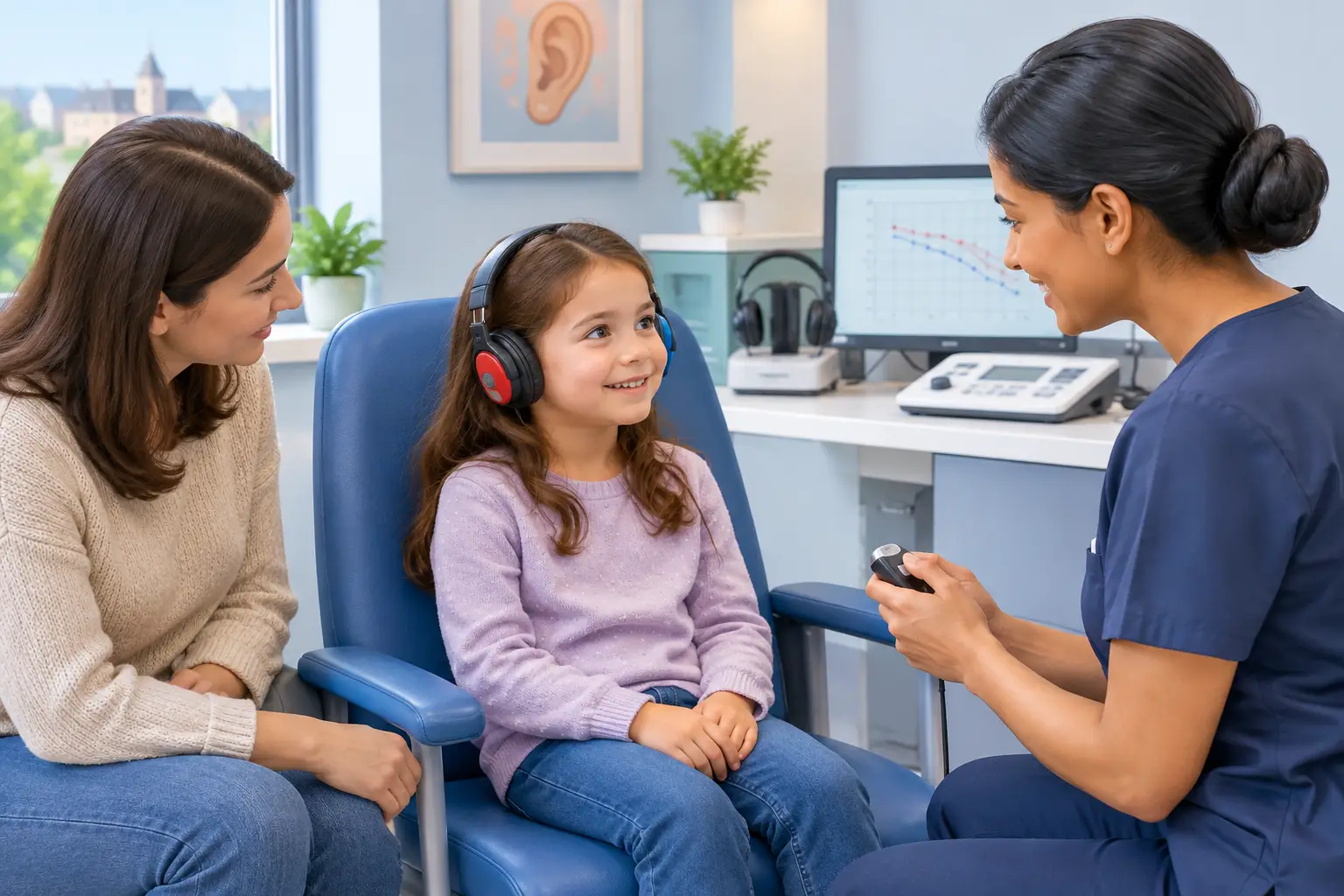
A child does not need to say “I cannot hear” for a hearing concern to deserve attention. They may ask for repetition, seem distracted in busy places, turn one ear towards you, or become tired after a noisy school day. Paediatric audiology Sevenoaks gives families access to an expert assessment that looks beyond a single symptom and considers how hearing may be affecting communication, confidence and learning.
Hearing changes can be subtle, particularly when a child has adapted to them over time. A calm, age-appropriate assessment can replace uncertainty with clear information and practical next steps.
When should you arrange paediatric audiology in Sevenoaks?
Parents often seek an assessment after noticing a pattern rather than one dramatic event. Perhaps your child regularly increases the television volume, mishears instructions, struggles to follow conversations in restaurants or appears unsettled by everyday sounds. A teacher may also have noticed that they do not always respond when spoken to from across the classroom.
Speech and language development, attention and hearing can overlap in the way concerns present. That does not mean a hearing issue is necessarily the explanation, but it is a good reason to assess hearing properly rather than make assumptions. Children can also experience temporary changes in hearing during or after coughs, colds and ear discomfort. If a concern persists, recurs or affects daily life, a specialist hearing assessment is a sensible next step.
Other reasons to book include tinnitus, sound sensitivity, frequent requests for repetition, a family history of hearing difficulties, concerns following an ear infection, or a child reporting muffled hearing. A child who hears well in a quiet room may still find group conversations and background noise challenging, so the detail you share as a parent matters.
What happens at a children’s hearing assessment?
A good paediatric appointment should never feel like a test your child can fail. The aim is to understand how their ears and hearing are functioning, using methods that suit their age, development and confidence. Qualified audiologists will explain each stage in straightforward language and help your child settle before beginning.
The assessment usually starts with a discussion about what you have noticed. This may cover when the concern began, whether it affects one or both ears, school or nursery feedback, recent illness, sensitivity to sound and any relevant hearing history. Your observations are valuable clinical information, especially for younger children who may not yet be able to describe what they are experiencing.
Testing is tailored to your child
For babies and very young children, testing may involve observing responses to carefully presented sounds and using objective measures that assess how the ear is responding. For toddlers and younger school-aged children, play-based methods can make the process engaging. A child may be asked to place a toy in a box each time they hear a sound, for example.
Older children can usually complete a more conventional hearing test using headphones or insert earphones, responding when they hear tones at different pitches and levels. Where appropriate, the audiologist may also assess middle-ear function. This can help build a fuller picture when hearing seems variable or ears feel blocked.
Not every child needs every test. The right combination depends on their age, symptoms, cooperation on the day and the answers already obtained. A premium ear clinic should prioritise reliable results, not rush through a fixed checklist.
A clear conversation after the assessment
The appointment should end with an explanation you can act on. Your audiologist will discuss the findings, answer questions and advise on appropriate next steps. Sometimes reassurance and monitoring are all that is needed. In other circumstances, the recommendation may be further assessment, management of an ear-related issue, support for listening in particular environments or communication with another healthcare professional.
This clarity matters. Families should leave knowing what was found, what remains uncertain, and what to do next.
Why specialist paediatric audiology matters
Children are not simply smaller adult patients. Their ability to take part in testing changes quickly with age, and their hearing needs are closely linked to language, education, social connection and emotional wellbeing. Testing must therefore be technically accurate as well as child-friendly.
An experienced paediatric audiologist knows when a result is dependable, when a child may need more time, and when alternative test methods will provide better information. This is particularly important if a child is anxious, has additional needs, finds headphones uncomfortable or struggles to stay focused for long periods.
Specialist care also recognises that a normal result is useful. It can give parents confidence to explore other explanations for a difficulty without continuing to worry that hearing has been overlooked. Equally, if the assessment identifies a concern, early and proportionate action can reduce the impact on everyday communication.
At Tragus-The Ear Specialists, children’s hearing assessments are delivered by clinicians with specialist audiology expertise. The focus is not merely on producing a test result, but on providing careful interpretation and supportive guidance for the family in front of us.
Helping your child feel ready for their appointment
There is no need to rehearse or pressure your child beforehand. It is usually enough to explain that they will meet someone who checks how their ears hear sounds. For younger children, presenting it as a listening game can be helpful. Avoid promising that nothing unusual will happen, as this can create worry if headphones or a small ear tip are introduced.
Bring any useful background information, including notes from school or nursery, previous hearing test results if available, and a brief record of what you have observed. Consider when the difficulty is most noticeable: at home, in class, in the car, at swimming, or around louder sounds. Specific examples are often more helpful than a general sense that your child is not listening.
Choose an appointment time when your child is likely to be rested and comfortable where possible. Hunger, fatigue and a busy day can affect concentration, particularly for play-based testing. If your child is nervous about healthcare visits or has sensory preferences, mention this when booking so the clinical team can prepare appropriately.
Questions parents often ask
Is my child too young for a hearing assessment?
No. Audiologists use different assessment approaches for different ages. A child does not need to be able to read, speak clearly or wear standard headphones to have their hearing investigated. The method is selected around the child, not the other way round.
Could earwax be causing the problem?
Earwax can sometimes contribute to a blocked sensation or reduced hearing, but it is not the only possible reason. An ear examination and hearing assessment help establish whether wax is relevant and whether further care is appropriate. Avoid inserting cotton buds or objects into your child’s ears, as this can push wax deeper or irritate the ear canal.
What if my child will not cooperate?
That is common and it does not mean the appointment has failed. Young children may need breaks, encouragement or a different approach. In some cases, the most useful information is gathered over more than one visit. The priority is obtaining trustworthy information without making the experience distressing.
Should I wait to see if the concern passes?
Brief changes around a cold may settle, but repeated, persistent or functionally significant concerns are worth checking. If hearing appears to affect your child’s speech, schooling, confidence or enjoyment of family life, an expert assessment can provide timely reassurance or direction.
A child’s hearing supports far more than answering when called. It helps them follow stories, join in games, learn in a busy classroom and feel connected to the people around them. If something does not feel quite right, a thoughtful paediatric assessment can give your family the clarity to move forward with confidence.