
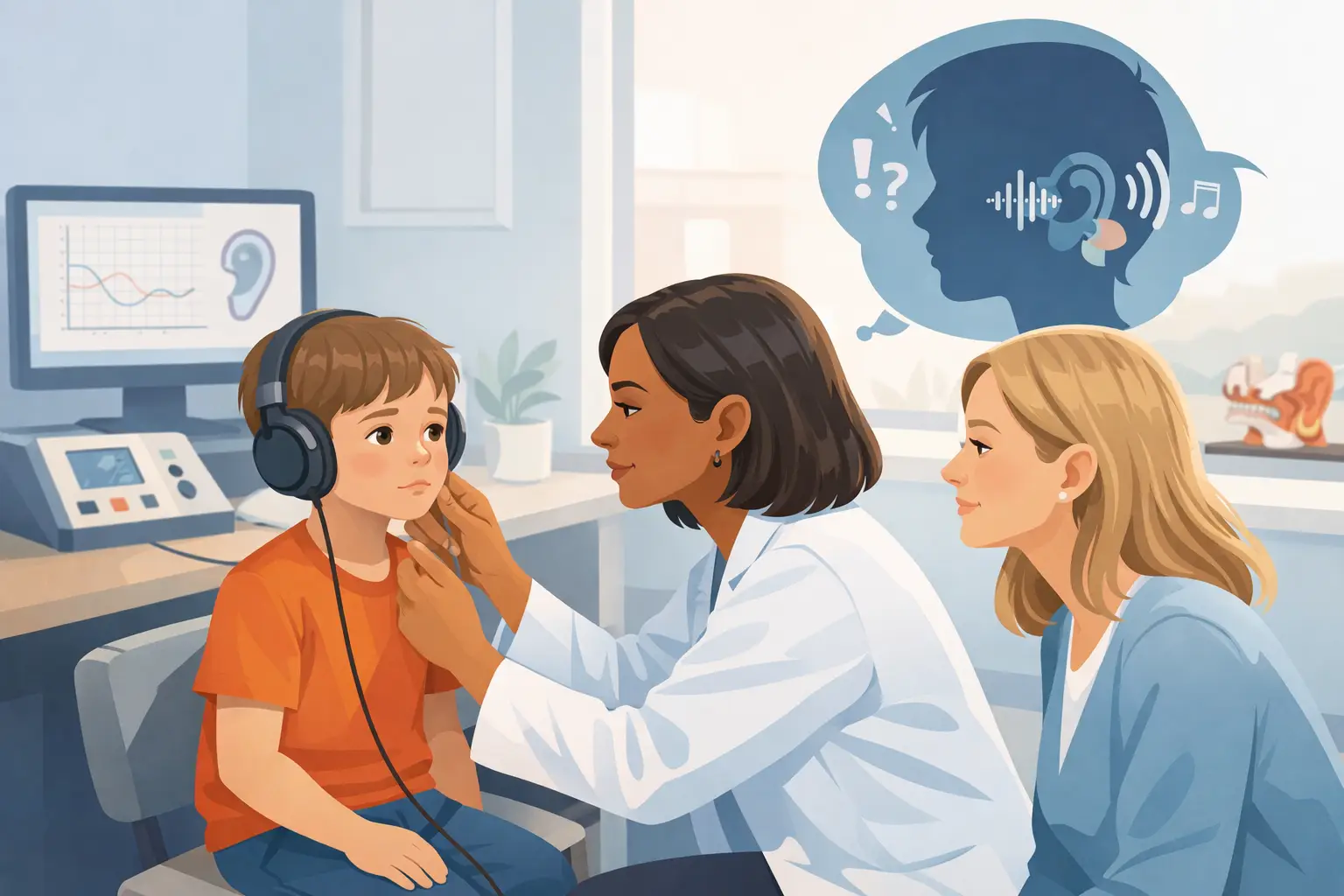
A child who does not respond when called may be deeply absorbed in play. A child who asks for the television louder may simply like a particular programme. But when these moments become a pattern, they deserve attention. Hearing loss in children: signs every parent should know are often subtle, and early assessment can make a meaningful difference to communication, learning and confidence.
Children do not always have the language to explain that sound feels muffled, unclear or uncomfortable. Some will adapt so well that adults around them assume they are hearing normally. A qualified paediatric hearing assessment provides clarity, rather than relying on guesswork or waiting for a problem to become more obvious.
Why childhood hearing changes can be easy to miss
Hearing difficulties in children are not always present from birth. They can develop gradually, fluctuate with repeated ear infections or congestion, or affect one ear more than the other. A child may hear well in a quiet room but struggle in a busy classroom, at nursery or in the playground.
Newborn hearing screening is valuable, but it is not a lifetime guarantee of normal hearing. Some hearing losses emerge later, and temporary middle-ear problems can still have a real effect on how a child hears speech. The key question is not only whether your child can hear a sound, but whether they can hear speech clearly and consistently in everyday settings.
Hearing loss in children: signs every parent should know
One isolated behaviour rarely tells the whole story. It is the repetition, persistence and impact on daily life that matter. Parents, teachers and nursery staff may each notice a different part of the picture.
Changes in how your child responds
A child may not react reliably to their name, especially when you are behind them or in another room. They may seem to ignore instructions, ask “what?” more often than expected, or watch faces closely when people speak. Some children turn one particular ear towards you, suggesting that one side may be hearing better than the other.
It can also be revealing to notice when communication is hardest. Difficulty following conversation in the car, at family gatherings, in class or in restaurants may point to problems hearing speech against background noise. This can happen even when a child appears to hear well at home.
Speech, language and learning concerns
Hearing is one part of language development. If speech is unclear, vocabulary is progressing slowly, or a child often mishears similar-sounding words, a hearing assessment may be appropriate alongside any speech and language support.
For school-age children, the signs can be less direct. They may lose track of verbal instructions, appear distracted, copy other pupils because they have missed what was said, or become unusually tired after school. These behaviours are sometimes attributed to attention, behaviour or confidence alone. Hearing should be considered as part of a careful, wider assessment.
Volume and listening habits
Look out for a television, tablet or music volume that is consistently higher than others find comfortable. Your child may sit very close to the screen, prefer subtitles, or complain that people mumble. They may also speak more loudly than usual because they cannot judge the volume of their own voice accurately.
Older children may describe blocked ears, ringing, pain, pressure, sound sensitivity or a feeling that hearing changes from day to day. These symptoms are worth discussing with a specialist, particularly when they follow an ear infection, a cold, swimming, a loud event or an injury to the ear.
Social and emotional clues
Listening difficulties can be exhausting. A child may withdraw from group activities, become frustrated during conversation or seem anxious in noisy places. Some children compensate by becoming quiet; others become restless or upset when they cannot follow what is happening.
None of these signs proves hearing loss. They do, however, justify an informed conversation and, where appropriate, an expert assessment. It is always better to check than to assume a child will grow out of a persistent difficulty.
Common causes of hearing difficulties in children
The cause affects what happens next, which is why assessment matters. One common issue is fluid behind the eardrum, often called glue ear. It can follow colds or recurrent ear infections and may create a temporary conductive hearing loss, making sounds seem dull or distant. It often fluctuates, so a child can seem better one week and struggle the next.
Earwax can also block the ear canal, although it should not be assumed to be the cause without an appropriate ear examination. In some cases, hearing loss is present from birth or develops because of genetic, medical or neurological factors. A perforated eardrum, repeated infections, certain medicines and significant noise exposure can also affect hearing.
Not every child who struggles to listen has a hearing loss. Auditory processing, language development, attention, anxiety and classroom acoustics can all influence how easily a child follows speech. A thorough hearing assessment helps distinguish between these possibilities and identifies whether onward referral or additional support is needed.
When should you arrange a hearing assessment?
Arrange an assessment if you have a persistent concern, if a teacher or health professional has raised one, or if your child’s hearing appears to have changed. Do not wait for a child to fail at school, withdraw socially or become distressed before seeking advice.
A more prompt medical review is sensible if hearing loss is sudden, affects one ear noticeably, follows a head injury, or comes with severe ear pain, discharge, dizziness, facial weakness or a high temperature. These symptoms may need urgent assessment through appropriate medical services.
For non-urgent concerns, a paediatric hearing assessment can establish how each ear is functioning and whether hearing is affected by middle-ear pressure, fluid, wax or another issue. Testing is adapted to the child’s age, development and confidence. A good appointment should feel calm and supportive, not like an exam your child can fail.
What a specialist paediatric assessment can provide
At a premium ear clinic, qualified audiologists assess far more than whether a child responds to a beep. Depending on age and need, the assessment may include a discussion of symptoms and developmental history, an examination of the ears, age-appropriate hearing tests and middle-ear measurements. Results should be explained in clear terms, with practical next steps for home and school.
Sometimes the outcome is reassuring: hearing is within expected limits, and another cause can be explored. Sometimes the assessment identifies a temporary issue that needs monitoring or medical management. Where hearing loss is confirmed, early rehabilitation and coordinated support can help a child access speech, learning and social interaction more comfortably.
Tragus-The Ear Specialists provides paediatric hearing assessments for families who want clinically led, individual care. The focus is on accurate diagnosis and a plan that reflects the child in front of us, rather than a one-size-fits-all response.
Supporting your child while you seek answers
Small changes can reduce listening effort. Face your child when speaking, gain their attention before giving instructions and keep sentences short when the environment is noisy. At home, reduce background television or music during important conversations. At school, it can help to share concerns early so staff can seat your child where they can see the teacher clearly and check that instructions have been understood.
Avoid repeatedly labelling a child as inattentive, defiant or careless when they may be working hard to hear. Calm reassurance matters. Explain that hearing checks are simply a way of finding out how their ears are working and making everyday listening easier.
Trust the pattern you are seeing. Parents often notice the earliest changes because they know their child’s usual responses, voice and confidence better than anyone. If something does not feel right, an expert hearing assessment can replace uncertainty with a clear next step – and help your child hear, learn and take part with greater ease.