
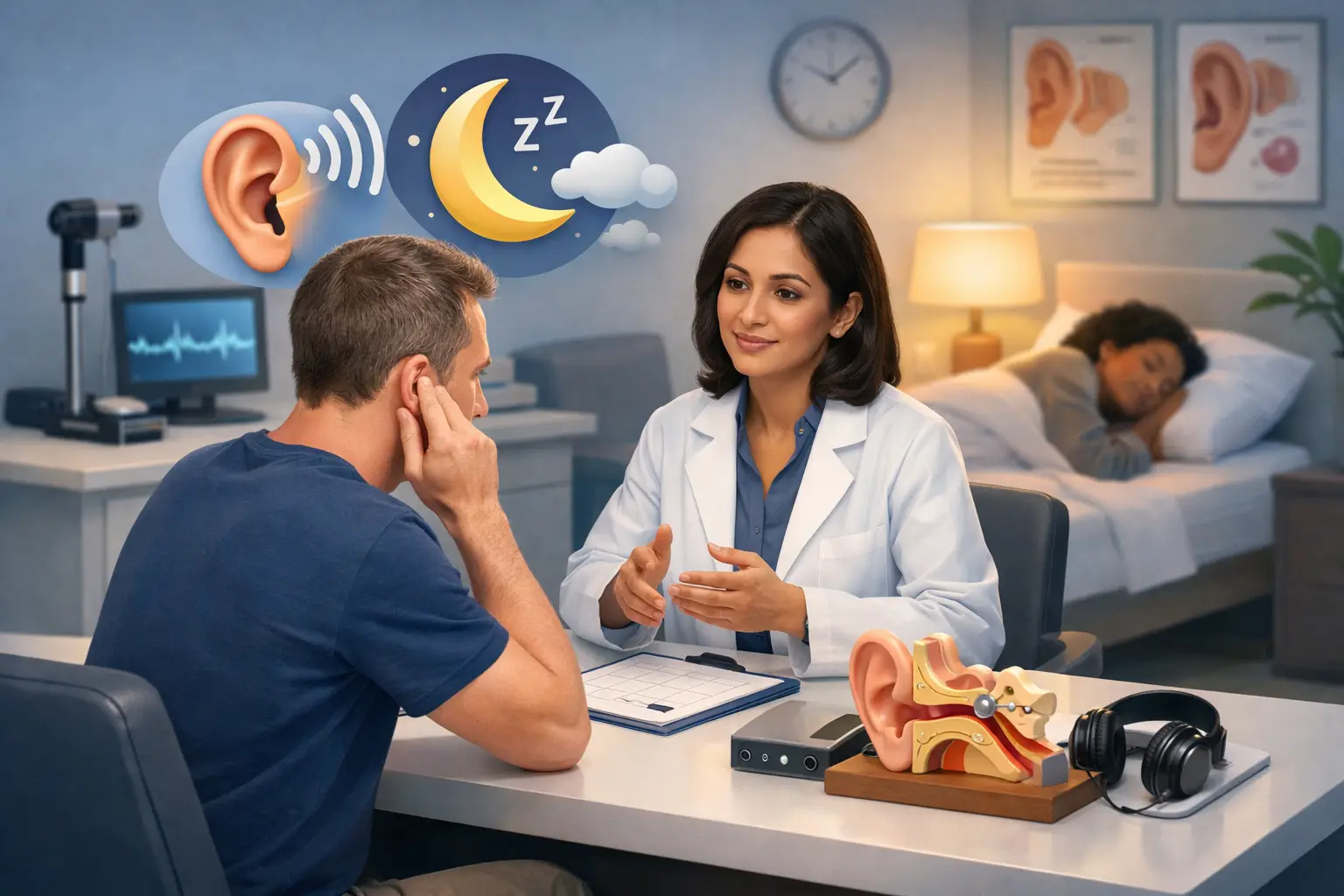
A quiet bedroom can make tinnitus feel anything but quiet. When daytime conversation, traffic and everyday activity fall away, ringing, buzzing, hissing or clicking may become the sound that demands your attention. So, can tinnitus affect sleep? Yes. For some people it can delay sleep, interrupt it during the night and leave them tired, anxious and less able to cope with the sound the following day.
This does not mean that tinnitus is damaging your sleep forever, or that you must simply learn to endure restless nights. Sleep difficulties are common in people with tinnitus, particularly when the sound feels new, intrusive or worrying. With the right approach, many people can reduce the impact and regain a more settled bedtime routine.
Why tinnitus often feels worse at night
Tinnitus is the perception of sound without an external source. It may be associated with hearing loss, noise exposure, ear conditions, medication, stress or no clearly identifiable cause. The sound itself can vary from one person to another, and it can fluctuate in loudness and intrusiveness.
At night, the environment is usually quieter. There is less external sound for the brain to process, so tinnitus becomes more noticeable by comparison. This is often described as tinnitus becoming louder, although the actual signal may not have changed. Your attention has simply had fewer competing sounds to focus on.
The difficulty can then become a cycle. You notice the tinnitus, worry that you will not sleep, become more alert and begin monitoring the sound. That heightened state makes it harder to drift off, and a poor night’s sleep can increase stress and reduce resilience the next day. Tinnitus may then seem more intrusive again the following evening.
For some people, the issue is not only falling asleep. They may wake in the early hours and immediately become aware of the tinnitus, finding it difficult to settle back down. Others begin avoiding bedtime altogether because they associate silence with distress. These are understandable responses, but they can reinforce insomnia over time.
Can tinnitus affect sleep quality as well as falling asleep?
Yes. Even if you fall asleep reasonably quickly, tinnitus-related worry can affect the quality of rest. You may wake more often, sleep lightly or wake feeling unrefreshed. Fatigue can affect concentration, mood, work performance and family life, while also making sounds seem harder to tolerate.
It is worth recognising that sleep and tinnitus influence one another, but neither tells the whole story. Poor sleep does not necessarily make the tinnitus physically worse, and a louder tinnitus perception does not automatically indicate an underlying emergency. It does, however, show that the symptom is affecting your wellbeing and deserves proper attention.
A specialist tinnitus assessment can help clarify the wider picture. This may include a detailed discussion of the tinnitus, a hearing assessment, consideration of sound sensitivity, lifestyle factors and the effect on sleep, concentration and emotional health. The goal is not to promise an instant cure, but to create a personalised plan that reduces distress and restores day-to-day control.
Practical ways to make nights easier
Trying to force sleep in complete silence is rarely helpful when tinnitus is prominent. Gentle, consistent background sound can soften the contrast between tinnitus and the room. This is not about drowning the tinnitus out at a high volume. The aim is to make it less central to your attention.
A fan, low-level nature sounds, a radio programme with calm speech or a dedicated sound source may help. Choose something neutral rather than stimulating, and keep it at a comfortable level. If you share a room, headphones may be tempting, but they are not always ideal for overnight use and can be uncomfortable or unsafe. A bedside speaker or pillow speaker may be more suitable.
Your pre-sleep routine matters too. Give yourself a short, repeatable wind-down period rather than moving straight from work, scrolling or household tasks into bed. Dim the lights, reduce screen use where possible, and choose an activity that signals the day is ending, such as reading a few pages of a book or taking a warm shower.
Caffeine, alcohol and nicotine can also affect sleep, although the balance is individual. Some people notice that coffee later in the day, alcohol in the evening or smoking before bed makes their sleep shallower and their tinnitus more noticeable. Rather than changing everything at once, keep a simple record for a fortnight to identify patterns.
If you are lying awake for a long time, it can help to leave the bed briefly and do something quiet in low light until you feel sleepier. This can prevent the bed becoming a place you associate with frustration and tinnitus monitoring. Avoid checking the clock repeatedly, as this tends to increase pressure rather than help.
Hearing loss, hearing aids and night-time tinnitus
Tinnitus and hearing loss commonly occur together. When hearing becomes less clear, the brain receives less everyday sound input. This can make tinnitus more apparent, particularly in quiet settings. A hearing test is therefore a valuable part of tinnitus care, even if you feel that you hear reasonably well in conversation.
Where hearing loss is identified, professionally fitted hearing aids may help some people by improving access to environmental sound and reducing listening effort during the day. Better hearing does not guarantee that tinnitus will disappear, and hearing aids are not the right solution for everyone. However, they can be an important part of rehabilitation when hearing loss is contributing to the problem.
It is also sensible to avoid overprotecting your ears in ordinary sound environments. Wearing earplugs constantly can make normal background sound seem quieter and may increase your awareness of tinnitus. Hearing protection remains essential for genuinely loud activities, such as concerts, power tools or shooting, but it should be used appropriately rather than as an all-day response to tinnitus.
When to seek specialist advice
Do not wait in silence if tinnitus is regularly disrupting your sleep or affecting your emotional wellbeing. A qualified audiologist can assess your hearing, discuss practical sound and sleep strategies, and provide tinnitus therapy tailored to the way the condition is affecting you.
You should seek prompt medical advice if tinnitus starts suddenly with hearing loss, occurs in one ear only and is new or persistent, pulses in time with your heartbeat, follows a head injury, or comes with dizziness, facial weakness, severe ear pain or neurological symptoms. These symptoms do not always indicate a serious cause, but they need timely assessment.
Support is also important if you are feeling persistently low, panicked or hopeless because of tinnitus and sleep loss. Speak to your GP or an urgent mental health service if you feel unable to cope or at risk of harming yourself. Tinnitus is a real health concern, and its emotional impact should be treated with the same seriousness as its auditory symptoms.
A more confident approach to bedtime
The most helpful goal is not to chase total silence or constantly test whether the tinnitus is still there. It is to reduce the threat your brain attaches to the sound, while giving yourself the conditions for better rest. That takes time, especially when sleep has been poor for weeks or months, but small, consistent changes can be effective.
At Tragus-The Ear Specialists, tinnitus care begins with expert assessment and a clear understanding of what is affecting your hearing, sleep and quality of life. If nights are becoming something you dread, a personalised tinnitus consultation can be the first step towards feeling more settled when your head reaches the pillow.