
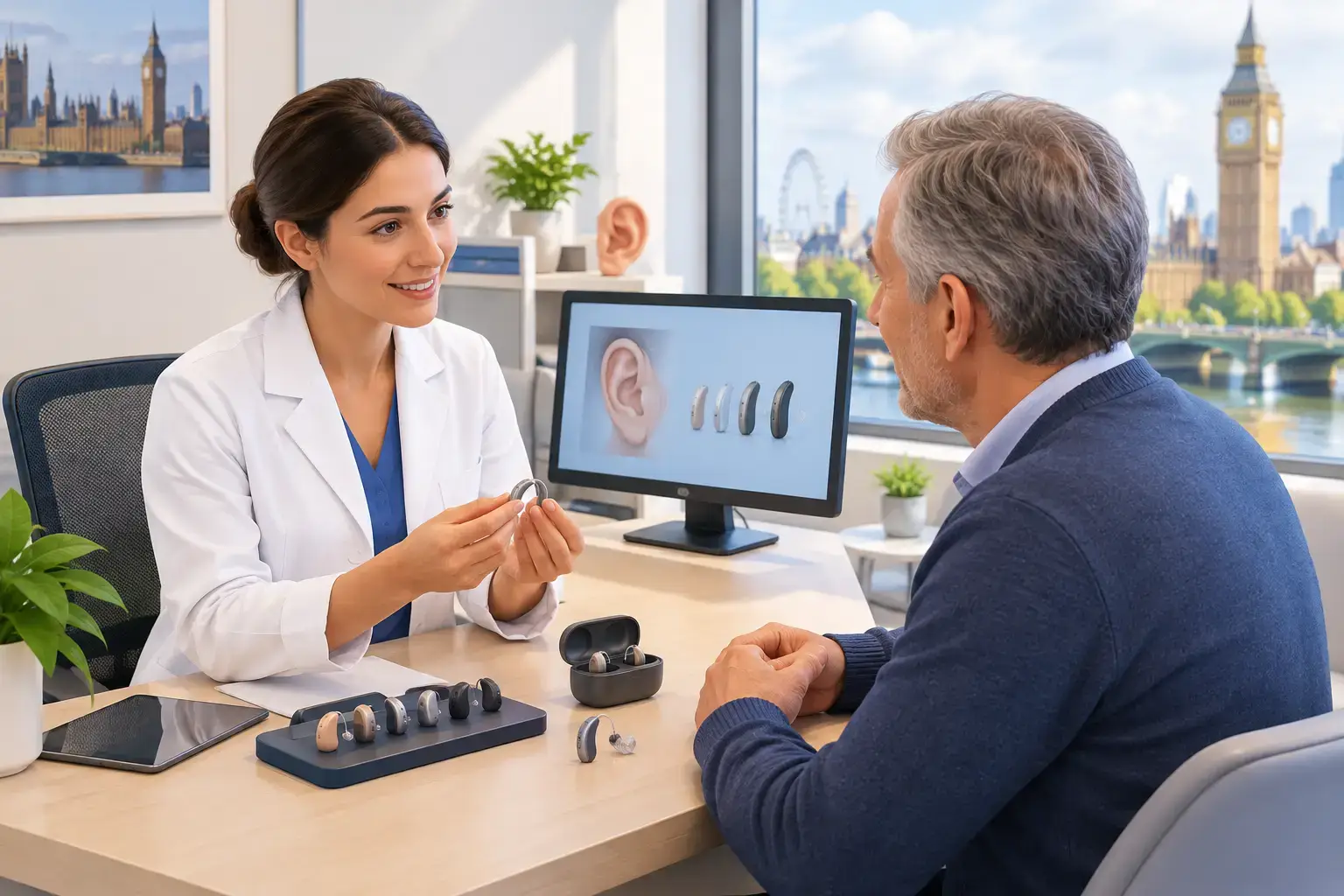
A hearing aid is not simply a device bought off the shelf. It is part of a rehabilitation plan that should begin with expert assessment and continue with careful fitting, adjustment and support. If you are researching private hearing aid prices in London, the most useful question is not only, “How much does it cost?” but also, “What level of clinical care is included, and will it meet my hearing needs in real life?”
The right solution should make conversations less tiring, help you follow speech in demanding places and support greater confidence at home, work and social occasions. That outcome depends on far more than the hearing aid itself.
What affects private hearing aid prices in London?
Private hearing aid costs vary because people’s hearing needs, lifestyles and expectations vary. A clear quotation should explain the device recommended, the professional services included and the ongoing support available after fitting.
The starting point is a comprehensive hearing assessment. A qualified audiologist assesses hearing sensitivity, discusses the listening situations that matter most to you and considers factors such as dexterity, previous hearing aid use, tinnitus concerns and sound tolerance. This ensures any recommendation is based on clinical findings and your day-to-day priorities, rather than a one-size-fits-all package.
The technology level also affects the overall cost. More advanced hearing aids can offer greater capacity to manage complex sound environments, such as busy restaurants, family gatherings or meetings with several speakers. Features may include improved speech focus, automatic adjustment between environments, rechargeable batteries, discreet designs and connectivity with compatible mobile phones or televisions.
That does not mean the most feature-rich option is always the right choice. Someone who spends most of their time in quieter settings may benefit from a different level of technology than a person who regularly works in open-plan offices or attends large social events. A good clinician will explain the practical difference a feature is likely to make for you.
The hearing aid is only one part of the investment
A private hearing aid package should reflect the clinical time needed to fit and optimise the devices safely and effectively. Hearing aids need to be programmed to your measured hearing levels, but fitting is not a single technical appointment. It is a process of adjustment, education and rehabilitation.
During a professional fitting, your audiologist should discuss insertion and removal, charging or battery management, cleaning, controls and realistic expectations for the first few weeks. Your brain may need time to become accustomed to sounds it has not heard clearly for some time. Everyday sounds can initially seem unusually sharp or prominent, which is why follow-up care matters.
The value of ongoing appointments is often underestimated when comparing private hearing aid prices in London. Follow-up reviews give you an opportunity to describe what is working and what is difficult. You may hear well in quiet conversation but find group settings challenging, for example, or need changes to improve comfort with certain sounds. Fine-tuning should be guided by your experience as well as the hearing test results.
At Tragus-The Ear Specialists, hearing care is delivered with the perspective of a specialist ear and hearing clinic. The focus is on accurate assessment, personalised rehabilitation and the confidence that comes from seeing qualified audiologists who understand the wider impact of hearing difficulties.
Why cheaper is not always better value
Comparing quotes is sensible, but comparing headline figures alone can be misleading. A lower initial cost may not include the same level of diagnostic assessment, verification, review appointments, aftercare or practical support. Conversely, paying for technology you are unlikely to use may not represent good value either.
Ask what is included before making a decision. You should understand whether the recommendation covers one or two hearing aids, the length and nature of aftercare, routine adjustments, warranty arrangements and what support is available if your hearing needs change. It is also sensible to ask whether any accessories discussed are essential to your goals or optional additions.
The best value is a solution that is clinically appropriate, comfortable to wear and supported well enough for you to continue using it. Hearing aids left in a drawer rarely reflect a problem with motivation alone. Sometimes the fit, programming, expectations or support have not been addressed adequately.
One hearing aid or two?
Where hearing levels indicate benefit in both ears, two hearing aids may provide a more balanced listening experience and make it easier to judge where sounds are coming from. They can also support speech understanding when background noise is present. However, the most suitable approach should follow a proper assessment and discussion of your preferences, hearing profile and budget.
A recommendation for two devices should be clearly explained, not treated as an automatic sales decision. Equally, choosing one device solely to reduce upfront cost can be a false economy if it does not adequately support your communication needs.
Rechargeable or battery-powered?
Rechargeable hearing aids can be convenient, particularly for people who prefer not to handle small batteries. They may suit a busy routine and remove the need to keep replacement batteries at hand. Battery-powered models can still be appropriate in some circumstances, including for people who travel frequently or prefer that format.
This is a practical choice rather than a measure of quality. Your audiologist should help you consider charging routines, hand dexterity and how you use your hearing aids from day to day.
Questions to ask before choosing a provider
You do not need to become an expert in hearing aid technology before attending an appointment. You do, however, deserve straightforward answers from a clinician who listens carefully. Ask how the hearing assessment informs the recommendation, which listening situations the suggested devices are designed to help with, and what follow-up appointments involve.
It is also worth asking how the fitting will be checked. Hearing aids can be programmed using prescription targets and adjusted to your individual comfort and clarity. A clinically led fitting should not rely only on a quick initial set-up. The aim is to give you the best possible foundation, then refine the settings as you gain experience in your own environments.
If tinnitus, sensitivity to sound or earwax are also affecting your hearing experience, mention this at the assessment. These concerns may influence the support you need and are best considered as part of your broader ear health, rather than treated as an afterthought.
Plan for long-term hearing support
Hearing changes are rarely static. Your communication demands can change too: a new role at work, more time with grandchildren, a move to a noisier environment or simply a wish to feel more involved in conversation. Regular review gives your audiologist the chance to reassess your needs and keep your hearing support aligned with your life.
Looking after the devices also protects their performance. Keep them clean and dry, follow the recommended charging or battery routine, and arrange a review if sound quality changes or they become uncomfortable. Do not assume a device is no longer suitable without having it checked. Often, a professional adjustment or maintenance review can make a meaningful difference.
For parents considering hearing support for a child, specialist paediatric assessment is particularly important. Children’s hearing needs, communication development and ability to describe listening difficulties require an approach designed around the child and family, not a standard adult appointment.
Choose clarity, not just a price
Private hearing aid prices in London should be transparent, but cost is only meaningful when you know what care it represents. A well-chosen hearing aid, fitted by an experienced clinician and supported through appropriate follow-up, is an investment in easier communication and fuller participation in the moments that matter.
Do not wait in silence or settle for uncertainty. Arrange an expert hearing assessment, ask the questions that matter to you and choose support that helps you hear the world with greater clarity and confidence.