
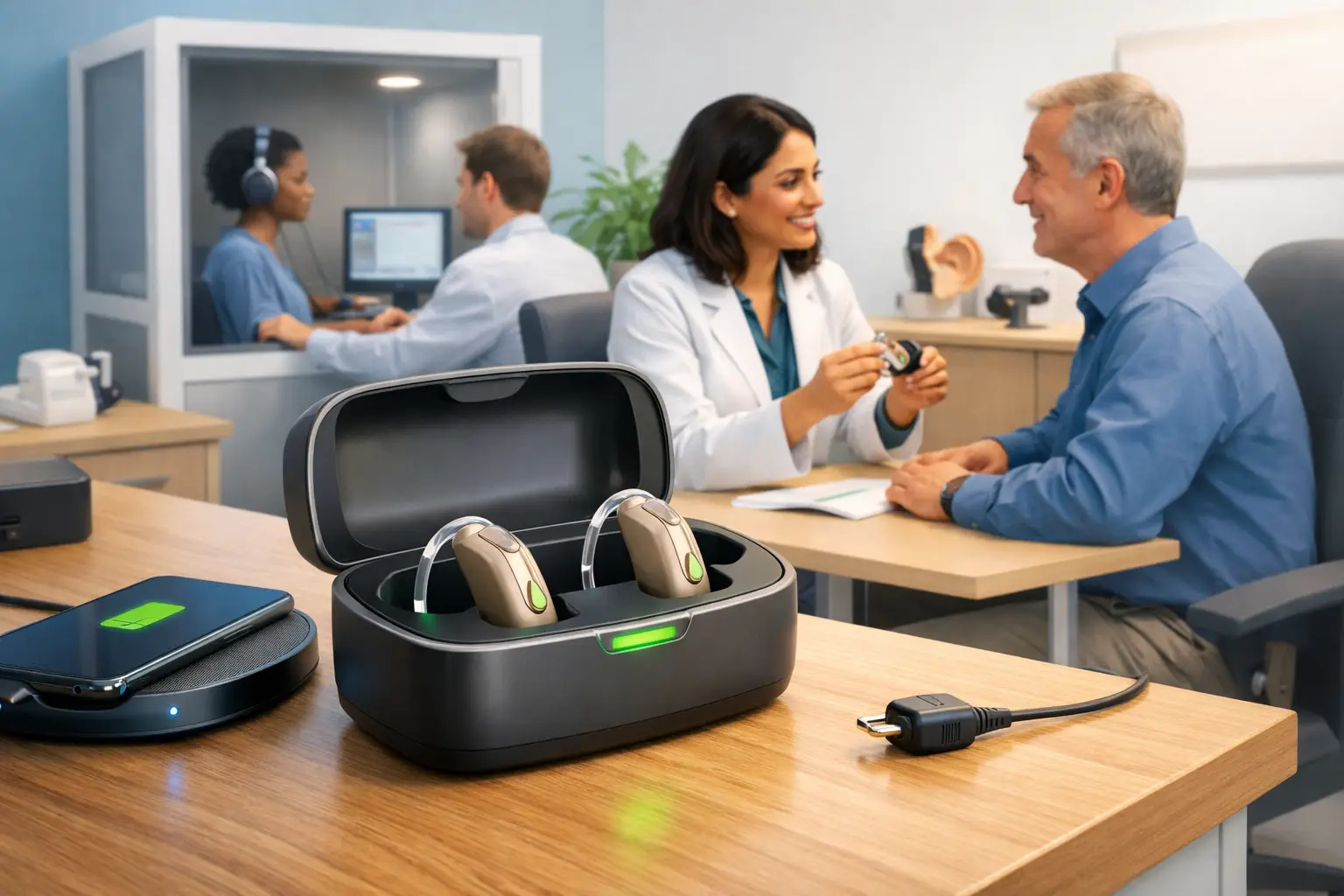
For many people, the smallest part of wearing hearing aids is also the most frustrating: changing tiny batteries. Rechargeable hearing aids remove that daily task, replacing disposable cells with a charger that powers the devices overnight or, for some models, provides extra charge while you are out. It is a practical change, but choosing the right hearing aid should never come down to charging alone.
The best solution depends on your hearing test results, the shape and health of your ears, your lifestyle, hand dexterity, vision, communication needs and the features you need to hear clearly in real life. A qualified audiologist can help you weigh up these factors and fit technology that supports confident hearing at home, at work and in social settings.
How rechargeable hearing aids work
Most modern rechargeable hearing aids use a built-in lithium-ion battery. Rather than opening a battery door and inserting a small disposable battery, you place the hearing aids into a purpose-designed charging unit. A full overnight charge commonly provides a full day of use, although exact performance varies between devices and settings.
Streaming phone calls, listening to audio directly through the hearing aids, using remote microphones and spending long periods in noisy places can all use more power. Your audiologist should discuss expected battery life based on how you will actually use the aids, rather than quoting a best-case figure.
Chargers vary too. Some need to remain plugged into the mains, while portable charging cases store power and can recharge the aids without a wall socket. This can be particularly useful for weekends away, long days at work or travel. It does not remove the need to plan ahead, but it makes daily hearing care considerably simpler for many wearers.
The everyday benefits of rechargeable hearing aids
The main advantage is convenience. Instead of keeping a supply of small batteries at home, in a handbag or in a coat pocket, you establish a straightforward routine: remove your hearing aids at night, place them in the charger, and begin the next day with fully charged devices.
This can be especially valuable for people with arthritis, reduced finger sensation, tremor or reduced vision. Disposable batteries are very small, and handling them can be difficult. Removing this step may make hearing aid use feel more manageable and reduce the risk of being left without power at an inconvenient moment.
There is an environmental consideration as well. Rechargeable devices reduce the number of single-use hearing aid batteries that need to be bought and disposed of. Although rechargeable hearing aids and their chargers still require responsible care and eventual replacement, fewer disposable cells is a meaningful benefit for many patients.
For some people, the benefit is less about the charger and more about consistency. Hearing aids are most effective when worn regularly, allowing the brain time to adapt to amplified sound and speech. A simple evening routine can make it easier to maintain that habit.
When disposable batteries may still be the better choice
Rechargeable technology is not automatically the right choice for every person. Disposable-battery hearing aids remain a sensible option in certain circumstances, particularly for people who spend long periods away from reliable electricity or who prefer the reassurance of carrying spare batteries.
Frequent international travellers may find a portable charger highly effective, but those taking extended camping trips, working offshore or travelling to areas with limited charging access may prefer replaceable batteries. It is also worth considering what happens if a charger is misplaced or damaged. With disposable batteries, a spare pack can solve the problem immediately; with rechargeables, access to the correct charger matters.
Some people simply prefer their existing routine. If changing batteries is easy for you and you value the ability to replace power instantly, there is no clinical reason to move to rechargeable devices purely because they are newer. Your hearing needs, rather than technology trends, should lead the decision.
Battery life is not the same as hearing aid lifespan
A common concern is whether the rechargeable battery will wear out. Like all rechargeable batteries, capacity gradually reduces over time. However, the battery is designed to provide daily use for years, and the expected performance will depend on the specific manufacturer and model.
It is helpful to distinguish between a single day of charge and the working life of the hearing aid. A device may initially provide more than enough power for a full day, including moderate streaming, but capacity can decrease gradually with age. If you begin finding that your hearing aids no longer last through your normal day, this should be assessed rather than ignored.
The cause may be battery ageing, but it could also be a charger issue, wax affecting the receiver, a fault, or a change in how the aids are being used. Professional aftercare helps identify the real cause and prevents a minor problem from becoming a period of avoidable reduced hearing.
Caring for the charger and hearing aids
Keep the charger in a dry, stable place and use the power supply recommended for the device. Hearing aids should be wiped gently each day, with wax guards and domes changed according to your audiologist’s advice. Avoid placing wet hearing aids straight into a charger after heavy rain, exercise or a shower mishap.
If you are prone to moisture in the ears, perspiration, or recurrent wax build-up, discuss this during your appointment. Appropriate cleaning, wax management and a suitable hearing aid style are all part of protecting the device and maintaining sound quality.
Why the fitting matters more than the power source
Rechargeable hearing aids can contain sophisticated features, including directional microphones, noise management, tinnitus programmes, Bluetooth connectivity and personalised sound processing. These features can be helpful, but only when selected and adjusted for your hearing profile.
A hearing aid is not a generic sound amplifier. It needs to be prescribed after a comprehensive hearing assessment, programmed to your hearing thresholds and fine-tuned according to the situations that challenge you most. Someone who struggles to follow conversation in a busy restaurant may need a different approach from someone whose priority is hearing family members clearly at home or participating in meetings.
Your ears also need examination. Earwax blockage, infection, a perforated eardrum or sudden changes in hearing can affect what you hear and how safely a hearing aid can be fitted. Where symptoms suggest an underlying medical issue, this should be investigated rather than masked with amplification.
At Tragus-The Ear Specialists, hearing aid recommendations are made as part of a clinical assessment and rehabilitation plan. That includes discussing your listening goals, demonstrating suitable options, verifying the fitting and providing ongoing support as your hearing needs change.
Questions to ask before choosing a rechargeable model
A good appointment should leave you clear about the practicalities, not just impressed by the technology. Ask how long the hearing aids are expected to last on one charge with your likely level of streaming. Find out whether the charger has its own rechargeable power bank, how long it takes to charge, and what support is available if the charger develops a fault.
It is also sensible to ask about connectivity with your mobile phone, television accessories or remote microphones if these matter to you. Not every feature is necessary for every wearer. The aim is to choose equipment that makes a noticeable difference to communication, not to pay for functions you will never use.
If you have tinnitus, sound sensitivity or fluctuating hearing, mention this before selecting a device. These concerns may influence the programming approach, counselling and follow-up required. For children, hearing aids should always be selected and managed through specialist paediatric assessment, with close attention to changing hearing levels, comfort and educational needs.
Building charging into your routine
The most reliable approach is to make charging part of the same evening routine as brushing your teeth or putting your glasses away. Place the charger somewhere safe and easy to reach, ideally in the same location each night. Check that the charging indicators show the aids are correctly seated.
If you are going away, take the charger, cable, plug and any portable charging case together in one pouch. It may also help to keep a written note of the device model and clinic contact details with your travel documents. Small preparations protect the hearing support you rely on every day.
Hearing well should not depend on struggling with a tiny battery at the kitchen table. If rechargeable hearing aids suit your needs, they can make daily hearing care simpler while giving you the consistent, personalised support needed to hear the world in high-definition once more.