
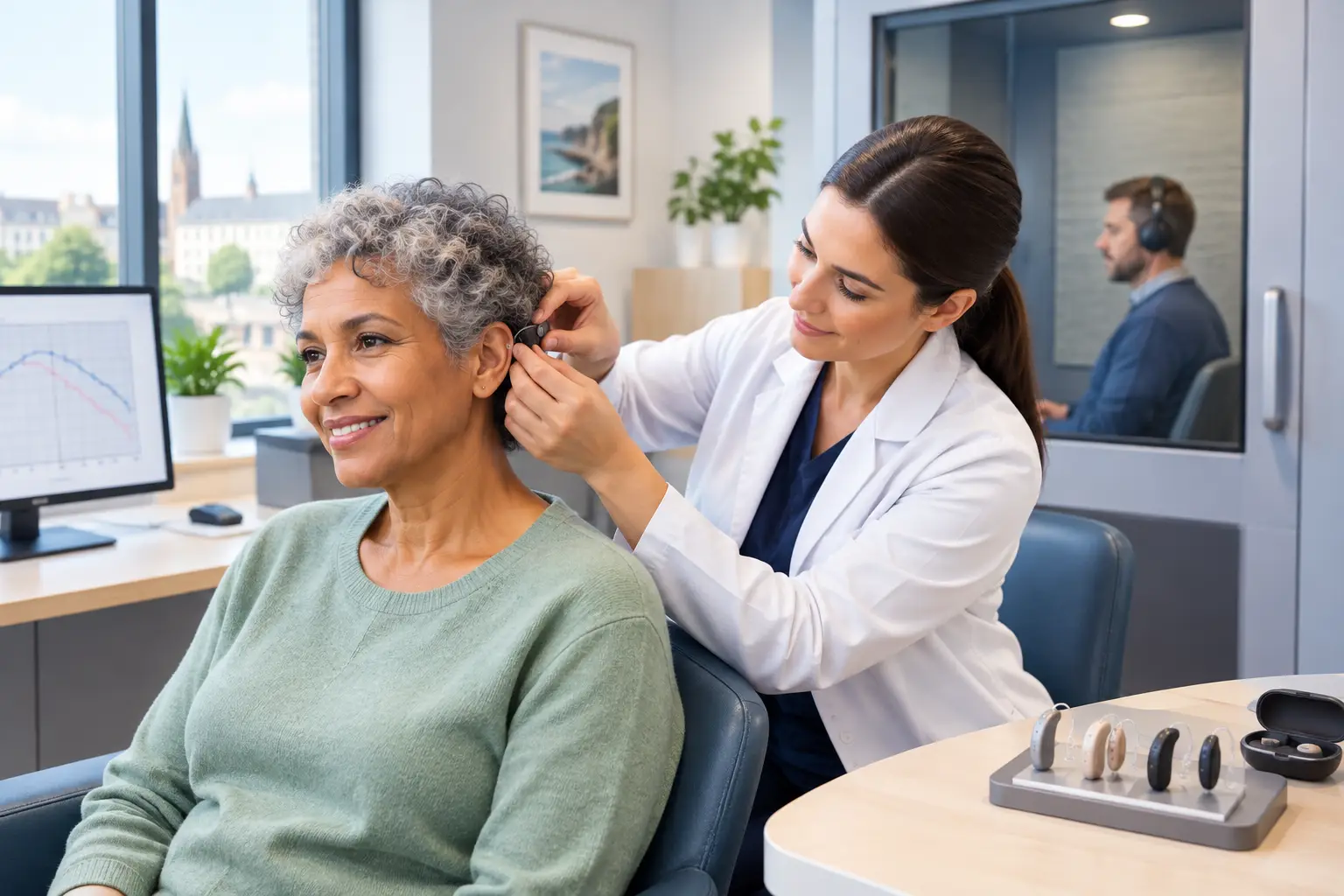
A missed question across the dinner table, a television that keeps getting louder, or a persistent sound in the ears can gradually affect far more than hearing. It can change confidence, concentration, sleep and the ease of everyday conversations. Specialist audiology services provide a clear route from concern to expert assessment, practical support and personalised ear care.
At a premium ear clinic, care should not begin and end with a quick screening or a product recommendation. The right approach looks at how your ears and hearing are affecting your life, identifies the most appropriate next step, and gives you time to make informed decisions with a qualified audiologist.
What specialist audiology services should include
Hearing and ear concerns do not always have one simple explanation. A feeling of blockage may be caused by earwax, while difficulty following speech in busy places may require a detailed hearing assessment. Ringing, buzzing or other internal sounds need a different conversation again, particularly when they are distressing or disrupting sleep.
That is why a comprehensive service matters. It brings assessment, therapeutic care, rehabilitation and ongoing support together, rather than treating every concern as the same problem. For adults, this may mean investigating a change in hearing, managing troublesome tinnitus, removing obstructive wax safely or selecting hearing technology that genuinely suits their routine. For children, it means an assessment tailored to their developmental stage and communication needs.
A specialist clinician will also consider the practical context. Hearing challenges at work, for example, may look different from those experienced in family life, education, music or social settings. The goal is not simply to produce a test result. It is to understand what that result means for the person in front of you.
Hearing assessments: more than a basic hearing test
A professional hearing assessment is often the starting point for anyone who has noticed changes in hearing clarity, struggles to follow conversation, asks others to repeat themselves, or feels that sounds are less balanced than before. It can also be sensible after repeated exposure to loud noise or when relatives have noticed a change before you have.
The appointment should begin with a discussion of your hearing history, symptoms and priorities. Your audiologist may examine the ear canal and carry out clinically appropriate tests to measure how you hear different sounds and frequencies. The findings are then explained in plain English, alongside the options that may help.
The value lies in the interpretation. Two people can have similar test results but very different listening demands. One may spend their day in meetings and need reliable speech clarity in a busy office. Another may want to hear grandchildren comfortably at home or follow conversation in a restaurant without withdrawing from the group. Recommendations should reflect that difference.
It is also worth remembering that not every hearing concern requires hearing aids. Sometimes earwax management, monitoring, communication strategies or further clinical advice may be more appropriate. A careful assessment prevents rushed assumptions.
Hearing aid fitting and rehabilitation
When hearing aids are suitable, the fitting process is not a one-off transaction. Modern devices can offer sophisticated support, but their benefit depends on accurate programming, realistic expectations and follow-up care.
Your audiologist should discuss your listening goals, dexterity, lifestyle, cosmetic preferences and comfort with technology before recommending a solution. A device used mainly at home may need a different set-up from one supporting frequent meetings, travel, music or social occasions. Features can be useful, but only when they solve a genuine everyday need.
Adjustment is normal. The brain needs time to re-familiarise itself with sounds that have become less noticeable, and settings may need fine-tuning as you begin to use the devices in real situations. Good rehabilitation includes that ongoing conversation, not just the initial fitting.
Tinnitus and sound sensitivity need specialist attention
Tinnitus is often described as ringing in the ears, but people experience it in many ways: buzzing, hissing, humming, clicking or a high-pitched tone. For some, it is occasional and manageable. For others, it can affect sleep, concentration, mood and their ability to relax in quiet moments.
There is no single response that suits everyone. Effective tinnitus support begins with a detailed assessment of the sound itself, its impact and the circumstances in which it becomes more intrusive. Therapeutic options may include education, sound-based approaches, counselling-informed strategies and hearing rehabilitation where appropriate. The purpose is to reduce distress and help the sound become less dominant in daily life.
Hyperacusis, or heightened sensitivity to everyday sound, requires similarly individualised care. Someone may find ordinary household noise, traffic or busy environments uncomfortably intense. Avoiding all sound can sometimes make daily life smaller, so management needs to be considered carefully and guided by a clinician experienced in sound tolerance.
If tinnitus begins suddenly, is accompanied by a noticeable rapid change in hearing, severe dizziness or other worrying symptoms, seek prompt medical advice. For ongoing symptoms that are affecting quality of life, a specialist audiology appointment can provide a more structured way forward.
Earwax removal: safe care when blockage gets in the way
Earwax is normal and protective, but it can become a problem when it builds up and blocks the ear canal. People may notice muffled hearing, a blocked sensation, discomfort, feedback from hearing aids or difficulty using earphones. Attempting to remove wax with cotton buds or other objects can push it further in and irritate the ear canal.
Microsuction earwax removal is a precise clinical method that uses magnification and gentle suction to clear wax from the ear canal. It is often preferred because the clinician can see what they are doing throughout the procedure. However, suitability depends on the individual ear and its history, so an examination should always come first.
For people who wear hearing aids, managing wax can be particularly helpful. Even a small amount of blockage can reduce sound quality and make a well-programmed device seem less effective than it is.
Paediatric hearing assessments require a different approach
Children do not always say that they cannot hear clearly. Instead, a parent or teacher may notice that they seem distracted, miss instructions, ask for repetition, turn the volume up, or struggle in noisy classrooms. These signs can have many explanations, which is why an expert hearing assessment is valuable.
Paediatric audiology is not simply adult testing with smaller headphones. It requires an age-appropriate approach, patience and methods that allow the clinician to obtain reliable information while helping a child feel at ease. The discussion should include speech and language development, school experiences, family observations and any relevant ear history.
For families, clarity is often the greatest immediate benefit. Understanding whether hearing is playing a part in a child’s communication or learning difficulties can make it easier to plan the right support. It also means parents do not have to keep guessing.
Custom earplugs protect hearing without shutting out life
Protection is another essential part of good ear care. Generic foam plugs can be useful in some settings, but they are not the ideal choice for every activity. A custom-moulded earplug is made to the shape of your ear and can provide a more secure, comfortable fit.
For musicians and concert-goers, filtered protection can reduce sound exposure while preserving a more natural quality of sound. For shooting, the priority is appropriate protection from impulse noise. For swimming, a watertight custom fit can help keep water out of the ear canal. Each purpose calls for a different design, so the conversation should start with how and where the plugs will be used.
Choosing the right clinic for your hearing and ear care
When comparing audiology providers, qualifications and clinical scope matter. Look for qualified audiologists who take time to assess your needs, explain findings clearly and offer care beyond a single appointment. A service that includes tinnitus and hyperacusis support, children’s assessments, wax removal, hearing rehabilitation and custom protection can be especially helpful when needs overlap or change over time.
At Tragus-The Ear Specialists, care is shaped by NHS clinical experience and academic expertise, with a focus on careful assessment and meaningful outcomes. That combination matters when you want to make decisions based on professional advice rather than pressure.
You do not need to wait until hearing difficulties become overwhelming. Whether the issue is a blocked ear, an ongoing sound that will not fade into the background, a child who seems to miss instructions, or a growing effort to keep up in conversation, expert support can help you take the next step with confidence. Hear the world in high-definition once more – and do not wait in silence.