
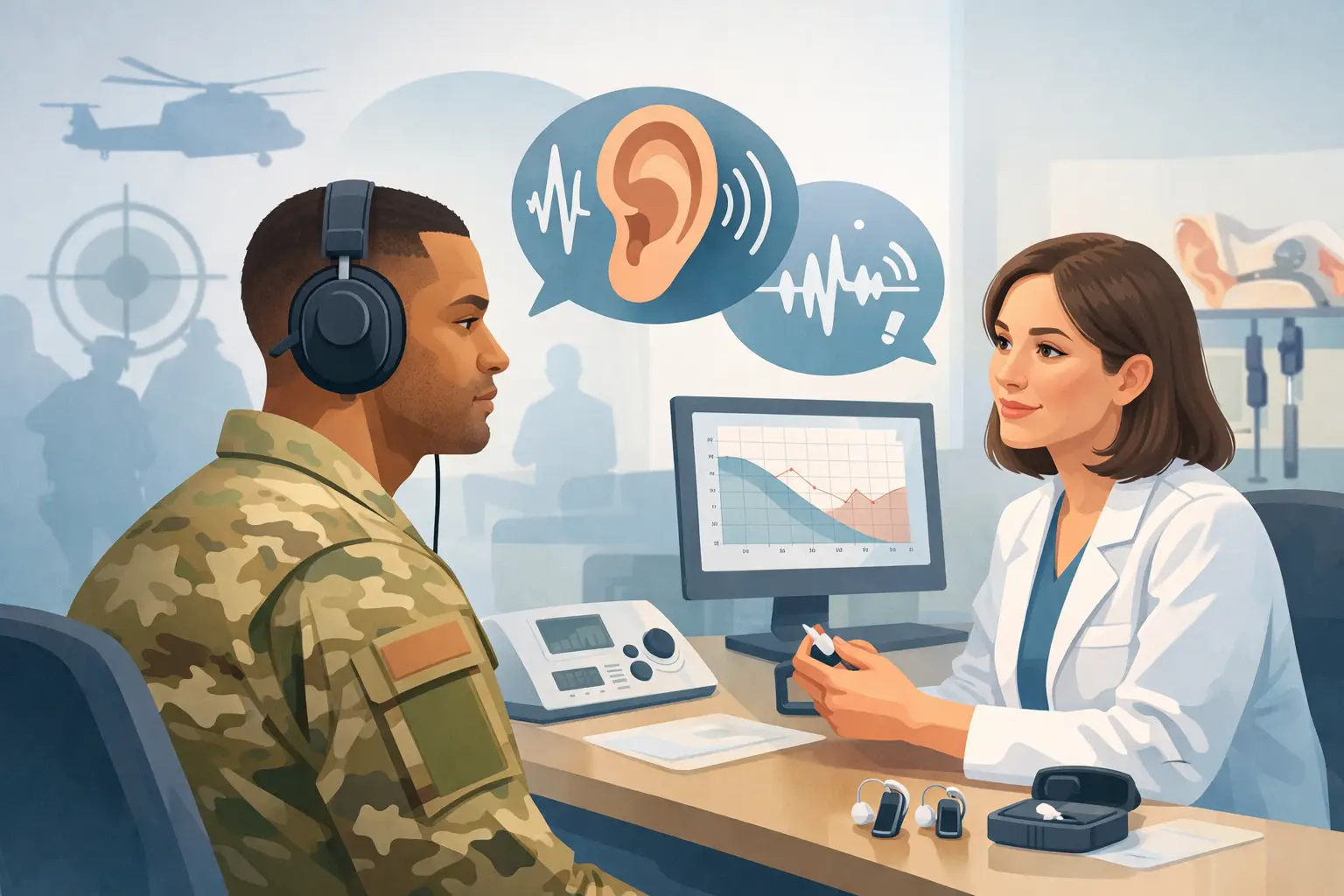
The crack of rifle fire, aircraft engines, armoured vehicles and repeated training exercises can leave a lasting mark long after service ends. Military induced hearing loss is not always obvious at first. Many people notice that conversations in restaurants become tiring, speech sounds unclear, or a persistent ringing follows them into quiet rooms at night.
For serving personnel, veterans and families, these changes can affect work, relationships, sleep and confidence. Expert assessment can establish what is happening, rule out treatable ear conditions and provide a clear plan for protecting and improving day-to-day hearing.
Why military induced hearing loss happens
Noise-induced hearing loss occurs when intense sound, or repeated exposure to sound over time, damages the delicate sensory cells within the cochlea of the inner ear. These cells convert sound vibrations into electrical signals for the brain. Once damaged, they do not regenerate.
Military environments can involve both sustained noise and sudden impulse noise. Weapons fire, explosions, helicopters, aircraft, generators, naval machinery and vehicle engines all present different risks. A single blast may cause immediate injury, while years of regular exposure can produce gradual damage that is easier to dismiss.
Hearing protection makes a significant difference, but it cannot remove every risk. Protection may not have been available, properly fitted or practical during every task, particularly in earlier periods of service. The overall effect depends on the sound level, proximity, duration, number of exposures and individual susceptibility.
Symptoms are often more than reduced volume
The most familiar sign is difficulty hearing quieter sounds or asking people to repeat themselves. Yet military-related hearing damage commonly affects the ability to understand speech in background noise before a person feels they have a clear hearing loss. A busy pub, family gathering or meeting can become exhausting because the brain is working harder to separate speech from competing sound.
Tinnitus is also common. It may be heard as ringing, whistling, hissing, buzzing or a high-pitched tone in one or both ears. For some people it is intermittent and manageable; for others it interferes with concentration, relaxation and sleep. The distress associated with tinnitus is real, but it can be reduced with informed assessment and personalised therapy.
Some people develop hyperacusis, where everyday sound feels uncomfortably loud, sharp or overwhelming. This can occur alongside tinnitus and may lead to avoiding social settings, public transport or family activities. Avoidance can narrow life considerably, so the right approach is not simply to wear earplugs at all times. It is to understand the sound tolerance problem and manage it with specialist guidance.
Other symptoms require prompt medical attention. Sudden hearing loss, a rapidly worsening change, severe dizziness, ear pain, discharge, or hearing loss affecting one ear more than the other should be assessed urgently. These symptoms are not always caused by noise exposure and need careful investigation.
What a specialist hearing assessment should establish
A good hearing test is not just a graph and a recommendation. It should connect your results to the situations where you struggle and consider the full history of your ears, health and noise exposure.
A qualified audiologist will usually begin by discussing your service history, including the types of noise encountered, the period of exposure, hearing protection used and when symptoms began. It can be useful to bring previous hearing records if you have them, although a current assessment remains valuable without historic documents.
The appointment should also include an examination of the ear canal and eardrum. Earwax, middle-ear pressure changes and infection can all affect hearing and may contribute to a blocked or muffled sensation. These conditions are different from inner-ear noise damage and may be treatable.
Pure-tone testing measures the quietest sounds you can detect across a range of frequencies. Speech testing examines how clearly you hear words, often providing a better reflection of real-world communication difficulties. Where tinnitus or sound sensitivity is present, an assessment should explore its impact on sleep, concentration, mood and daily activities rather than focusing only on the sound itself.
Noise-related loss often affects higher frequencies first, which can make consonants such as s, f, t and k harder to hear. This is why someone may say, “I can hear people talking, but I cannot make out what they are saying.” However, hearing patterns vary. An expert assessment avoids assumptions and identifies whether onward medical referral is appropriate.
Treatment and rehabilitation after noise exposure
There is currently no treatment that restores damaged inner-ear sensory cells. That does not mean that nothing can be done. Modern hearing rehabilitation can make a meaningful difference to communication, listening effort and quality of life.
When hearing aids are clinically appropriate, they can amplify speech carefully while managing louder sounds comfortably. Premium devices can also use directional microphones and noise-management settings to support listening in restaurants, meetings and group conversations. The right choice depends on your hearing profile, dexterity, lifestyle, mobile phone use and the environments that matter most to you. A device alone is not the whole solution: accurate fitting, verification and follow-up support are essential.
For tinnitus, the focus is typically on reducing its intrusiveness rather than promising a quick cure. Education, sound enrichment, sleep strategies and structured tinnitus therapy can help the brain react less strongly to the sound. If anxiety, low mood or insomnia are significant, a clinician may recommend coordinated support through your GP or an appropriate mental health professional.
Hyperacusis also needs an individual plan. In some cases, sound exposure is built up gradually and carefully, helping the auditory system become less reactive. Overprotecting the ears in ordinary safe environments can sometimes increase sound sensitivity, while inadequate protection around genuinely loud noise risks further damage. This balance is one reason specialist advice matters.
Protecting the hearing you have now
Past exposure cannot be changed, but future exposure can be reduced. If you still shoot, work in noisy settings, attend motorsport events or use power tools, choose hearing protection suited to that activity. Custom-moulded earplugs can provide a secure, comfortable fit and may be designed for shooting, music or occupational use. The best option depends on the noise level and whether you need communication or situational awareness.
A few practical habits help protect hearing without withdrawing from life:
- Use correctly fitted hearing protection for shooting, machinery, loud live music and other high-noise activities.
- Step away from speakers, engines and other direct noise sources where possible, and take quiet breaks during prolonged exposure.
- Keep personal listening devices at a moderate level, especially when listening for extended periods.
- Arrange a hearing review if tinnitus, muffled hearing or speech-in-noise difficulty changes.
Do not try to clean deep earwax with cotton buds or improvised tools. They can push wax further into the canal and injure delicate skin or the eardrum. If wax is contributing to symptoms, it should be assessed and removed using an appropriate clinical method.
When it is time to seek help
Many former service personnel adapt gradually to hearing changes and do not seek advice until a partner, colleague or child points out how often they need repetition. Earlier assessment can reduce that strain. It also creates a useful baseline, so future changes can be identified more confidently.
At Tragus-The Ear Specialists, qualified audiologists can provide a detailed hearing assessment and discuss support for hearing loss, tinnitus and sound sensitivity. The aim is not simply to make sounds louder. It is to help you follow conversation with less effort, sleep more comfortably and feel more at ease in the places that matter to you.
You do not need to wait until hearing difficulty becomes isolating. If military noise exposure is affecting your everyday life, a thorough assessment is a practical first step towards clearer communication and better ear health.