
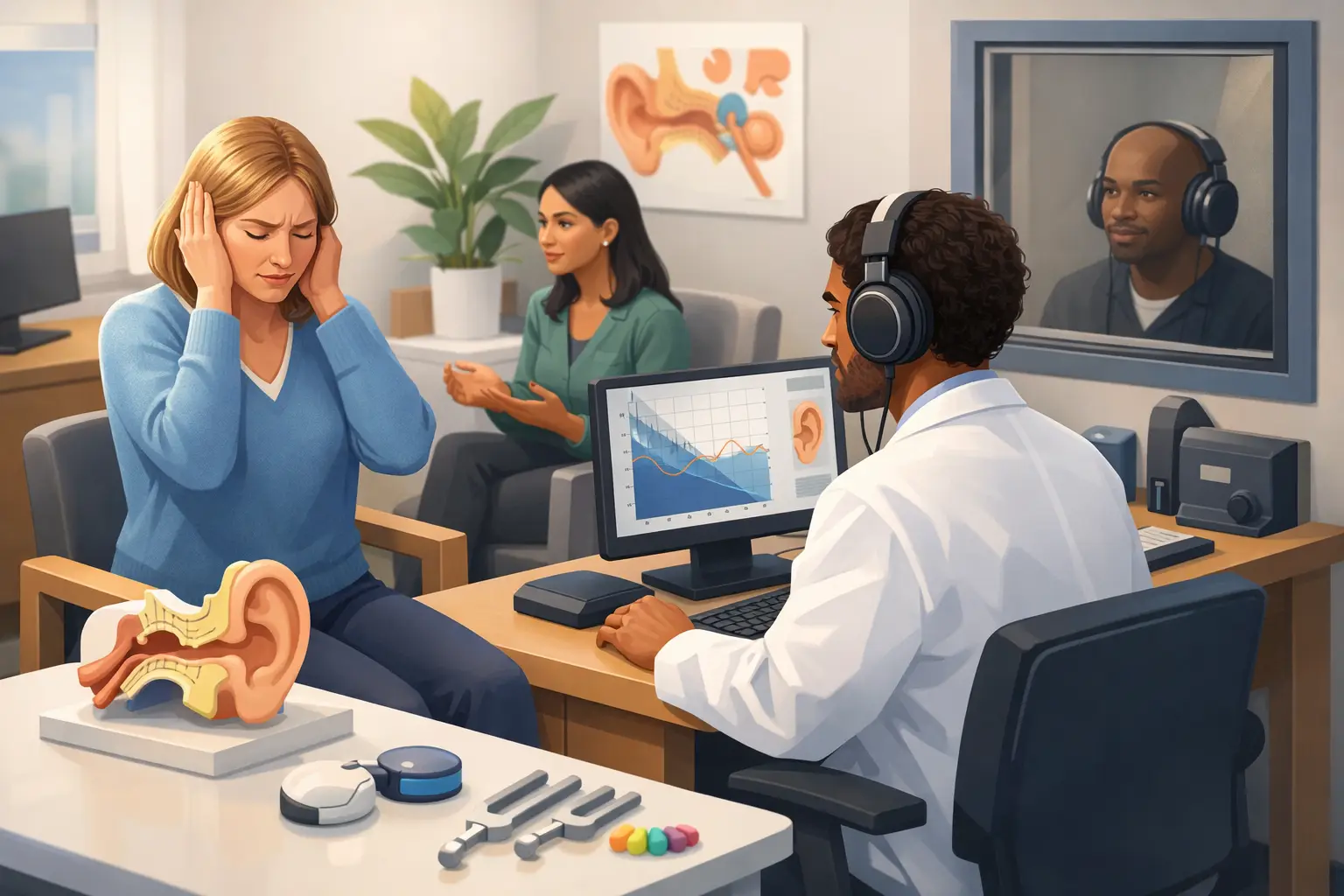
A hand dryer in a public loo, plates clattering in a café, a child’s sudden shout across the room – when everyday sounds feel sharp, overwhelming or even painful, life can shrink quickly. If you are searching for hyperacusis therapy UK patients can access with confidence, the first thing to know is that sound sensitivity is real, clinically recognised, and treatable with the right specialist support.
What hyperacusis actually feels like
Hyperacusis is not simply disliking loud noise. It is a reduced tolerance to ordinary environmental sound. For some people, certain sounds feel unbearably intrusive. For others, they trigger pain, distress, panic or exhaustion. The impact is often wider than patients expect. Work becomes harder, family life feels noisier than it used to, travel is stressful, and social situations start to feel like something to manage rather than enjoy.
Many people with hyperacusis also have tinnitus, but not always. Some have hearing loss as well, while others have hearing that appears normal on a routine test. That is one reason a specialist assessment matters. Hyperacusis is not a one-size-fits-all condition, and treatment should not be either.
Why expert hyperacusis therapy in the UK matters
A common mistake is to assume the answer is simply to avoid noise at all costs. In the short term, that can feel sensible. If sound is causing discomfort, reducing exposure seems protective. The difficulty is that overprotection can sometimes make the auditory system even more sensitive over time.
This is where expert hyperacusis therapy in the UK differs from generic advice. A qualified audiologist or hearing specialist will look at the full picture – your symptoms, triggers, hearing levels, tinnitus history, sound tolerance, medical background and day-to-day functioning. The goal is not to push you into noisy environments before you are ready. It is to build tolerance carefully, safely and in a way that respects your symptoms.
At a specialist ear clinic, assessment is usually more detailed than a standard hearing check. That may include discussing when the problem began, whether it followed illness, stress, noise exposure, ear problems or changes in hearing, and how it affects work, sleep and mental wellbeing. Hyperacusis can be influenced by both auditory and emotional factors, so treatment often works best when both are considered.
What causes hyperacusis?
There is not always a single clear cause. Some patients develop hyperacusis after a loud sound exposure or acoustic shock. Others notice it alongside tinnitus, migraine, jaw problems, vestibular conditions, anxiety, concussion or periods of significant stress. It can also appear after ear infections or without an obvious trigger.
That uncertainty can be frustrating, but it does not mean treatment is pointless. In clinic, what matters most is identifying the pattern of your symptoms and the factors that may be maintaining them. Good therapy is not dependent on finding a perfect explanation for every case.
What does hyperacusis therapy involve?
The most effective approach is usually personalised rehabilitation rather than a single treatment session. Depending on the patient, hyperacusis therapy may include education, sound therapy, counselling-based support and practical strategies for daily life.
Specialist assessment and diagnosis
Treatment starts with clarity. Before discussing therapy, an audiologist needs to establish whether hyperacusis is the main issue, whether tinnitus or hearing loss is also involved, and whether there are signs that warrant onward medical review. This matters because pain from sound can sometimes overlap with other ear or neurological concerns.
A specialist assessment also helps define severity. Some patients are mainly distressed by busy environments. Others are struggling with normal household noise. The treatment plan should reflect that difference.
Sound therapy
Sound therapy is often part of hyperacusis management, but it is frequently misunderstood. It does not mean exposing someone to harsh noise or telling them to “get used to it”. It usually involves carefully controlled, consistent sound enrichment designed to reduce the auditory system’s overreaction.
This may use environmental sound, bedside sound enrichment, wearable devices in some cases, or a structured plan for increasing tolerance to everyday listening. The pace matters. Too little sound input may reinforce sensitivity, but too much too quickly can worsen symptoms. That balance is one of the main reasons specialist guidance is so valuable.
Counselling and education
Patients with hyperacusis are often caught in a cycle of anticipating sound, avoiding sound and then reacting more strongly when it occurs. Education helps break that loop. Understanding what the auditory system is doing can reduce fear, and reduced fear often lowers the intensity of the response.
This is not about dismissing symptoms as psychological. Hyperacusis is a genuine sensory problem. But the brain’s threat response can amplify it. Therapy often works best when patients understand both the ear and the nervous system components of sound sensitivity.
Hearing support when needed
If hearing loss is also present, management may include hearing rehabilitation. This can feel counterintuitive to patients who already find sound uncomfortable, but untreated hearing loss can sometimes contribute to poor sound processing and listening strain. In selected cases, carefully programmed hearing technology forms part of a broader plan.
Again, it depends on the individual. Someone with severe sound intolerance and normal hearing needs a different approach from someone with tinnitus, reduced hearing and moderate hyperacusis.
What about earplugs?
Earplugs have a role, but they are not the whole answer. In genuinely loud settings – concerts, power tools, shooting environments, heavy traffic exposure or certain workplaces – hearing protection is sensible. In ordinary day-to-day situations, wearing earplugs too often can sometimes increase sensitivity by reducing normal sound exposure.
This is where nuanced advice matters. Patients are often told either to wear protection all the time or never use it at all. Neither extreme is usually right. The better approach is selective, appropriate use based on your environment, symptoms and stage of treatment.
How long does hyperacusis therapy take?
Most patients want a simple timeline. The honest answer is that progress varies. Some people improve noticeably within weeks once they start a structured plan. Others need several months of guided rehabilitation, especially if symptoms are severe or have been present for a long time.
Hyperacusis therapy is rarely about an overnight fix. It is more often a process of reducing distress, building confidence around sound and improving tolerance in real-world settings. Progress may come in stages – managing the home environment better, tolerating travel again, returning to restaurants, feeling less anxious in shops, sleeping more comfortably.
Those changes matter. They are often the first signs that treatment is working.
When to seek hyperacusis therapy UK patients should not delay
If sound sensitivity is limiting your routine, affecting your work, causing pain, or making you withdraw from family and social life, it is worth arranging an expert assessment. The same applies if you are using hearing protection constantly, feeling panicked by normal noise, or noticing hyperacusis alongside tinnitus or hearing changes.
Children and teenagers with sound sensitivity also benefit from proper assessment. Sometimes the issue is auditory, sometimes behavioural, sometimes linked to another developmental or sensory factor. The right evaluation helps avoid guesswork.
For adults and families seeking private specialist care in Kent and South East London, a clinic with dedicated experience in tinnitus and hyperacusis can offer a more focused pathway than a general high-street hearing provider. Tragus-The Ear Specialists is one example of the kind of premium clinical setting where patients can access assessment and tailored rehabilitation from qualified audiology professionals.
Choosing the right clinic
When comparing providers, look beyond whether hyperacusis is merely mentioned on a services page. You want evidence of genuine specialist expertise, clear assessment pathways, qualified clinicians and a treatment model that goes further than basic reassurance.
It is reasonable to ask who will assess you, whether they manage both tinnitus and hyperacusis, whether hearing loss and paediatric needs can also be addressed where relevant, and how treatment is tailored over time. Hyperacusis can be complex. Patients generally do better when care is thorough, realistic and clinically led.
The best therapy does not promise miracles. It offers expert assessment, a credible plan and support that helps you rebuild your relationship with sound safely.
If ordinary noise has started to dictate where you go, how long you stay, or how comfortable you feel in your own home, do not put up with it quietly. With the right guidance, sound can become manageable again – and daily life can start to feel like your own.