
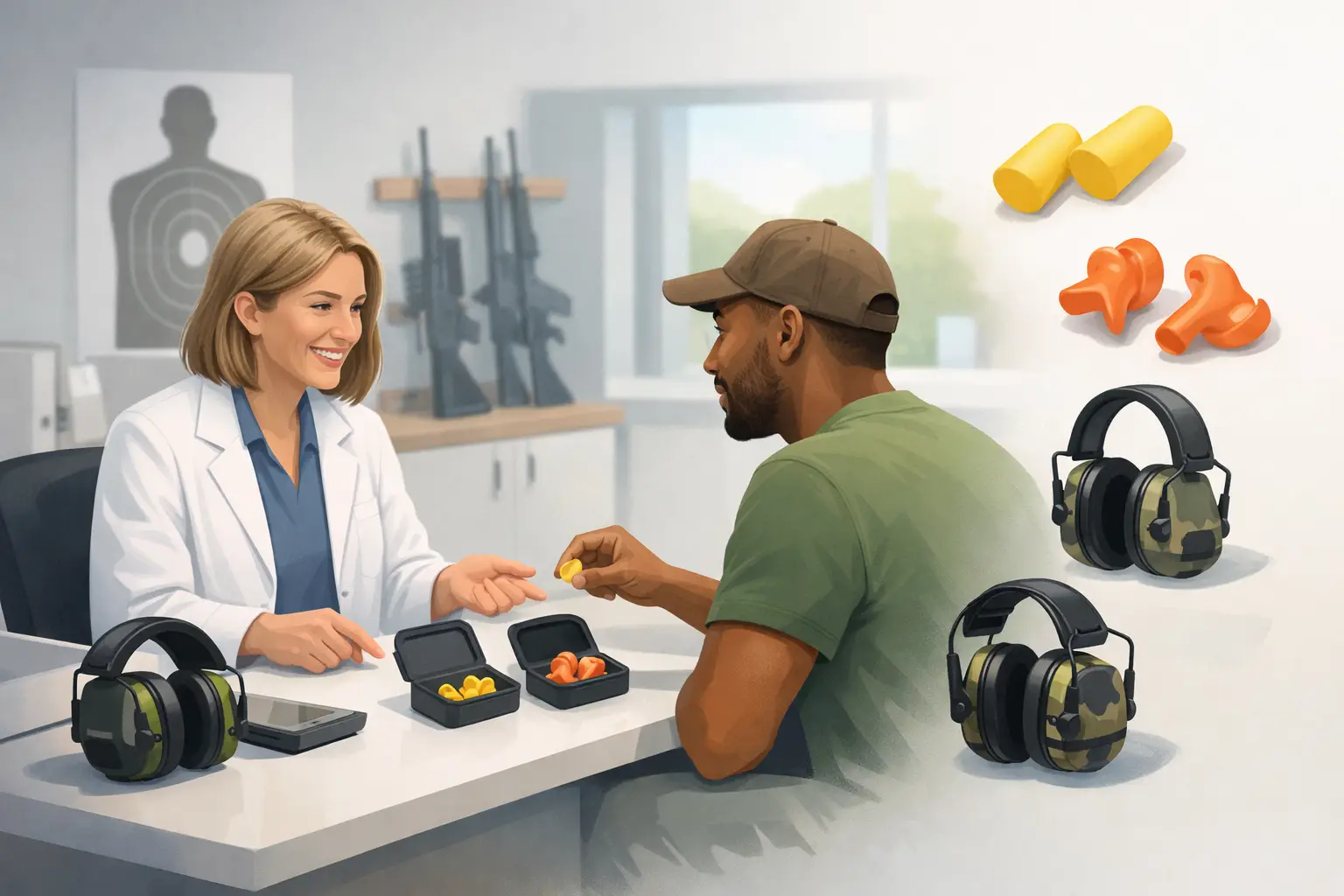
A shotgun can peak at well over safe noise levels in a fraction of a second, and hearing damage from shooting is often permanent long before it feels obvious. That is why choosing the best earplugs for shooting is not a matter of convenience – it is a matter of protecting hearing, reducing tinnitus risk, and making sure repeated exposure does not quietly build into a long-term problem.
For many shooters, the mistake is not wearing no protection at all. It is wearing the wrong protection. An earplug that is uncomfortable, poorly fitted or unsuitable for impulse noise may offer far less protection than expected. In clinic, we often see people who assumed they were covered because they had something in their ears, only to find that ringing, sound sensitivity or reduced hearing has started to creep in over time.
What makes the best earplugs for shooting?
The best option depends on what kind of shooting you do, how often you do it, whether you also need to hear conversation or instructions, and how well standard plugs fit your ears. There is no single product that is right for everyone, but there are clear features that matter.
First, they need to be designed to manage very high, sudden sound pressure. Shooting noise is not the same as steady machinery noise or loud music. It is impulsive, extremely fast and potentially damaging even with brief exposure. Earplugs for this setting must reduce peak noise effectively without creating pressure, pain or a poor seal.
Second, fit is critical. Even a well-rated earplug can underperform if it does not sit properly in the ear canal. This is especially common with one-size-fits-most foam or reusable plugs. Ear canals vary widely in shape, width and bend, so a product that works well for one person may sit loosely or uncomfortably in another.
Third, comfort matters more than people expect. If earplugs irritate the ear, feel blocked, or make communication impossible, many users start loosening them or removing them between shots. That inconsistency can expose hearing to repeated high-risk peaks.
Foam earplugs: affordable, but technique matters
Foam plugs are often the starting point because they are inexpensive and easy to buy. When inserted properly, some can provide good protection. The problem is that proper insertion takes more care than many people realise. The plug usually needs to be rolled down firmly, inserted deeply and held in place while it expands. If it is only resting at the entrance of the ear, protection can drop significantly.
For occasional shooting, foam plugs may be a practical option, particularly if you are using them alongside over-ear defenders. They are less ideal for people who shoot regularly, struggle with insertion, or have narrow or sensitive ear canals. Some users also find that foam plugs distort sound too much, making conversation or range instructions harder to follow.
Filtered shooting earplugs: more natural hearing, if chosen well
Filtered earplugs are designed to reduce harmful noise while allowing more useful sound through than basic solid plugs. This can be helpful if you need better awareness of speech, movement or instruction around you. Some shooting-specific filters are intended to reduce sharp impulse noise more intelligently than general-purpose plugs.
That said, quality varies. Not every filtered plug marketed for sport or outdoor use is appropriate for firearm noise. The level of attenuation, the way the filter behaves under impulse noise, and the consistency of the seal all matter. A poor fit can undermine even a well-designed filter.
For clay shooting, game shooting or club use where situational awareness is part of safe participation, filtered plugs can be an excellent middle ground. They are particularly useful for people who dislike the blocked sensation of foam but still want discreet hearing protection.
Custom earplugs for shooting: often the best long-term choice
For regular shooters, custom-moulded earplugs are often the strongest option. These are made from impressions of your ears, so the fit is tailored to your ear canals rather than guessed from a standard size. That usually means a more reliable seal, better comfort and greater consistency over time.
Custom shooting earplugs can also be fitted with appropriate acoustic filters, allowing protection against hazardous peaks while preserving more natural listening than many disposable alternatives. For people who spend long periods on a shoot, train regularly, or find generic plugs unstable, this can make a meaningful difference.
There is a higher upfront cost, but custom protection tends to be more durable and more likely to be worn properly. In clinical terms, that matters. The best hearing protection is not simply the product with the highest number on the packet. It is the one that delivers appropriate protection and that you will actually use correctly every time.
Should you choose earplugs or ear defenders?
This depends on the shooting environment and the level of exposure. Ear defenders can provide excellent protection and are often easier to position correctly than plugs. However, some shooters find them bulky, warm, or disruptive to cheek weld and gun mount. Earplugs are lighter and less intrusive, which is one reason they remain popular.
In higher-noise settings, or where there is prolonged exposure to repeated shots, double protection may be appropriate. That means wearing earplugs underneath ear defenders. This is especially worth considering for indoor ranges, instructors, beaters, or anyone exposed not only to their own shots but to multiple shooters nearby.
If you already have tinnitus, hyperacusis or known hearing loss, it is sensible to get personalised advice rather than relying on general assumptions. Overprotection is not usually the main concern in shooting settings, but the type of hearing protection should still match your hearing profile and environment.
Common mistakes when buying shooting earplugs
One of the most common errors is buying for convenience rather than fit. Another is assuming that a product labelled for noise protection will automatically be suitable for firearms. General travel plugs, swimming plugs and sleep plugs are different products with different purposes.
People also tend to underestimate wear and tear. Reusable plugs degrade, filters can become blocked, and custom plugs may need review if the fit changes or if they become damaged. Poor hygiene is another issue. Dirty earplugs can irritate the ear canal and increase the risk of inflammation, particularly if worn for extended periods.
A final point is earwax. If the ear canal is partially blocked, plugs may not seat properly and sound can behave unpredictably. If hearing feels muffled before protection even goes in, that is worth addressing rather than ignored.
When custom fitting adds genuine value
Not everyone needs a bespoke solution, but some people clearly benefit from one. If standard plugs keep slipping out, if one ear always feels less protected than the other, or if you shoot frequently enough that comfort affects compliance, custom fitting is usually worthwhile.
It also adds value if you have existing ear symptoms. Ringing after a day’s shooting, discomfort with loud sound, or a sense that hearing has changed should not be brushed aside as part of the sport. These are signs to take seriously. An expert assessment can identify whether there is early noise damage, wax obstruction, sound sensitivity or another issue affecting protection and hearing.
At a specialist ear clinic, the process is more than simply purchasing a product. It can include an assessment of your hearing, a discussion of your exposure pattern, and advice on the most appropriate type of protection for your needs. For patients across Kent and the surrounding area, this sort of tailored input often avoids the false economy of buying multiple unsuitable products first.
How to choose well without overcomplicating it
If you shoot once or twice a year, a high-quality disposable or reusable plug used correctly may be perfectly reasonable. If you shoot regularly, need clearer communication, or want a dependable fit, custom earplugs are usually the stronger investment. If your environment is especially loud, consider whether double protection is the safer route.
Whatever you choose, check four things: the plug is intended for high-level noise exposure, it fits securely, you can tolerate wearing it for the full session, and you are using it consistently before the first shot rather than after your ears start to notice the noise.
Hearing damage from shooting is often gradual, but its effects can be life-changing. Good protection should feel like part of your kit, not an afterthought. If there is any doubt about fit, comfort or whether your hearing has already been affected, a specialist assessment can give you clear answers and help you protect what cannot be replaced.