
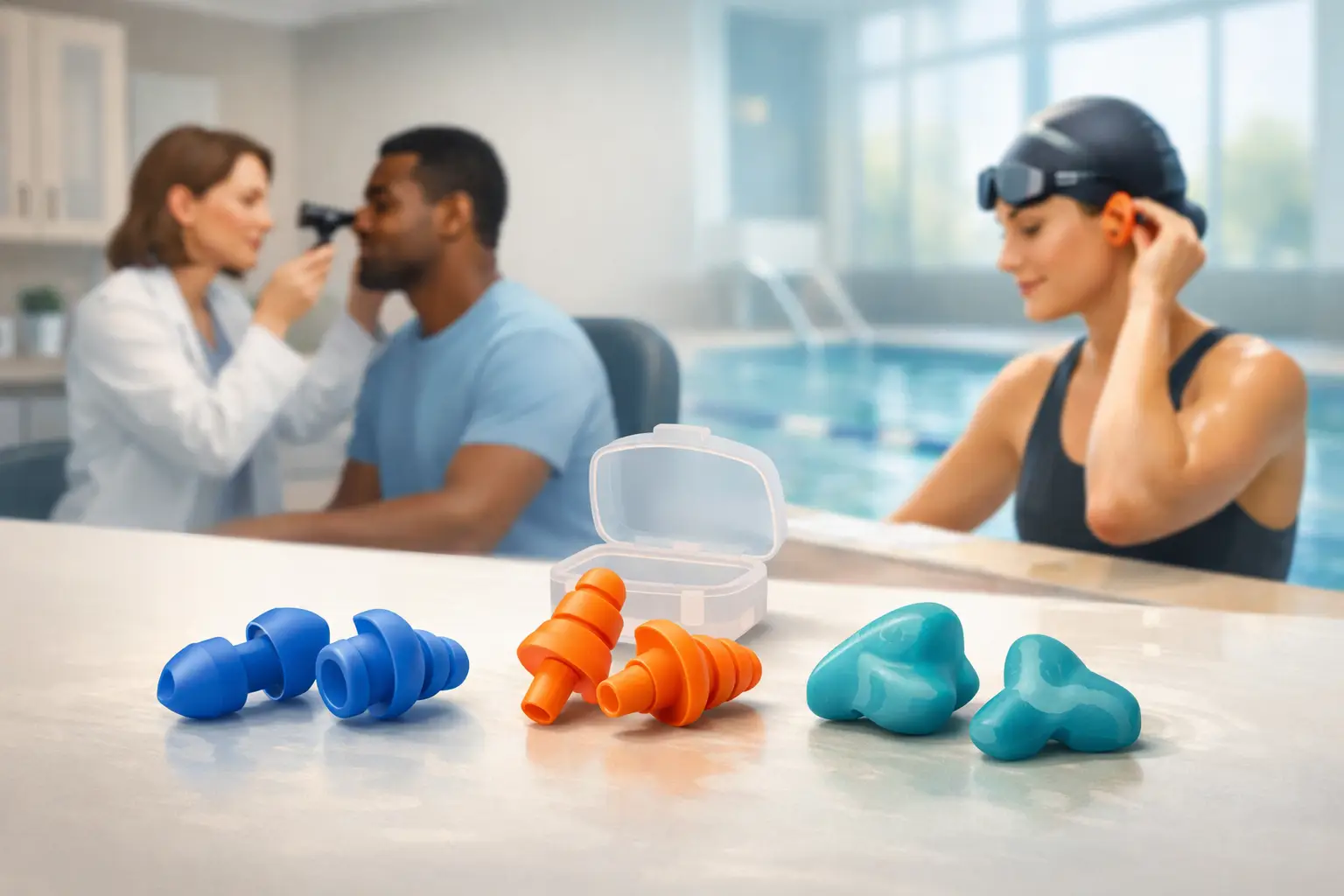
A swim should not end with a blocked, irritated ear or a flare-up of pain that lingers for days. For many people, swimming earplugs for adults are not a nice extra – they are the difference between enjoying the pool and dealing with repeated ear problems afterwards.
That said, not every swimmer needs them, and not every earplug is worth wearing. The right choice depends on why you want protection in the first place, how often you swim, and whether you have a history of ear infections, perforations, grommets, eczema in the ear canal, or previous ear surgery. This is where a more clinical view helps. Good ear protection should reduce water entry without creating pressure, discomfort, or a false sense of security.
Who should consider swimming earplugs for adults?
Some adults can swim regularly with no ear symptoms at all. Others find that even a short session in the pool leads to itching, fullness, reduced hearing, or pain later that day. If that sounds familiar, earplugs are worth considering.
They are particularly useful for adults who are prone to otitis externa, often called swimmer’s ear. This is an infection or inflammation of the outer ear canal, and repeated moisture is a common trigger. Earplugs may also help if you have a perforated eardrum, ventilation tubes, or a history of ear procedures where your clinician has advised keeping the ear dry.
There are also adults with narrow ear canals, skin conditions affecting the ear, or troublesome sensitivity to cold water. In these cases, plugs can improve comfort as much as they improve protection. The key point is that the reason matters. Someone swimming lengths twice a week with healthy ears has different needs from someone trying to prevent recurrent infections.
What swimming earplugs for adults are designed to do
The main job of a swimming earplug is simple: limit the amount of water entering the ear canal. In practice, the better products also need to stay in place during movement, feel secure without being painful, and create a reliable seal in a wet environment.
This is where many off-the-shelf options fall short. They may work reasonably well for light use, but ears are not uniform. A plug that seals perfectly for one person may fall out of another ear within minutes. If you have ever pushed a plug in repeatedly during a swim, that is usually a sign of poor fit rather than poor technique.
It is also worth being realistic about what earplugs cannot do. They do not treat infection, remove wax, or replace medical advice. They can reduce water exposure, but if you have ongoing ear pain, discharge, sudden hearing loss, or repeated infections, the first step should be an expert ear assessment rather than another online purchase.
Off-the-shelf versus custom-made plugs
For occasional swimmers, standard reusable silicone or mouldable plugs can be perfectly adequate. They are easy to buy, relatively inexpensive, and suitable if your ears are healthy and you simply want a little extra protection. Soft silicone designs are often more comfortable than firmer plastics, especially for longer swims.
The trade-off is consistency. Ready-made plugs are produced to generic sizes, so the seal can vary from ear to ear and from session to session. Some people also find they work in one ear but not the other. That does not mean the product is faulty – just that ear anatomy is individual.
Custom-made plugs sit in a different category. These are made from impressions of your ears, so the fit is tailored to the exact shape of your ear canal and outer ear. For adults who swim regularly, have recurring ear trouble, or need dependable water protection after clinical advice, custom plugs are often the better long-term option.
They are usually more comfortable, more stable, and easier to trust because they are designed for your ears rather than the average ear. The obvious downside is cost. A custom solution is an investment, so it makes the most sense when the problem is persistent or the need is ongoing.
How to tell if your current earplugs are not working
Poor fit is not always dramatic. Sometimes the signs are subtle. If your ears still feel wet after every swim, if a plug loosens when you turn your head, or if you find yourself adjusting it in the water, the seal may be unreliable.
Discomfort is another clue. A good swimming plug should feel secure, but not painful. Pressure, aching, or tenderness after use may mean the shape or size is wrong. In some cases, plugs that fit badly can irritate the skin of the ear canal and create a new problem while trying to prevent another.
There is also the question of confidence. If you are constantly wondering whether the plug is still in place, it becomes harder to relax in the water. Reliable ear protection should not require ongoing attention.
Choosing the right material and style
Material affects both comfort and function. Softer silicone tends to be well tolerated and can form a gentle seal, which is useful for swimming. Firmer plugs may feel more secure for some users, but they can be less forgiving in sensitive ears.
Mouldable putty-style plugs can work well around the outer opening of the ear, especially for people who dislike inserts sitting deeper in the canal. However, they need to be applied carefully and are not ideal for everyone. Insert-style reusable plugs may be easier to handle, but they can be hit and miss if the sizing is not right.
For adults with previous ear disease or complex ear history, the safest route is usually not guesswork. A qualified audiologist or ear specialist can advise whether swimming plugs are appropriate and whether a custom-made option would offer better protection.
When custom plugs are worth it
Custom plugs are not only for elite swimmers. They are often the sensible choice for adults who have a practical reason to avoid water exposure and who are tired of trial and error.
If you swim several times a week, the higher upfront cost may be offset by better comfort and more reliable use over time. If you have had repeated otitis externa, one avoided cycle of pain, drops, and cancelled swims can make the decision feel straightforward. If you have been advised to keep the ears dry after a perforation or surgery, the value lies less in convenience and more in peace of mind.
At a specialist clinic, custom plugs are made after examining the ears and taking impressions when appropriate. That matters. If there is wax blockage, inflammation, or another issue in the ear canal, it should be identified before impressions are taken. This is one reason medically led ear care is different from a retail-only purchase.
A few practical points swimmers often overlook
Even the best earplugs need proper care. They should be cleaned as advised, stored dry, and replaced if they crack, harden, or no longer fit properly. Custom plugs can last well, but they are not lifetime devices.
It also helps to remember that earplugs are one part of the picture. Drying the outer ear gently after swimming, avoiding cotton buds, and seeking treatment early if symptoms develop can reduce the chance of ongoing problems. If you are repeatedly getting water trapped behind wax, you may also need the wax addressed professionally rather than simply trying different plugs.
For adults in Dartford, Sevenoaks, Swanley and surrounding areas who are balancing regular swimming with recurrent ear symptoms, getting the ears assessed before choosing protection can save time and frustration. It is a more precise approach, especially if you have already tried standard options without success.
When to seek professional advice
If ear symptoms continue despite using swimming plugs, do not assume you just need a more expensive pair. Pain, discharge, persistent itching, muffled hearing, dizziness, or repeated infections all justify proper assessment. There may be wax impaction, inflammation, a skin condition, or a middle ear issue that earplugs alone will not solve.
The same applies if you are unsure whether swimming is advisable with your ear history. Adults with grommets, healed or unhealed perforations, previous mastoid surgery, or chronic ear disease may need individual advice. An expert assessment can clarify the level of risk and the most suitable protection.
At Tragus-The Ear Specialists, this kind of advice sits within a wider clinical view of ear health rather than a one-size-fits-all product sale. That tends to lead to better decisions, especially when comfort, hearing, and infection prevention are all part of the picture.
The best swimming earplugs are the ones that match your ears, your swim routine, and your medical history – because staying active is much easier when your ears are not paying the price for it.