
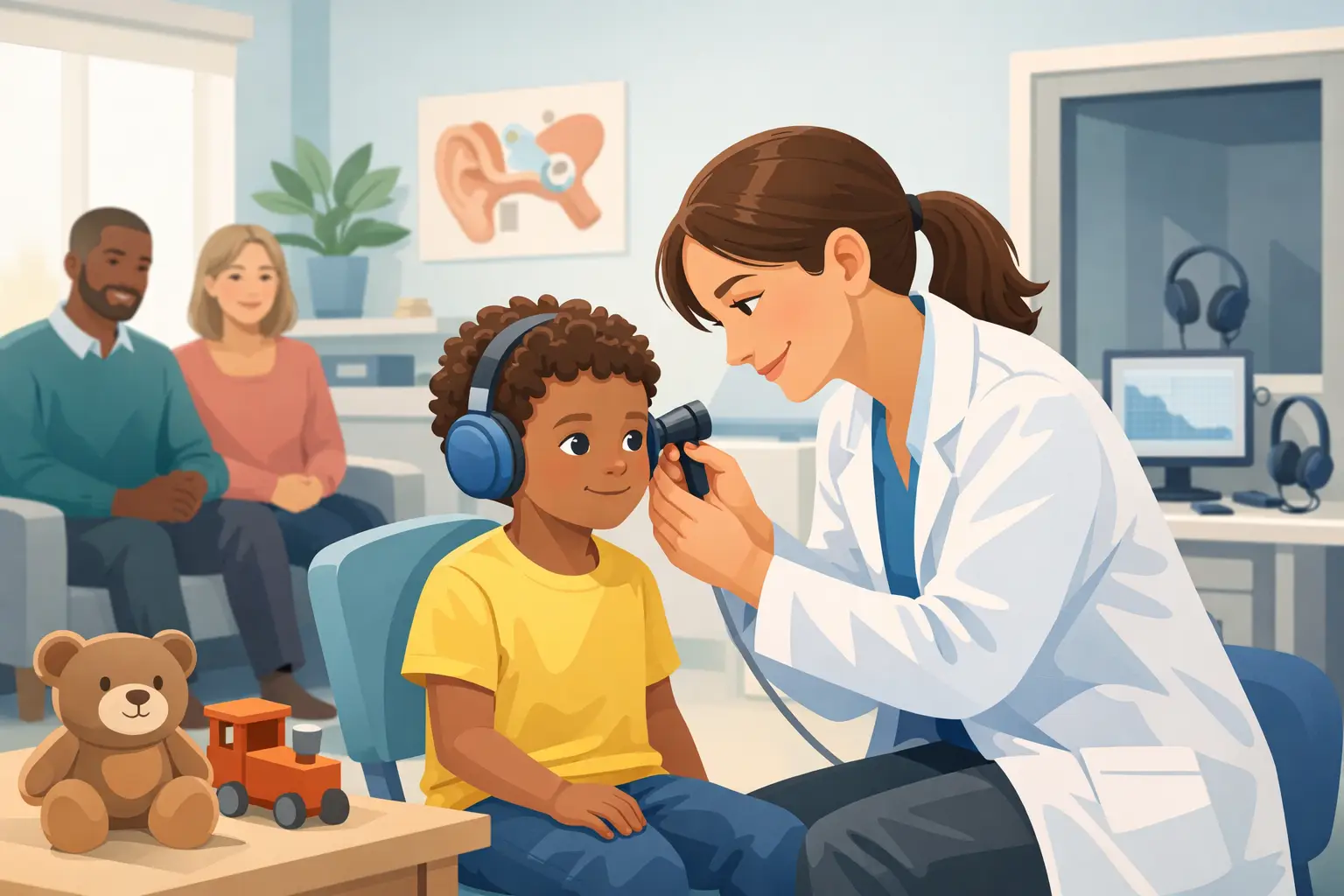
A child does not need to say, “I cannot hear,” for hearing to be affecting them. They may turn the television up, miss parts of classroom instructions, seem distracted in noisy places, or become frustrated when conversation moves too quickly. A paediatric audiologist Kent parents can turn to provides the expert assessment needed to understand whether hearing is contributing to these everyday difficulties.
Children’s hearing changes as they grow, and the signs are not always obvious. Prompt, careful assessment can offer reassurance where hearing is typical, or identify the right next step where support is needed. The aim is not simply to measure hearing levels. It is to understand how your child hears, communicates and manages in the environments that matter most.
When should you see a paediatric audiologist in Kent?
Parents often seek an assessment after a teacher, health visitor, GP or family member raises a concern. Equally, many parents book because they have noticed a small but persistent change at home. Trust that instinct. Hearing difficulties can be subtle, particularly when a child hears well in quiet but struggles with background noise, distance or fast speech.
It may be sensible to arrange an expert hearing assessment if your child regularly asks for repetition, appears not to respond when called, misunderstands spoken instructions, or watches faces closely to follow conversation. Speech and language development that seems delayed or unclear can also warrant assessment, although hearing is only one possible factor.
Frequent ear infections, a history of glue ear, earache, discharge or a feeling of blocked ears are further reasons to seek clinical advice. Temporary middle-ear problems can affect how sounds are heard and may fluctuate from week to week. A child can appear to hear perfectly on one day and struggle significantly on another.
School-age children may not mention hearing concerns directly. Instead, they may describe the classroom as noisy, find group work tiring, lose confidence with reading or spelling, or come home exhausted after concentrating intensely all day. These experiences do not automatically mean hearing loss, but they deserve proper investigation rather than guesswork.
What happens at a paediatric hearing assessment?
A high-quality children’s hearing appointment should feel calm, age-appropriate and unhurried. The testing approach depends on your child’s age, development and ability to engage, so there is no single test used for every child.
The appointment usually begins with a detailed discussion. Your audiologist will ask about your concerns, your child’s medical and hearing history, ear infections, speech and language development, school feedback and situations in which hearing seems easier or harder. This context is clinically valuable. A hearing result is more meaningful when considered alongside real-world listening.
Looking carefully at the ears
The audiologist will examine the outer ear and ear canal, where appropriate, to check for wax, inflammation, discharge or other visible concerns. Earwax is common and can sometimes affect hearing, but it should not be assumed to be the explanation without examination.
The middle ear may be assessed with tympanometry. This test provides information about eardrum movement and middle-ear pressure. It can help identify patterns consistent with fluid behind the eardrum or Eustachian tube dysfunction, both of which may influence hearing temporarily.
Measuring how your child responds to sound
For children able to participate in conventional testing, sounds are presented through headphones or earphones, and the child responds when they hear them. Younger children may take part in play-based testing, turning hearing assessment into a simple game such as placing a toy in a box when a sound is heard.
The best method is the one that produces reliable information without making the child anxious or fatigued. Some children need a little time to settle, and that is entirely normal. An experienced paediatric clinician adapts the pace, language and test approach to the child in front of them.
Where further investigation is needed, the audiologist will explain why and discuss appropriate onward referral. A private assessment can complement NHS care, particularly when a family wants timely specialist advice, a detailed explanation of findings or support in understanding what should happen next.
Hearing tests are not simply a pass or fail result
Families sometimes expect a straightforward answer: normal hearing or hearing loss. In practice, the picture can be more nuanced. A child may have hearing within expected limits but experience difficulty listening in noise. They may have a mild or fluctuating conductive issue linked to middle-ear fluid. They may also have one ear that hears differently from the other.
This is why a meaningful appointment goes beyond handing over a graph. Your audiologist should explain what the results mean in plain English, how confident they are in the test findings and whether those findings account for the concerns you have noticed.
If hearing is within normal limits, that reassurance matters. It may also help you and other professionals consider different reasons for communication, attention or learning difficulties. If a hearing concern is identified, early clarity supports better planning at home, in nursery or at school.
Why specialist paediatric experience matters
Children are not small adults, and paediatric audiology requires a different clinical approach. Reliable testing depends on building rapport, observing behaviour carefully and recognising when a result reflects hearing ability versus concentration, confidence or fatigue.
A qualified audiologist with children’s hearing experience can select appropriate tests, interpret them in context and communicate findings without causing unnecessary alarm. They should also recognise when ear, nose and throat review, medical assessment, speech and language support or educational input may be appropriate.
For parents in Dartford, Sevenoaks, Swanley, Orpington and surrounding Kent communities, access to a specialist clinic can mean receiving clear answers closer to home. At Tragus-The Ear Specialists, paediatric hearing care is delivered with the same clinical focus given to every ear and hearing concern: a thorough assessment, an honest explanation and advice tailored to the individual child.
Preparing your child for the appointment
You do not need to rehearse the tests in detail. In fact, a simple explanation is often best: “We are going to meet someone who will check how your ears hear sounds.” Let your child know there may be headphones, beeps or a game, and reassure them that nothing should hurt.
Bring any relevant information, including previous hearing test results, details of ear infections or medical appointments, and reports from nursery or school if these are available. It can also help to write down examples of what you have observed. Is your child struggling mainly in noise? Do they hear you better from one side? Has the change been sudden or gradual? Specific examples help guide the assessment.
Avoid presenting the appointment as a test your child can pass or fail. The purpose is to understand their hearing, not to judge their performance. A relaxed parent often helps a child feel relaxed too.
When to seek more urgent advice
A routine hearing assessment is appropriate for many concerns, but some symptoms need prompt medical attention. Seek urgent advice if your child has sudden hearing loss, severe ear pain, bleeding or discharge after an injury, marked dizziness, facial weakness, or appears seriously unwell alongside ear symptoms.
Persistent discharge, repeated infections or pain should also be assessed by an appropriate medical professional. Audiology can provide essential hearing information, but medical ear conditions may require GP, ENT or urgent care input.
If you have been wondering whether your child is hearing as clearly as they should, an expert assessment can replace uncertainty with an informed plan. Early action is not about expecting the worst. It is about giving your child every opportunity to listen, learn, communicate and enjoy the world around them with confidence.