
A drummer in a rehearsal room, a tradesperson using power tools, a commuter with headphones turned up to drown out the train – noise induced hearing loss rarely arrives with much warning. Many people notice the effects only when speech starts sounding muffled, tinnitus appears, or busy rooms become exhausting. By that point, the hearing system may already have been placed under strain for years.
Noise induced hearing loss happens when the delicate structures of the inner ear are damaged by sound exposure. Sometimes that damage follows one very loud event, such as an explosion or firearm discharge. More often, it develops gradually through repeated exposure to loud music, machinery, tools, traffic, or recreational noise. The common theme is intensity over time. The louder the sound, the less time it takes to cause harm.
What noise induced hearing loss actually does
Inside the cochlea are sensory hair cells that help convert sound into electrical signals for the brain. These cells are highly specialised and, once damaged, do not regenerate. That is why noise-related hearing damage is usually permanent.
This does not always mean a person feels profoundly deaf. In many cases, the early effect is more selective. High-frequency hearing may reduce first, making speech less crisp and consonants harder to catch. Someone may hear that another person is speaking, but miss key parts of the message. This is often most obvious in restaurants, family gatherings, workplaces and classrooms where background noise competes for attention.
Tinnitus commonly accompanies noise damage. A ringing, buzzing or hissing sound after a loud night out may settle by the next day, but recurrent episodes should not be ignored. For some people, tinnitus becomes persistent and intrusive, especially when the auditory system has been overstimulated over time.
Why some people miss the early signs
Gradual hearing loss is easy to underestimate because the brain adapts. People start filling in gaps from context, asking others to repeat themselves, increasing the television volume, or avoiding difficult listening environments without fully realising why. Friends and family often spot the pattern first.
There is also a widespread assumption that hearing loss is mainly age-related. Age can certainly play a role, but noise exposure can accelerate the process and make problems appear earlier than expected. A person in midlife may have more difficulty than their age alone would suggest because of years spent around amplified music, workshops, engines or industrial settings.
Common causes of noise induced hearing loss
Workplace exposure remains a significant cause. Construction, manufacturing, aviation, agriculture, emergency services and military settings all carry risk. Music professionals, sound engineers, DJs and nightclub staff are also vulnerable, even though the source is entertainment rather than machinery.
Outside work, personal listening habits matter. Headphones and earbuds are convenient, but high volume for long periods can be harmful, particularly when used daily. Leisure activities such as shooting, motorcycling, attending concerts and using DIY tools can also contribute.
There is no single lifestyle profile. We see noise damage in people with clearly noisy occupations, but also in those with seemingly ordinary routines who have simply accumulated years of loud exposure in smaller, repeated doses.
When is sound too loud?
There is no perfect rule that applies to every situation, because risk depends on volume, duration, distance from the source and the type of sound. A brief exposure to an extremely loud impulse noise can be damaging on its own. More moderate noise may still become harmful if it is repeated often enough.
A practical warning sign is this: if you need to raise your voice to be heard at close range, the environment may be loud enough to pose a risk over time. Ringing ears, sound sensitivity, dulled hearing after exposure and listening fatigue are also signs that the auditory system has been pushed too far.
Symptoms that deserve expert assessment
People often seek help only when hearing loss is obvious, but earlier assessment is far better. Warning signs include difficulty hearing speech in background noise, asking for repetition, turning up the volume more than others prefer, tinnitus, reduced tolerance of loud sound, and the sense that people are mumbling.
Children and teenagers can be affected too, especially with prolonged headphone use or repeated exposure to loud leisure environments. In younger patients, the signs may appear as inattentiveness, misunderstandings, delayed responses or school-related listening difficulties rather than a direct complaint about hearing.
How noise induced hearing loss is diagnosed
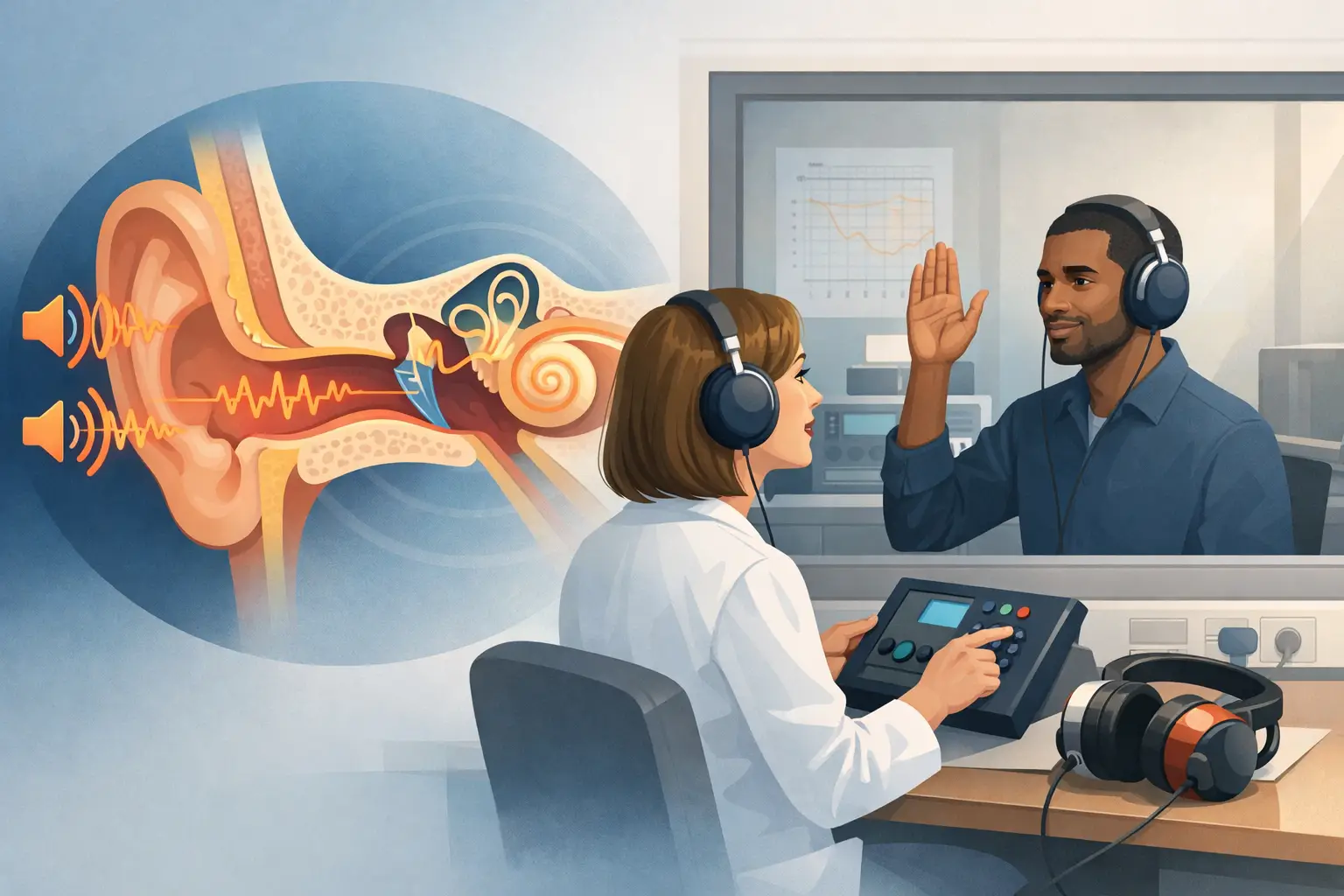
An expert assessment does more than confirm that hearing has changed. It helps establish the likely pattern, severity and possible cause. A full audiological evaluation usually includes a detailed history of symptoms, work and leisure noise exposure, otoscopy to inspect the ear canal and eardrum, and hearing tests tailored to the patient’s age and needs.
The audiogram often shows a characteristic pattern in noise-related cases, particularly in the higher frequencies, but interpretation still requires care. Not every high-frequency loss is caused by noise, and not every patient presents in a textbook way. Earwax, middle ear conditions, age-related change, infections, medication effects and other medical factors may need to be considered.
That is one reason specialist assessment matters. A premium ear clinic should not simply identify a problem and sell a device. It should provide a clinically grounded explanation of what is happening and what can be done next.
Can noise induced hearing loss be treated?
Permanent inner ear damage cannot usually be reversed. That is the difficult truth, and patients deserve clear advice about it. However, irreversible does not mean untreatable.
Management depends on the hearing profile, listening demands and associated symptoms. Hearing aids can make a substantial difference for many adults by improving access to speech and reducing listening effort. The right fitting is crucial. It is not just about amplification, but about careful programming, real-world comfort and support with adaptation.
If tinnitus is present, treatment may include tinnitus assessment and therapy rather than a one-size-fits-all recommendation to simply live with it. Some patients also experience hyperacusis or reduced sound tolerance after acoustic overexposure, which requires a different clinical approach again.
In cases of sudden hearing change following a loud event, urgent medical assessment is sensible. Timing can matter, particularly if the hearing drop is abrupt, one-sided or associated with pain, dizziness or pressure.
Prevention matters more than most people realise
The most effective treatment for noise induced hearing loss is prevention before damage becomes established. That means reducing exposure where possible and using proper hearing protection where reduction is not realistic.
Generic foam plugs can help in some settings, but they are not always the best long-term option. Musicians may need filtered earplugs that lower volume while preserving sound quality. Shooters need protection designed for impulse noise. Swimmers, children and patients with specific ear conditions may require something different altogether. Good protection must match the use case, fit properly and be worn consistently.
There is always a balance to strike. Overprotecting in ordinary sound environments can be unhelpful, especially for people with sound sensitivity. Underprotecting in genuinely hazardous settings carries obvious risk. Personalised advice is better than guesswork.
Who should book a hearing check?
Anyone with ongoing tinnitus, suspected hearing decline or regular exposure to loud noise should consider a proper assessment. That includes people who work in noisy settings, attend live music frequently, use headphones for long periods, or notice difficulty following conversation in groups.
It is also worth booking if family members are commenting on your hearing before you have fully recognised a problem yourself. Early diagnosis gives you more options, whether that means monitoring, hearing protection, rehabilitation or hearing aids. For families, a paediatric assessment is especially important when a child seems to hear inconsistently or struggles in noisy classrooms.
At Tragus-The Ear Specialists, that kind of assessment is approached as a clinical process, not a retail transaction. Patients need clear answers, an accurate diagnosis and a management plan that fits real life.
Hearing damage from noise can be gradual, frustrating and easy to dismiss until communication starts to suffer. If sounds are less clear than they used to be, or your ears are working harder than they should, do not wait in silence – an expert assessment can help you protect what hearing you have and make the most of it.