
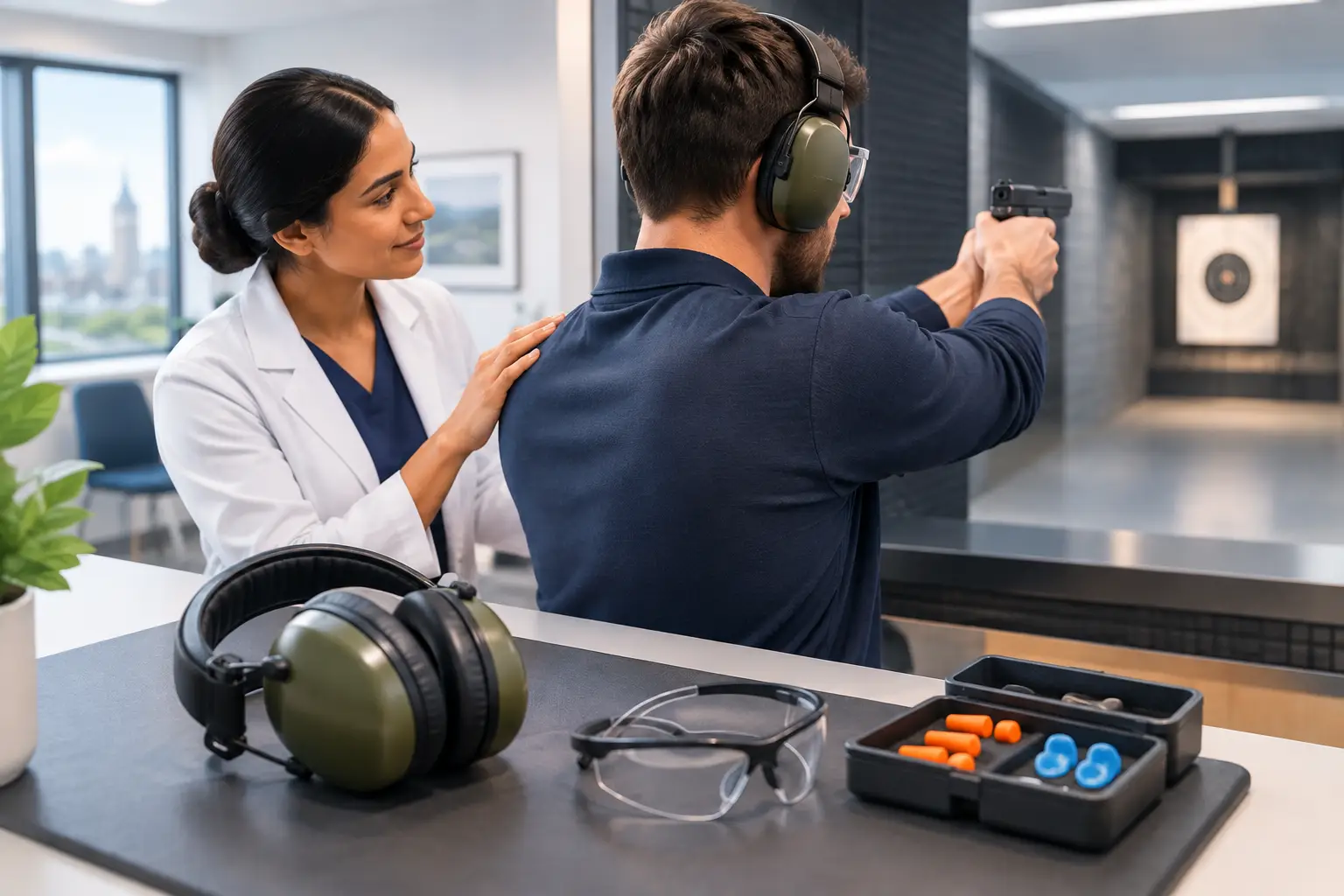
A single gunshot can create a sound pressure level high enough to damage the delicate sensory cells of the inner ear immediately. That damage is often permanent. Knowing how to protect hearing shooting is therefore not simply about comfort on the range or in the field. It is a practical safeguard against hearing loss, tinnitus and sound sensitivity that may affect work, conversations, sleep and quality of life.
Hearing protection should be treated as essential equipment every time a firearm is handled, whether you are clay shooting, target shooting, game shooting or attending a shooting lesson. The right protection depends on the firearm, environment and individual fit, but the principle remains the same: reduce noise exposure before the first shot is fired.
How to protect hearing when shooting
Firearm noise is an impulse sound. It arrives suddenly, reaches an extremely high peak and may last only milliseconds. This does not make it harmless. A shotgun or rifle can produce peak sound levels well above 140 decibels, while noise in an enclosed indoor range may be even more hazardous because sound reflects from hard surfaces.
The inner ear contains tiny hair cells that convert sound vibrations into electrical signals for the brain. Unlike many cells elsewhere in the body, these sensory cells do not reliably repair themselves. Excessive noise can injure them in one exposure or through repeated shooting without sufficient protection.
You may notice muffled hearing or ringing after a loud day. Some people assume this is normal and will settle without consequence. While symptoms may improve, temporary changes can still indicate stress or injury to the hearing system. Recurrent exposure increases the risk of permanent high-frequency hearing loss and tinnitus.
Use double hearing protection for higher-risk shooting
For many shooting situations, particularly indoor ranges, use of rifles, larger calibres or shooting close to other people, double protection is the most sensible approach. This means wearing correctly fitted earplugs underneath over-ear defenders.
Earplugs reduce sound entering the ear canal, while ear defenders provide a second physical barrier around the ear. The combined effect is particularly valuable against the sharp peak noise produced by firearms. It also offers more dependable protection if one layer is slightly disturbed by glasses, a hat, cheek weld or movement.
Double protection does not mean any two products will perform perfectly together. Bulky plugs may prevent earmuffs from sealing properly, and spectacles with thick arms can create a small gap in the cushion of a muff. Choose low-profile plugs and check that the defenders sit evenly against the side of the head. A seal that feels slightly uncomfortable is usually preferable to one that leaves gaps.
For quieter outdoor shooting, some experienced shooters may use a high-quality single solution. However, the appropriate choice depends on the firearm, number of shots, proximity to other shooters and your hearing history. If you have tinnitus, hyperacusis or established hearing loss, seek advice from a qualified audiologist rather than relying on trial and error.
Choose ear protection designed for shooting
The best hearing protection is the protection you will wear correctly for every shot. Disposable foam plugs, reusable plugs, passive earmuffs, electronic earmuffs and custom-moulded protection all have a place, but they serve different needs.
Foam and reusable earplugs
Foam earplugs can provide useful attenuation when inserted correctly. The common problem is fit. A plug that sits only at the entrance of the ear canal provides far less protection than its packaging suggests. Clean hands are essential, and the plug should be compressed, inserted deeply but comfortably, then held in place while it expands.
Reusable plugs are convenient and may be easier to insert consistently. They can be a sensible backup in a shooting bag, but their performance still depends on the size and shape of your ear canals. Off-the-shelf plugs are not one-size-fits-all.
Passive and electronic earmuffs
Passive ear defenders reduce environmental sound continuously. They are straightforward, durable and effective when they have a good seal. Low-profile models can make it easier to achieve a stable gun mount, which matters when shooting a shotgun or rifle.
Electronic earmuffs use microphones to allow conversation and lower-level environmental sounds through, then limit amplification when a gunshot occurs. They can help you hear range commands, instructors and approaching activity while still providing protection from impulse noise. They are not a substitute for attenuation: choose electronic defenders with suitable passive protection, maintain the batteries and test them before use.
Custom-moulded shooting earplugs
Custom earplugs are made from impressions of your ears, giving a close and repeatable fit. For regular shooters, they can be more comfortable over long sessions than generic plugs and are less likely to work loose with movement. Specialist options may include filters or electronic systems designed to manage sudden impulse noise while retaining useful situational awareness.
Custom protection is an investment in long-term ear health, but it still needs to be selected for the activity. A solution suitable for music may not be the best option for firing a rifle indoors. An expert assessment can help identify the appropriate level and style of protection for how and where you shoot.
Fit matters as much as the stated rating
Hearing protectors are often sold with a Single Number Rating, or SNR. This provides a useful comparison, but it is not a guarantee that you will receive that exact reduction in real use. Hair, earrings, glasses, hat brims, jaw movement and an incorrect plug size can all reduce protection.
Before shooting, take a moment to check your equipment. Earmuff cushions should be clean, flexible and free from splits. They should fully surround the ear without interference. Earplugs should feel secure but not painful. If you can hear speech unusually clearly through passive plugs in a noisy environment, or if a plug repeatedly shifts, reassess the fit.
Do not remove your protection between stands, during a ceasefire or while waiting nearby. Other shooters may fire unexpectedly, and sound carries across a range or shooting ground. Put protection on before entering the active area and keep it in place until you are well clear.
Reduce the noise risk around the shot
Good ear protection is the main control, but safer habits add another layer of protection. Avoid standing beside muzzle brakes or close to other shooters where possible. Muzzle brakes can direct a substantial amount of sound and pressure sideways towards bystanders. If you are instructing, spotting or supervising, you need the same standard of hearing protection as the person firing.
Indoor environments deserve extra caution. Hard walls and covered firing points reflect noise, increasing the total sound energy reaching the ear. Double protection is strongly advisable in these settings. When attending a new range, ask about their hearing protection requirements and bring your own reliable equipment rather than assuming suitable protection will be available.
Limit unnecessary exposure as well. A full day of shooting, repeated drills or time spent near multiple firing points adds up. Take breaks in a quieter area, particularly if you notice ringing, fullness, discomfort or difficulty following conversation. Breaks are not a replacement for protection, but they can reduce the overall burden on the auditory system.
Children and shooting: take extra care
Children’s hearing protection deserves particular attention. Their ear canals and head sizes vary, so adult products may not seal correctly. Choose child-sized earmuffs that fit securely without excessive pressure, and check the seal each time they are worn. For louder settings, combining suitable plugs with child-sized defenders may be appropriate, provided the child can tolerate both safely and consistently.
Children should be taught that hearing protection stays on throughout the active shooting area, not only when they expect to fire. If a child complains of pain, ringing, muffled hearing or distress from sound afterwards, stop exposure and arrange an audiological assessment. These symptoms should not be dismissed as part of the experience.
When to arrange a hearing assessment
Book an expert hearing assessment if you experience ringing after shooting that lasts beyond a short period, recurring muffled hearing, sensitivity to everyday sounds, difficulty understanding speech in background noise or a noticeable change in one ear. Sudden hearing loss, severe dizziness, ear pain or a sudden one-sided change in hearing needs urgent medical assessment.
A qualified audiologist can test hearing across relevant frequencies, discuss tinnitus or hyperacusis symptoms and advise on suitable custom hearing protection. At Tragus-The Ear Specialists, this can form part of a personalised plan that considers both your shooting activity and your wider ear health.
Your hearing should not be the price of a day at the range. Choose protection that fits, wear it before exposure begins and take new symptoms seriously. Those simple decisions give you the best chance of continuing to enjoy shooting while preserving the sounds that matter beyond it.