
A child may not say, “I cannot hear properly.” Instead, you might notice repeated requests for things to be said again, difficulty following instructions, a raised television volume or growing frustration in noisy places. Knowing how to book paediatric audiology gives you a clear route to expert assessment, without waiting for concerns to affect communication, learning or confidence.
A specialist hearing assessment is not just for children with obvious hearing loss. It can also help when speech and language development seems delayed, recurrent ear infections are affecting day-to-day hearing, school has raised concerns, or a child struggles to understand speech in background noise. The aim is to understand what your child is hearing, identify any factors affecting it and advise on the most appropriate next step.
When should you arrange a paediatric hearing assessment?
Trust your observations. Parents and carers are often the first to spot a change, particularly where a child has begun responding differently at home, nursery or school. Hearing can fluctuate with colds, middle-ear fluid and ear infections, so a child may seem to hear well on some days and struggle on others.
It is sensible to book an assessment if your child regularly mishears words, watches faces closely to follow conversation, speaks unusually loudly, complains that sounds are muffled, or seems tired after school because listening takes so much effort. Younger children may not react consistently to sounds, may startle less than expected or may have delayed speech and language milestones. For older children, difficulties with phonics, concentration and hearing teachers in a busy classroom can also be relevant.
A paediatric audiologist will consider the whole picture. Hearing is only one possible reason for communication or learning difficulties, but it should be assessed properly rather than assumed. A clear result can provide reassurance; where further support is needed, it helps families make informed decisions promptly.
If your child has sudden hearing loss, severe ear pain, bleeding or discharge from the ear, significant dizziness, a high temperature with concerning symptoms, or appears very unwell, seek urgent medical advice rather than waiting for a routine appointment.
How to book paediatric audiology privately
For many families, a private paediatric audiology appointment can be booked directly. You do not necessarily need a GP referral, although a referral letter, previous hearing-test results or relevant hospital correspondence can be useful where these are available.
When contacting the clinic, explain your child’s age, the concerns you have noticed and whether there is a history of ear infections, ear surgery, known hearing loss or developmental needs. This helps the team allow suitable time and choose an assessment approach that is appropriate for your child. Testing a toddler is very different from testing a teenager, and an experienced clinic will adapt the appointment accordingly.
You should also mention if your child has sensory sensitivities, anxiety around healthcare settings, communication needs or uses speech and language support. These details are not a barrier to assessment. They help the audiologist create a calmer, more effective experience and avoid asking your child to do more than is realistic in one visit.
At Tragus-The Ear Specialists, parents can arrange a specialist paediatric hearing assessment directly, with qualified clinicians who understand that children need a different pace, approach and level of reassurance from adult patients.
Choose the right type of appointment
A hearing assessment is usually the correct starting point when the question is whether your child can hear clearly. However, the right booking may depend on the concern.
If your child has a blocked-ear sensation, repeated wax build-up or discomfort, tell the clinic before booking. Earwax can prevent an accurate hearing test, but it is not always appropriate to remove wax immediately in children. The clinician may need to examine the ear first and advise whether wax management is needed.
If your child already has hearing aids or has been assessed by an NHS audiology or ear, nose and throat service, ask whether you need a review appointment, hearing-aid support or a full reassessment. Bringing previous information prevents unnecessary repetition and gives the clinician a useful comparison point.
For babies and very young children, testing methods are carefully selected according to developmental stage. If a clinic cannot offer age-appropriate paediatric testing, it is better to choose a service that can, rather than relying on an adult-style test your child cannot reliably complete.
What to prepare before you book
You do not need to have all the answers before making contact. A short record of what you have seen can make the conversation clearer. Think about when the problem began, whether it is constant or comes and goes, and the situations where your child finds hearing most difficult.
Useful details include recent colds or ear infections, any family history of hearing loss, medicines your child takes, previous grommets or ear surgery, and feedback from a teacher, nursery practitioner or speech and language therapist. If school has reported concerns, ask for specific examples. “Struggles in group work” is helpful, but “often misses instructions when the class is noisy” gives a more precise picture.
Bring any previous audiograms, GP letters, ENT reports and hearing-aid records to the appointment. If you do not have these documents, do not delay booking. The assessment can still begin with a detailed history and examination.
It is also worth choosing a time when your child is likely to be alert and settled. A very tired, hungry or unwell child may find any clinical appointment harder. For younger children, a familiar toy, comfort item or drink can make the visit feel less daunting.
What happens at a paediatric audiology appointment?
The appointment begins with a conversation about your concerns, your child’s medical history and how hearing may be affecting everyday life. The audiologist will then look in the ears, where appropriate, to check for visible wax, infection signs or other issues that could influence testing.
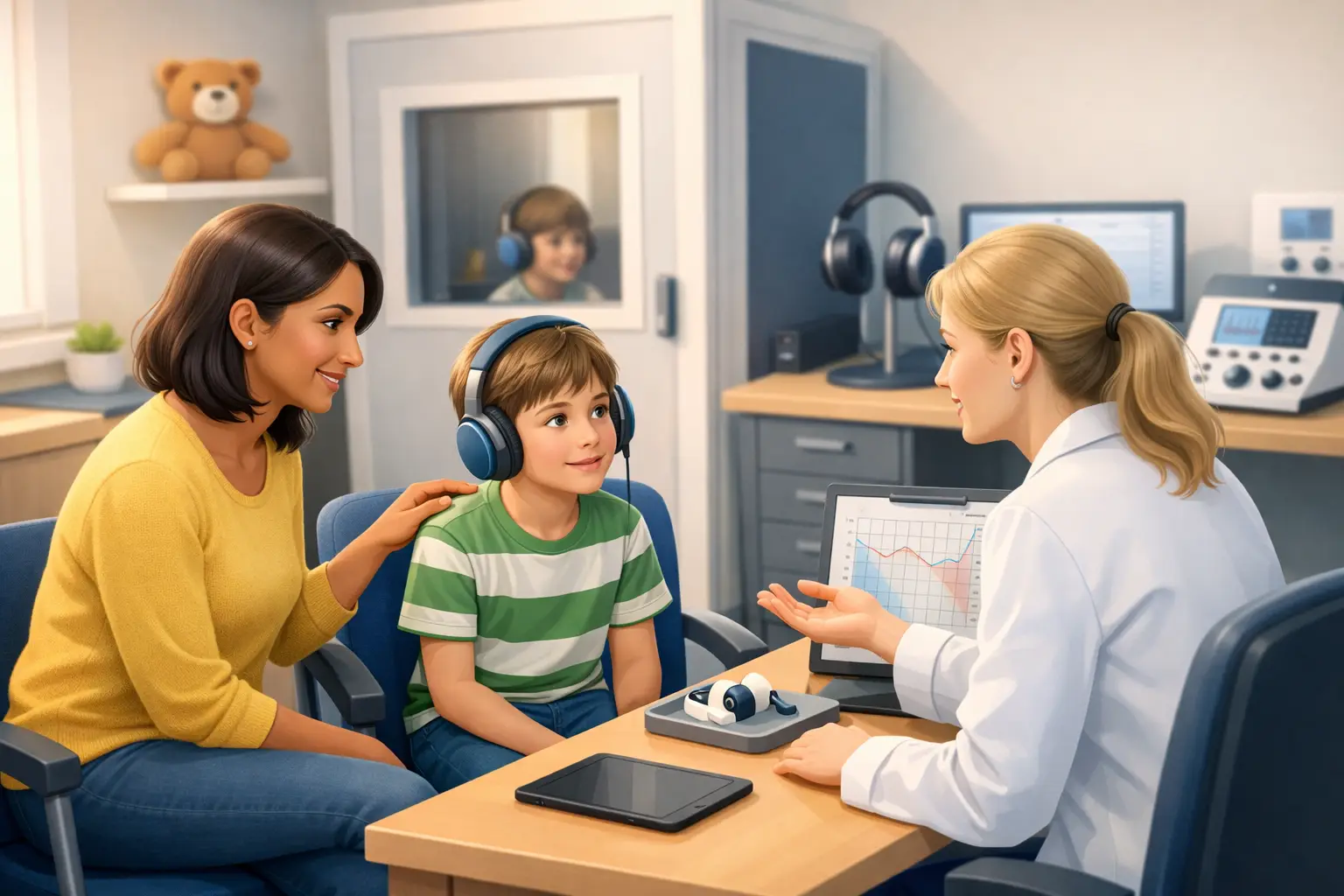
The hearing assessment itself depends on age and ability. Older children can often wear headphones and respond when they hear tones or speech. Younger children may be tested through play, such as placing a toy in a box when a sound is heard. For very young children, the audiologist may observe responses to carefully presented sounds. These techniques are designed to gain reliable information without making the process intimidating.
Other tests may assess how the eardrum and middle ear are functioning. This can be particularly useful where fluid behind the eardrum is suspected after frequent colds or infections. The test is quick, but some children dislike the feeling of the small probe in the ear. A skilled paediatric clinician will explain what is happening in child-friendly language and stop or adapt if your child becomes distressed.
Not every child will complete every test on the first occasion. This does not mean the appointment has failed. Children’s attention, confidence and developmental stage all affect testing. Sometimes the best clinical decision is to gather what is reliable, explain the limits of the result and arrange further assessment if needed.
Understanding the results
A good appointment should end with clear, practical feedback. The audiologist will explain whether hearing appears within expected levels, whether there are signs of a middle-ear problem, or whether further investigation is advisable. Ask what the findings mean for home, school and communication, not just what the graph shows.
The next step may be monitoring, medical review through your GP or ENT, advice for school, hearing rehabilitation or a repeat assessment. There is no single pathway for every child. Temporary hearing difficulties linked to middle-ear fluid are managed differently from permanent hearing loss, and both require a plan based on the child rather than a generic checklist.
Questions worth asking before confirming your booking
Before you book, make sure the service is equipped to assess children of your child’s age and that the appointment is with an appropriately qualified audiologist. Ask how long the consultation allows, whether ear examination and middle-ear testing are included where clinically appropriate, and how results will be explained to you.
It is reasonable to ask about fees, cancellation terms and whether a written report is available for your GP, school or other professionals. A premium ear clinic should be transparent about what the appointment includes and clear about any additional charges before treatment or follow-up is arranged.
If you are deciding between NHS and private care, the right choice depends on urgency, local waiting times, your child’s needs and whether you want a prompt independent assessment alongside existing care. Private audiology can provide timely assessment and detailed advice, while NHS services may remain central where hospital-based investigations or longer-term medical management are needed.
Your child does not need to be able to describe hearing difficulty perfectly for their concerns to deserve attention. Book when something feels different, bring the observations you have, and let a specialist assessment replace uncertainty with a clearer plan for the conversations, classrooms and everyday moments ahead.