
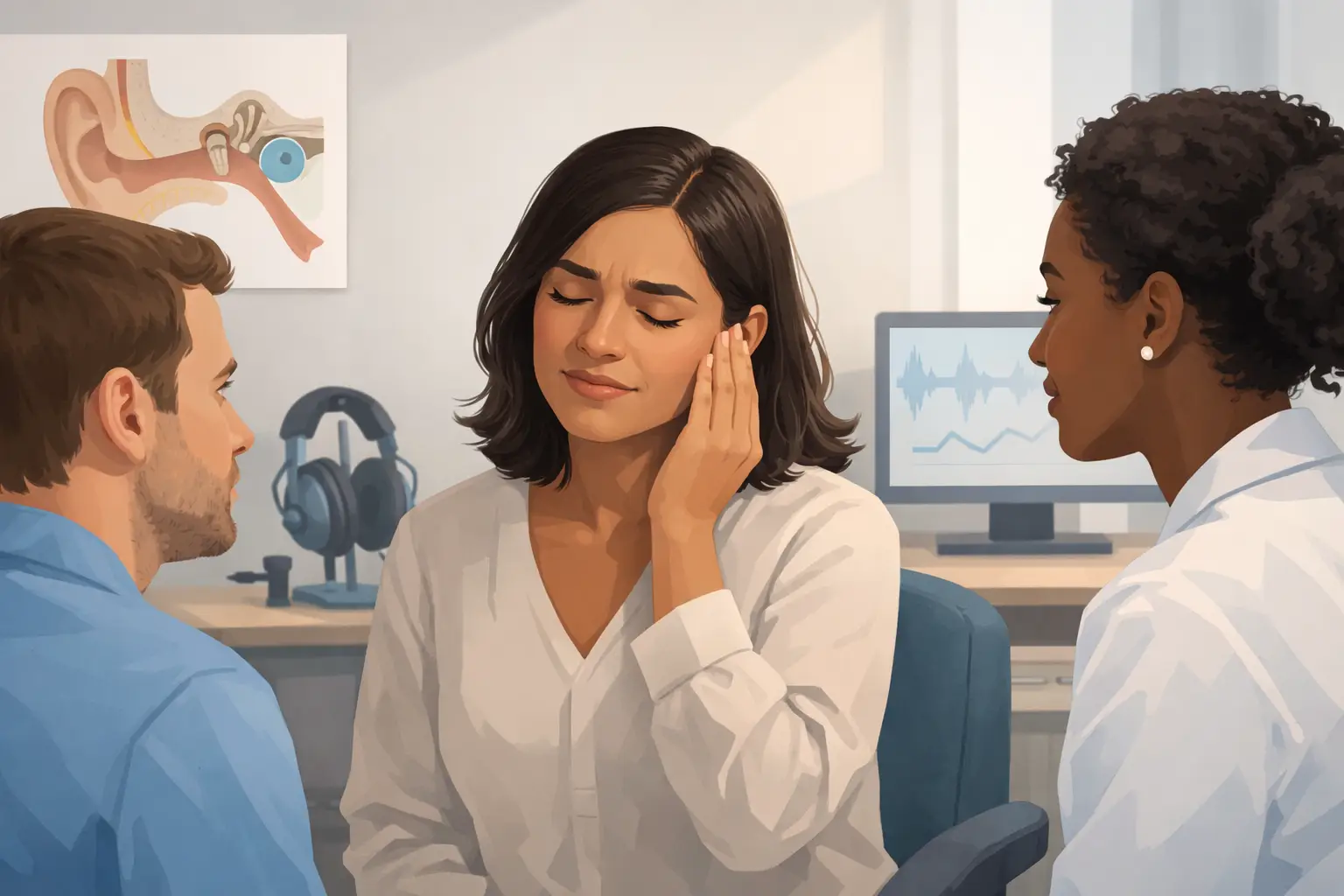
That muffled, pressurised sensation – as though sound is coming through cotton wool – can be surprisingly unsettling. If you have been wondering why do ears feel blocked, the short answer is that the ear is very sensitive to changes in pressure, inflammation, wax build-up and hearing function. The more useful answer is that a blocked feeling does not always mean the same thing, and getting the cause right matters.
Sometimes the problem is straightforward, such as earwax sitting against the eardrum. In other cases, the ear itself may be clear, but the pressure behind it is not equalising properly, or the hearing system is reacting to infection, allergy, jaw tension or even sudden sensorineural hearing loss. A blocked ear can be minor and short-lived, but if it persists, affects one ear more than the other, or comes with pain, dizziness, tinnitus or reduced hearing, it deserves proper assessment.
Why do ears feel blocked in the first place?
The blocked sensation usually comes from one of three things: sound is physically being obstructed, pressure is not balancing normally across the eardrum, or the hearing system is not processing sound as clearly as usual. Patients often describe all three in the same way, which is why self-diagnosis can be unreliable.
Your outer ear and ear canal carry sound towards the eardrum. The middle ear, behind the eardrum, needs air pressure to stay balanced. This job is handled by the Eustachian tube, which connects the middle ear to the back of the nose and throat. The inner ear then converts sound into nerve signals. A problem at any of these stages can create that blocked, full or muffled feeling.
Common causes of a blocked ear feeling
Earwax build-up
Earwax is one of the most common reasons for a blocked sensation. Wax is normal and protective, but when it accumulates or becomes impacted, it can reduce sound transmission and create pressure, fullness and dulled hearing. Some people are more prone to this than others, especially if they wear hearing aids, use earbuds regularly, have narrow ear canals or have previously pushed wax deeper with cotton buds.
Wax blockage can affect one or both ears. It may come on gradually, and some people notice it most after showering, when the wax absorbs moisture and swells.
Eustachian tube dysfunction
If your ear feels blocked during a cold, after a flight, when driving through hills or during allergy season, pressure imbalance is a likely cause. The Eustachian tube may not be opening effectively, so the air pressure behind the eardrum is not matching the outside environment.
This can create popping, crackling, mild discomfort and fluctuating hearing. For some patients, it settles once the congestion clears. For others, especially where there is nasal inflammation or recurrent allergy, it becomes more persistent.
Middle ear infection or fluid
Children commonly develop fluid behind the eardrum, but adults can experience it too, particularly after an upper respiratory infection. This can produce a blocked or underwater feeling, sometimes with pain, reduced hearing or a sense of imbalance.
Not every case is acutely painful. In some patients, fluid lingers after the infection itself has improved, leaving the ear feeling full for days or weeks.
Changes in the jaw or surrounding muscles
The ear sits close to the jaw joint and a network of muscles and nerves. Teeth grinding, jaw clenching and temporomandibular joint dysfunction can all create a sensation of fullness or pressure around the ear, even when the ear canal and eardrum look normal.
This is one reason a blocked feeling can be confusing. The symptom is real, but the source may not be inside the ear itself.
Sudden hearing change
A blocked sensation is not always caused by blockage. Sometimes a sudden change in hearing, particularly in one ear, is interpreted by the brain as fullness or pressure. This is especially important because sudden sensorineural hearing loss is a medical urgency.
If one ear suddenly feels blocked and your hearing drops noticeably over hours or a day or two, particularly with tinnitus or dizziness, do not wait to see if it clears on its own. Prompt medical assessment is essential.
When a blocked ear is more than earwax
It is understandable to assume wax is the culprit, especially if you have had it before. But not every blocked ear is due to wax, and using home remedies without knowing the cause can delay the right treatment.
Olive oil drops may soften wax, but they will not correct middle ear pressure problems. Repeated attempts to clear the ear yourself can also irritate the ear canal or push wax deeper. Ear candles should be avoided altogether. They are ineffective and carry a real risk of injury.
This is where expert assessment becomes valuable. Looking into the ear is only one part of the picture. A qualified audiologist or clinician may also assess hearing levels, middle ear pressure and the pattern of symptoms. That helps distinguish between a simple mechanical blockage and a condition that needs a different course of action.
Symptoms that help point to the cause
The timing and pattern of symptoms often tell us a great deal. A blocked sensation after swimming may suggest trapped moisture or swollen wax. Fullness during a cold or after flying points more towards pressure dysfunction. Earache and fever raise concern for infection. Crackling when swallowing often fits with Eustachian tube problems.
If the blocked feeling is paired with tinnitus, hearing loss or dizziness, the assessment needs to go further. Likewise, if only one ear is affected and it does not improve, that deserves careful evaluation rather than guesswork.
Why one ear feels blocked
When symptoms affect just one ear, common causes still include wax, pressure dysfunction and infection. However, one-sided symptoms should be taken more seriously if they are persistent, recurrent or associated with tinnitus or a clear change in hearing.
Most one-sided blocked ear symptoms are not dangerous, but asymmetry matters in ear and hearing care. It is one of the reasons a specialist ear clinic will ask detailed questions rather than assuming a routine wax problem.
What can help at home – and what should not
If the sensation began with a cold or a flight, swallowing, yawning or gently chewing can sometimes help equalise pressure. Managing nasal congestion may also help if the issue is linked to the Eustachian tube.
If you are prone to wax and know that is the likely cause, medical-grade olive oil drops may be suitable for a short period to soften it before professional removal. But if you have ear pain, discharge, previous ear surgery, a perforated eardrum, or you are not sure what is causing the problem, it is better not to put anything into the ear without advice.
Avoid cotton buds, hair grips or improvised tools. These commonly compact wax, scratch the ear canal and create more trouble than they solve.
When to book an expert assessment
A blocked ear should be assessed promptly if it lasts more than a few days, keeps returning, or interferes with hearing, sleep, communication or concentration. You should also seek help sooner if there is pain, discharge, dizziness, significant tinnitus, or if symptoms started suddenly in one ear.
In a specialist setting, assessment may include otoscopy to inspect the ear canal and eardrum, hearing tests to check whether there is conductive or sensorineural hearing loss, and middle ear testing to see how the eardrum is moving. That level of detail matters because the correct treatment depends on the correct diagnosis.
If wax is the problem, microsuction is typically the safest and most precise removal method in a clinical environment. If the issue is pressure dysfunction, infection, or hearing change, the management plan will be very different. At a specialist ear clinic such as Tragus-The Ear Specialists, the value is not only in treatment but in knowing exactly what you are treating.
Why children and older adults may experience this differently
Children are more prone to middle ear fluid because their Eustachian tubes are shorter and less efficient. They may not say their ear feels blocked, but you might notice inattentiveness, asking for repetition, louder speech or turning the television up.
Older adults may describe a blocked ear when hearing loss is developing gradually, even if the ear canal is clear. In those cases, the sensation is less about physical obstruction and more about reduced sound clarity. That distinction is important because hearing rehabilitation, not wax removal, may be the answer.
Why do ears feel blocked when nothing obvious is there?
This is a common and frustrating scenario. The ear may look normal on basic inspection, yet the sensation remains. Often the explanation lies in subtle pressure dysfunction, jaw-related symptoms, early hearing changes, or residual inflammation after an illness.
It is also worth remembering that the sensation of blockage and actual blockage are not always the same. The ear and brain are constantly interpreting sound quality, pressure and balance. When that system is disrupted, the result can feel like fullness even in the absence of visible obstruction.
If your ears feel blocked, try not to reduce the problem to a single guess. Earwax is common, but it is only one part of the picture. The right next step is expert assessment that looks at the ear, the hearing system and the pattern of symptoms together – because hearing clearly and feeling comfortable should never be left to trial and error.