
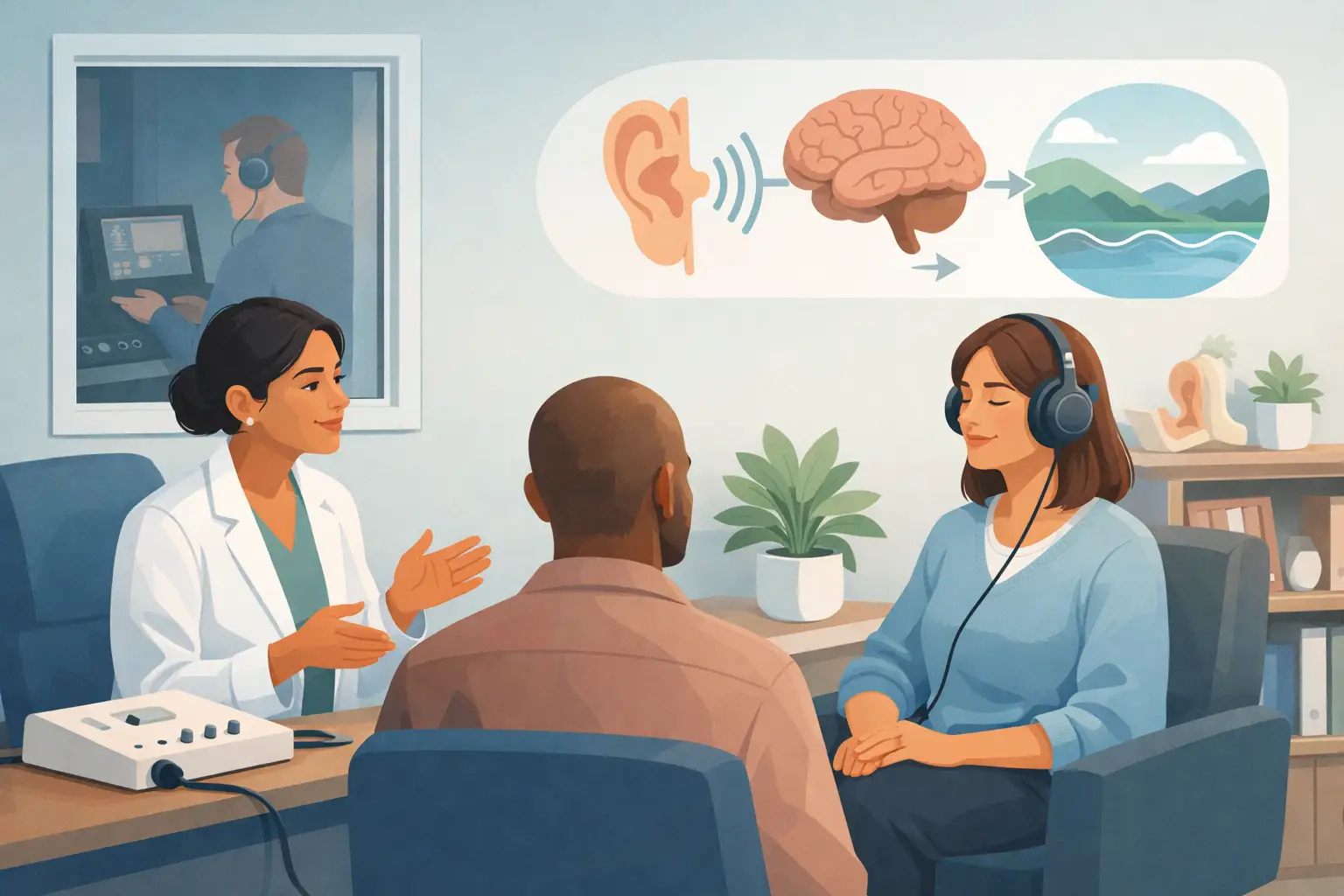
A hand dryer, clattering plates or a child’s voice should not have to dictate where you go, how long you stay or whether you can focus at work. Understanding how hyperacusis therapy works can make the condition feel less frightening: treatment is not about forcing yourself to endure painful noise, but helping your hearing system and nervous system respond to everyday sound with less alarm.
Hyperacusis is an increased sensitivity to sound. Some people experience sounds as uncomfortably loud; for others, particular noises feel sharp, painful or overwhelming even when those around them cope comfortably. It can occur alongside tinnitus, migraine, hearing loss, stress or following a period of illness or noise exposure. The experience is real, and a specialist assessment is the right place to start.
Hyperacusis is more than a dislike of noise
Sound sensitivity can take several forms. You may find a wide range of everyday sounds intolerable, react strongly to particular sounds, or worry so much about encountering noise that you begin avoiding shops, restaurants, public transport or family occasions. Avoidance can be understandable in the short term, especially where sound causes pain. Over time, however, a very quiet routine and constant use of ear protection may make the auditory system more watchful and less tolerant of ordinary sound.
That does not mean you should simply push through distressing environments or expose yourself to harmful volume. Genuine loud noise, such as power tools, live music or shooting, requires appropriate hearing protection. The clinical task is to distinguish reasonable protection from overprotection, then create a safe route back to a fuller daily life.
The first stage is an expert assessment
Effective therapy begins with finding out what is happening for you, rather than applying a standard sound programme. A qualified audiologist will discuss when the sensitivity began, which sounds trigger it, the effect on sleep, concentration, work and social life, and whether tinnitus, dizziness, ear pain, headache or changes in hearing are also present.
A hearing assessment may be recommended to check hearing thresholds and identify patterns that could influence treatment. Your clinician may also use questionnaires or carefully explore your sound tolerance. This is not a test of whether you can cope. It helps establish a baseline, measure the impact of symptoms and guide a treatment plan at a pace that is clinically appropriate.
The assessment also considers whether medical review is needed. Sudden hearing loss, a one-sided change in hearing, persistent ear pain, discharge, significant dizziness or neurological symptoms should be assessed promptly. Hyperacusis therapy is most helpful when important ear and health concerns have been considered first.
How hyperacusis therapy works in practice
Therapy usually combines education, gradual sound enrichment and psychological support. The balance depends on your symptoms, lifestyle and any related tinnitus, anxiety, migraine or hearing loss. There is no single sound level or timeline that suits everyone.
Understanding the sound response
For many people, hyperacusis involves a heightened threat response to sound. The ears receive sound, but the brain’s filtering and alarm systems may begin treating ordinary noises as if they signal danger. The physical sensations are then reinforced by anticipation: you hear a plate being put away, brace for discomfort, and become even more alert to the next noise.
A clinician explains this process in clear terms so that symptoms feel more understandable and manageable. This education is not intended to suggest that the condition is “all in the mind”. It recognises that hearing, attention, emotion and the body’s stress response are closely connected.
Reintroducing safe everyday sound
Sound enrichment means reducing excessive silence and gradually rebuilding tolerance to safe, low-level sound. Depending on the clinical plan, this may involve gentle background sound at home, carefully selected audio, environmental sound, or structured use of sound generators. The aim is controlled exposure, not flooding the system with noise.
Progress is usually measured in small, practical changes. You may begin by tolerating the kettle, a short car journey or conversation in a quiet café with less discomfort. As confidence develops, the plan can be adjusted. If symptoms flare, the answer is not necessarily to stop entirely; it may be to reduce the level, shorten the exposure or allow more recovery time before progressing again.
The right pace matters. Moving too quickly can increase distress and reinforce fear. Moving too cautiously may allow avoidance to become more established. Specialist guidance helps find the middle ground.
Reducing the fear and strain around sound
Counselling-based approaches can address the anxiety, frustration and hypervigilance that often accompany hyperacusis. Therapy may include strategies to calm the body’s stress response, challenge unhelpful predictions about sound, improve sleep routines and plan a gradual return to activities that have become difficult.
This can be particularly valuable where tinnitus and hyperacusis occur together. When someone is monitoring both sound sensitivity and internal noise throughout the day, the mental load can be exhausting. A personalised rehabilitation plan focuses on reducing distress and restoring function, not on asking you to ignore symptoms.
What treatment may look like day to day
A plan should fit around real life. A parent may need support managing school gates, busy family mealtimes and children’s activities. Someone working in an office may need a staged approach to meetings, shared spaces and commuting. A musician, teacher or healthcare professional may need advice that protects hearing without cutting them off from their work.
You might keep a brief record of situations that were difficult, what you did and how you recovered. This can reveal patterns, such as fatigue, stress, poor sleep or particular environments making sensitivity worse. It also gives your audiologist useful information for refining the plan between appointments.
Avoid making major changes alone, such as wearing earplugs all day or deliberately testing your limits with loud sounds. Custom earplugs can be highly valuable for genuinely noisy situations, but all-day protection is not routinely the answer for everyday sound sensitivity. Your clinician can advise when protection is appropriate and when gentle sound exposure is more helpful.
How long does hyperacusis therapy take?
Improvement is often gradual. Some people notice an early reduction in anxiety once they understand the condition and have a clear plan. Building sound tolerance generally takes longer, often over weeks or months, because the goal is a stable change that holds up in ordinary life.
The outcome also depends on the cause and complexity of symptoms. Hyperacusis associated with migraine may require migraine management alongside audiological rehabilitation. Where hearing loss is present, hearing technology may sometimes form part of a wider plan. If anxiety, trauma or low mood is having a significant impact, coordinated support from other healthcare professionals may be appropriate.
A good therapy plan is reviewed rather than fixed. It should reflect your progress, setbacks, work demands and the sounds that matter most to you.
Hyperacusis support for children and families
Children may not describe sound sensitivity in the same way as adults. They may cover their ears, become upset in busy places, avoid assemblies or struggle with certain classroom sounds. These reactions deserve careful assessment, particularly where they affect learning, confidence or family routines.
Paediatric support should be sensitive to the child’s development and involve parents or carers. The focus is often on helping the child feel safe around sound while avoiding patterns that unnecessarily narrow school, play and social participation. Advice for home and school can make a meaningful difference when it is consistent and realistic.
When to seek specialist help
Book an assessment when sound sensitivity is affecting your work, relationships, sleep, education or willingness to leave home. You do not need to wait until symptoms become severe. Earlier support can help prevent the cycle of avoidance and distress from becoming more entrenched.
At Tragus-The Ear Specialists, qualified audiologists provide expert assessment and personalised rehabilitation for tinnitus and hyperacusis. For patients in Kent, a private appointment offers time to discuss the whole picture, ask questions and receive advice matched to everyday life.
The most useful next step is not to test yourself against the loudest sound you can tolerate. It is to seek informed support, protect your ears appropriately where noise is genuinely hazardous, and begin rebuilding confidence in the sounds that belong in your life.