
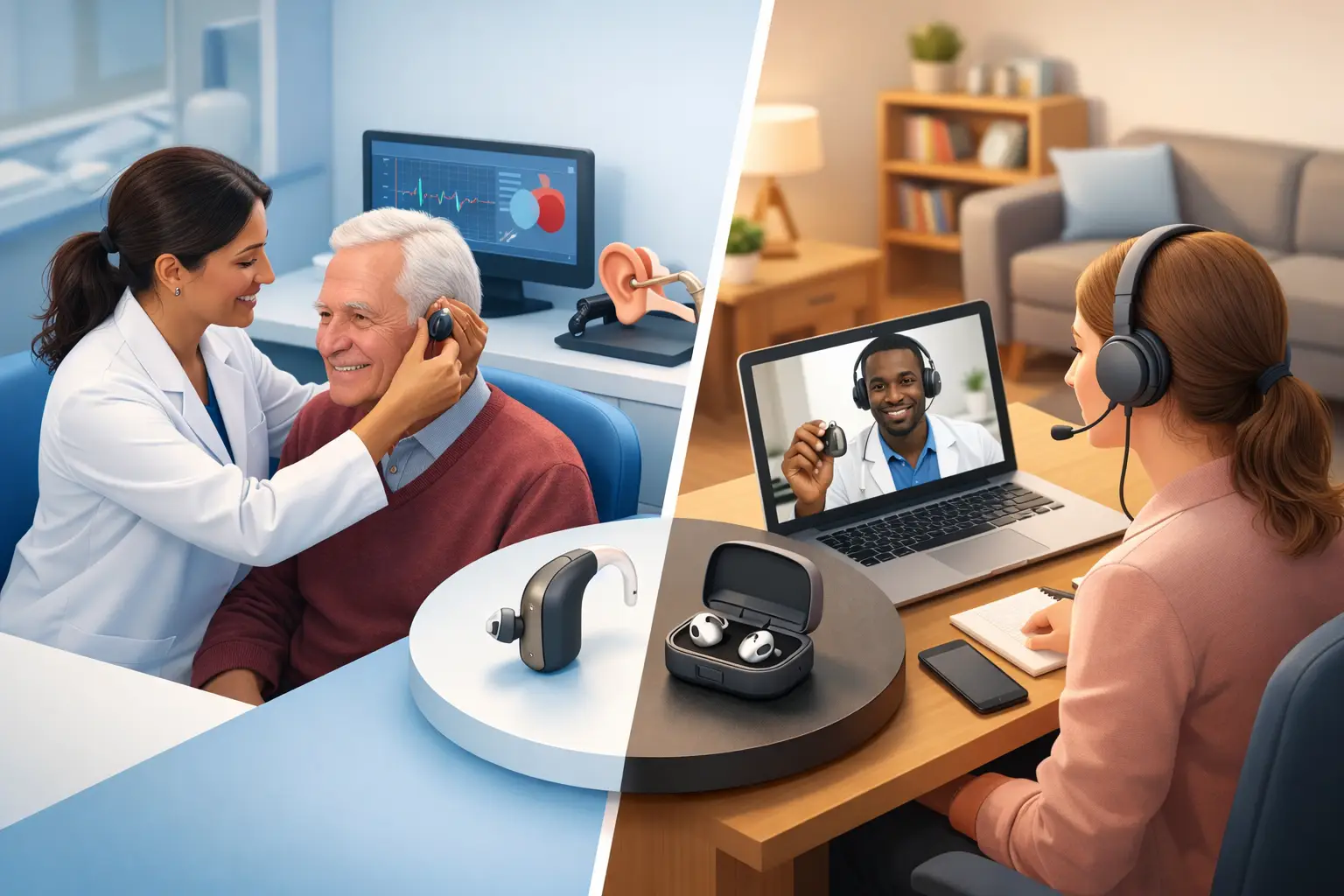
A hearing aid may be small enough to sit discreetly behind the ear, but getting meaningful benefit from one is rarely a simple purchase. The real difference in hearing aid fitting vs online options is not just where you buy the device. It is whether your hearing needs, ear health, lifestyle and ongoing adjustment are properly assessed and supported.
For some people, an online route can be a convenient and lower-cost way to start. For others, particularly those with complex hearing loss, tinnitus, troublesome earwax or changing hearing, a clinician-led fitting offers reassurance and a far more tailored result. The right choice depends on what your ears need, not simply what the hearing aid costs.
Hearing aid fitting vs online: what actually differs?
A professionally fitted hearing aid begins with a detailed hearing assessment. A qualified audiologist measures the quietest sounds you can hear across a range of pitches, considers how you cope with speech, and checks whether there are signs that need further medical attention. Your results are used to select and programme technology for your individual hearing profile.
An online purchase may involve an online questionnaire, a remote hearing screen, or a hearing test arranged elsewhere. Some providers offer remote support and app-based adjustments, while others sell pre-programmed or self-fitting devices directly. These models can work for people with straightforward, mild-to-moderate hearing difficulties who are comfortable managing technology and have had their hearing and ear health checked recently.
The key distinction is the depth of assessment and personalisation. Hearing loss is not always even between the ears, and two people with similar audiogram results can have very different listening needs. Someone who regularly attends meetings, enjoys family meals in busy restaurants or struggles with the television needs a different approach from someone whose main priority is hearing one-to-one conversations at home.
What a clinical hearing aid fitting involves
A fitting is a rehabilitation appointment, not simply a handover of hearing aids. Following expert assessment, your audiologist discusses suitable styles, features and budgets, then helps you understand the practical trade-offs. Smaller devices may be more discreet but have shorter battery life or fewer controls. Rechargeable models are convenient for many people, while disposable-battery options may suit others.
The aids are then programmed to your hearing test results. Crucially, the settings need to be comfortable as well as technically appropriate. If sound is made too loud too quickly, everyday noise can feel sharp, unnatural or overwhelming. If the settings are too cautious, speech may remain unclear. Your audiologist can adjust gain, noise management, feedback control and directional microphones to balance clarity with listening comfort.
A good fitting also includes guidance on realistic expectations. Hearing aids can make speech more accessible, but they do not restore natural hearing or remove every background sound. Your brain needs time to relearn how to prioritise useful sounds. This adjustment period is normal, and it is one reason follow-up care matters.
Verification and fine-tuning matter
Where available, clinicians may use real-ear measurement to check how much sound the hearing aid is delivering inside your ear canal. This gives a more accurate picture than relying on manufacturer defaults alone, because ear canals vary significantly in shape and acoustics.
Follow-up appointments allow settings to be refined once you have worn the aids in real situations. You may discover that the car, a family dinner or a workplace meeting presents a particular challenge. An experienced audiologist can use that feedback to make focused adjustments rather than leaving you to change settings by trial and error.
The benefits and limits of buying online
Online hearing aid providers have changed access to hearing technology. They can offer a broader choice, transparent pricing and the convenience of ordering from home. Remote aftercare can also be valuable for people who are confident using smartphone apps, live further from a clinic, or already understand their hearing loss well.
It would be wrong to suggest that every online hearing aid is poor quality. Some are made by established manufacturers and may offer sophisticated features. The question is whether the service around the device is enough for you. A high-quality hearing aid that is incorrectly programmed, poorly fitted in the ear or not worn consistently may deliver disappointing results.
Before buying online, establish whether the provider includes a recent, comprehensive hearing test; whether adjustments are made by a qualified audiologist; how repairs and returns are handled; and what follow-up support is available once the trial period ends. Also ask whether the price includes both aids if you need binaural hearing support, as hearing with two ears often improves balance, sound awareness and speech understanding in noise.
Online routes can be less suitable if you have reduced dexterity, limited confidence with apps, recurrent ear infections, narrow ear canals, wax build-up, tinnitus that is causing distress, or a hearing loss that has not been formally investigated. Convenience should not come at the expense of a safe diagnosis.
When an in-person assessment is the safer choice
Hearing changes can occasionally point to an underlying ear or medical issue. A specialist appointment provides an opportunity to examine the ear canal, identify wax blockage and decide whether onward referral is needed before hearing aids are considered.
Seek prompt medical or audiological assessment rather than buying a hearing aid online if you have any of the following:
- sudden or rapidly worsening hearing loss
- hearing that is noticeably worse in one ear
- persistent ear pain, discharge or repeated infections
- new dizziness, severe imbalance or pulsating tinnitus
These symptoms do not automatically mean there is a serious problem, but they deserve proper assessment. A device should never mask symptoms that need clinical attention.
Parents should also be cautious about relying on online hearing solutions for children. Children require age-appropriate testing, careful interpretation and ongoing monitoring as their communication, education and hearing needs develop. Paediatric hearing care is a specialist area.
Cost is only one part of the decision
The lower headline price of an online device can be appealing, especially when hearing loss has developed gradually and you are unsure whether you will use hearing aids. Yet it helps to compare like with like. A clinic-based package may include diagnostic testing, fitting, programming, counselling, review appointments, repairs support and ear care advice. An online price may cover the device but charge separately for some of those services, or leave you to arrange them elsewhere.
That does not mean the most expensive option is always the best one. The best value is the route that gives you reliable hearing support, a clear plan for adjustments and confidence that any warning signs have been addressed. If your hearing needs are uncomplicated and you are comfortable with remote care, an online provider may meet them well. If communication difficulties affect your work, relationships, confidence or wellbeing, personalised clinical support is often worth prioritising.
Questions to ask before you decide
Start with the quality of the assessment. Ask who will test your hearing, what qualifications they hold and whether your ears will be examined. Then ask how the hearing aids will be programmed and how many follow-up adjustments are included.
It is also sensible to ask about the trial period, warranty, repair process and what happens if your hearing changes. Hearing aids are long-term rehabilitation tools, not a one-off purchase. The provider should be able to support you beyond the first few weeks.
At Tragus-The Ear Specialists, hearing aid fittings are built around detailed assessment, personalised programming and ongoing clinical care. This approach is particularly valuable for people who want expert guidance through the adjustment period, or whose hearing concerns sit alongside tinnitus, sound sensitivity or ear health issues.
Hearing better should feel less like buying a gadget and more like receiving the right care for a very personal health need. Whether you choose online support or an in-person fitting, begin with an accurate assessment and give yourself the support needed to hear conversations, music and everyday life with greater confidence.