
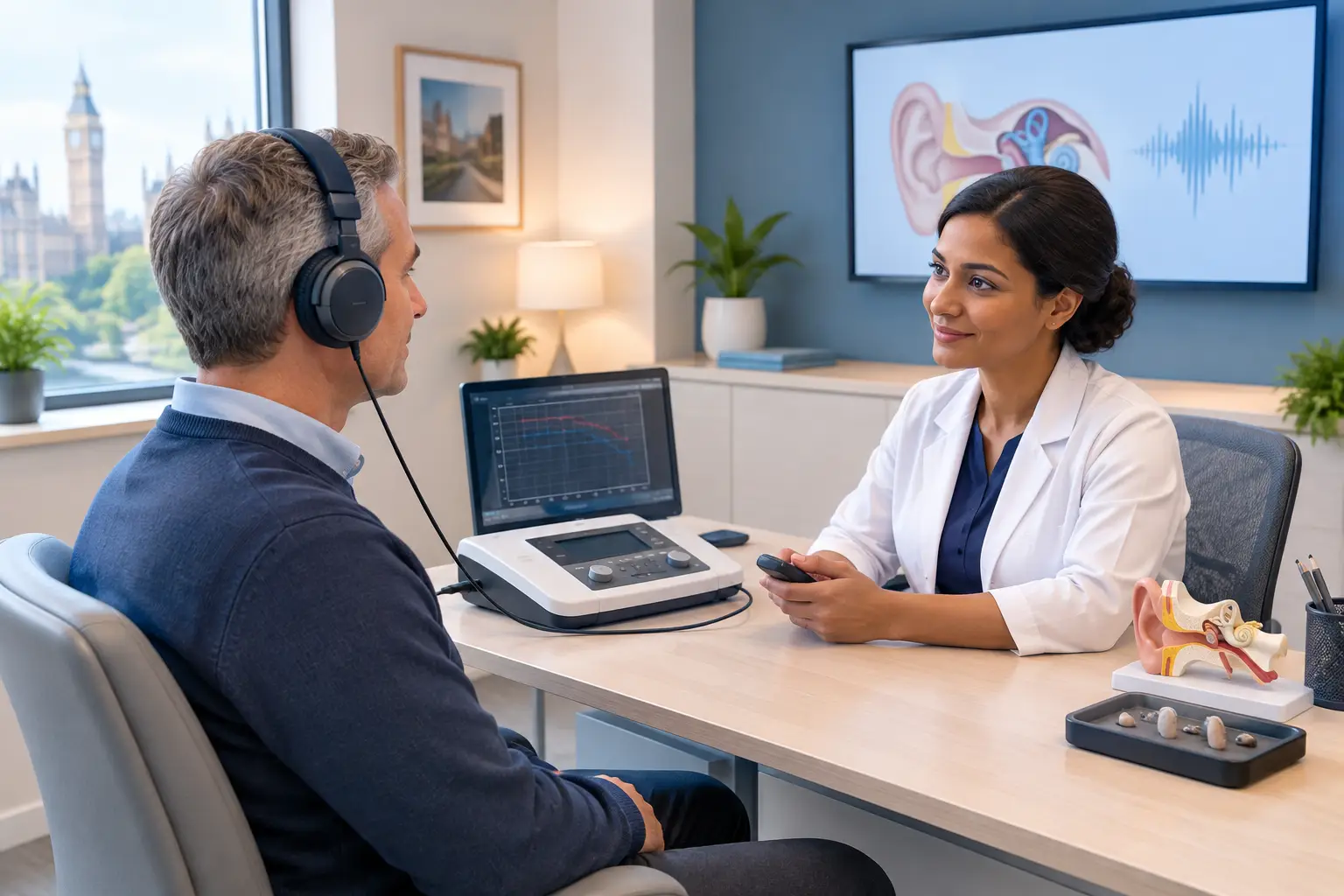
A persistent ringing, buzzing, humming or hissing can make quiet rooms feel anything but quiet. It may disrupt concentration at work, make sleep harder, or leave you worrying about what the sound means. This guide to tinnitus assessment process explains how a specialist audiology appointment turns a vague, often unsettling symptom into a clear clinical picture and a practical plan for moving forward.
Tinnitus is the perception of sound without an external source. It is common, but the experience is highly individual. Some people notice it only at night; others hear it throughout the day or find that certain environments, stress, fatigue or sound exposure make it more intrusive. A proper assessment is not simply a hearing test. It considers your hearing, ear health, symptoms and the effect tinnitus is having on your daily life.
Why a specialist tinnitus assessment matters
Tinnitus has more than one possible contributing factor. It can occur alongside hearing changes, earwax build-up, exposure to loud sound, recent illness, medication changes, jaw tension or periods of heightened stress. For some people, no single cause can be identified. That does not make the symptom any less real, nor does it prevent useful support.
A qualified audiologist will assess the parts of the picture that can be measured and, just as importantly, listen carefully to the parts that cannot. The aim is to identify any hearing or ear-health factors requiring attention, understand how tinnitus is affecting you, and recommend appropriate management and rehabilitation.
This level of assessment is especially valuable if the sound is affecting sleep, communication, mood, work or family life. Do not wait in silence simply because you have learned to tolerate it.
Before your appointment: what to notice
You do not need to prepare a detailed diary, but a few observations can help your clinician understand your experience more quickly. Consider when you first noticed the tinnitus, whether it began suddenly or gradually, and whether it is constant or intermittent. Think about the type of sound, which ear it seems to come from, and whether anything makes it more or less noticeable.
It is also useful to note recent noise exposure, such as concerts, power tools or headphones, as well as any changes in hearing, ear fullness, dizziness, discomfort or balance. Bring details of relevant medications and previous hearing test results if you have them. Your clinician will ask focused questions, so there is no need to have every answer ready.
If you experience a sudden change in hearing, tinnitus that follows a head injury, a sound that beats in time with your pulse, severe dizziness, or new neurological symptoms, seek prompt medical advice rather than waiting for a routine appointment.
The tinnitus assessment process, step by step
1. A detailed clinical conversation
Your appointment usually begins with a thorough case history. This is where an experienced audiologist learns how the tinnitus started, what it sounds like, how often you notice it and how it changes across the day. They will ask about your hearing, work and leisure noise exposure, general health, previous ear problems and any family history of hearing difficulty.
The impact of tinnitus matters as much as the sound itself. You may be asked about sleep, concentration, anxiety, social situations and your ability to hear speech in busy places. These questions are not designed to dismiss tinnitus as stress-related. They help establish where support is needed most and how urgently the symptom is affecting your quality of life.
2. Examination of the ears
The audiologist will look inside your ear canals and at your eardrums using appropriate clinical equipment. This checks for visible factors that may affect hearing or create a sense of blockage, including earwax, inflammation or changes to the eardrum.
Sometimes an ear canal needs to be cleared before accurate testing can take place. If wax is present, safe clinical earwax removal may be advised before or as part of the wider assessment, depending on what is appropriate. Removing wax can improve hearing where it is contributing to blockage, but it should not be presented as a universal answer to tinnitus. The assessment determines what is relevant in your case.
3. Comprehensive hearing testing
Most tinnitus assessments include pure-tone audiometry. You will listen to a series of tones through headphones and indicate the quietest sounds you can hear at different pitches. This produces an audiogram, a detailed record of hearing sensitivity in each ear.
The results may show hearing changes that you had not fully noticed, particularly if they affect higher pitches or both ears equally. Many people compensate well in quiet conversation but struggle with speech in restaurants, meetings or family gatherings. When the brain receives less external sound, internal sound can become more noticeable for some people.
Your assessment may also include speech testing to examine how clearly you hear words, sometimes with background noise. Middle-ear testing, known as tympanometry, may be used where clinically indicated to assess how the eardrum and middle ear are functioning. Not every test is needed for every person. A good clinician selects tests based on your symptoms rather than following a one-size-fits-all checklist.
4. Characterising the tinnitus
In some appointments, the audiologist may use sound matching to explore the pitch and perceived loudness of your tinnitus. This does not measure tinnitus in the same way a thermometer measures temperature, and it is not a test of whether the sound is real. It is a useful clinical tool that can help inform counselling, sound-based strategies and future comparisons.
You may also complete a recognised tinnitus questionnaire. These questionnaires assess the level of distress and functional impact rather than judging how well you are coping. They can reveal patterns that may otherwise be missed, such as the extent to which tinnitus is affecting rest, emotional wellbeing or confidence in social situations.
5. Discussing findings and next steps
A specialist assessment should finish with an explanation you can understand. Your audiologist will talk through your ear examination and hearing test results, explain how they may relate to your tinnitus, and answer your questions directly.
The next step depends on the findings. Where hearing loss is present, hearing rehabilitation may reduce listening effort and provide useful environmental sound, which can make tinnitus less prominent for some people. Where sound sensitivity is also present, advice must be tailored carefully. Overusing ear protection in everyday safe sound environments can sometimes increase sound awareness, so the right balance matters.
Tinnitus therapy may include education about how tinnitus is processed by the hearing system and brain, practical sound enrichment strategies, sleep support and personalised techniques for reducing its impact. If the assessment suggests that further medical input is appropriate, your clinician will explain the correct referral route.
What a good care plan should feel like
You should leave a tinnitus assessment with more than a test result. You should understand what has been checked, what the findings mean, what remains uncertain, and what you can do next. Tinnitus management is rarely about a single quick fix. It is about reducing distress, improving control and helping you return attention to the sounds and activities that matter.
For some people, reassurance and a clearer understanding are the most valuable first outcomes. Others benefit from hearing technology, structured tinnitus therapy or follow-up monitoring. The right plan depends on your hearing profile, the characteristics of your tinnitus and the practical challenges you face each day.
When to arrange an assessment
Arrange an expert tinnitus assessment if the sound has persisted, is becoming more noticeable, affects sleep or concentration, or occurs alongside changes in hearing. It is also sensible to seek advice if you are avoiding social situations, relying more heavily on subtitles or struggling to follow conversation in noise.
At Tragus-The Ear Specialists, qualified audiologists provide detailed tinnitus and hearing assessments for adults and children, with care shaped around the person rather than the symptom alone. A calm, clinically thorough appointment can replace uncertainty with a clearer route towards better hearing confidence and day-to-day comfort.
The first useful step is often simply to have the sound taken seriously. With the right assessment, you can make informed decisions and begin focusing more of your attention on life beyond tinnitus.