
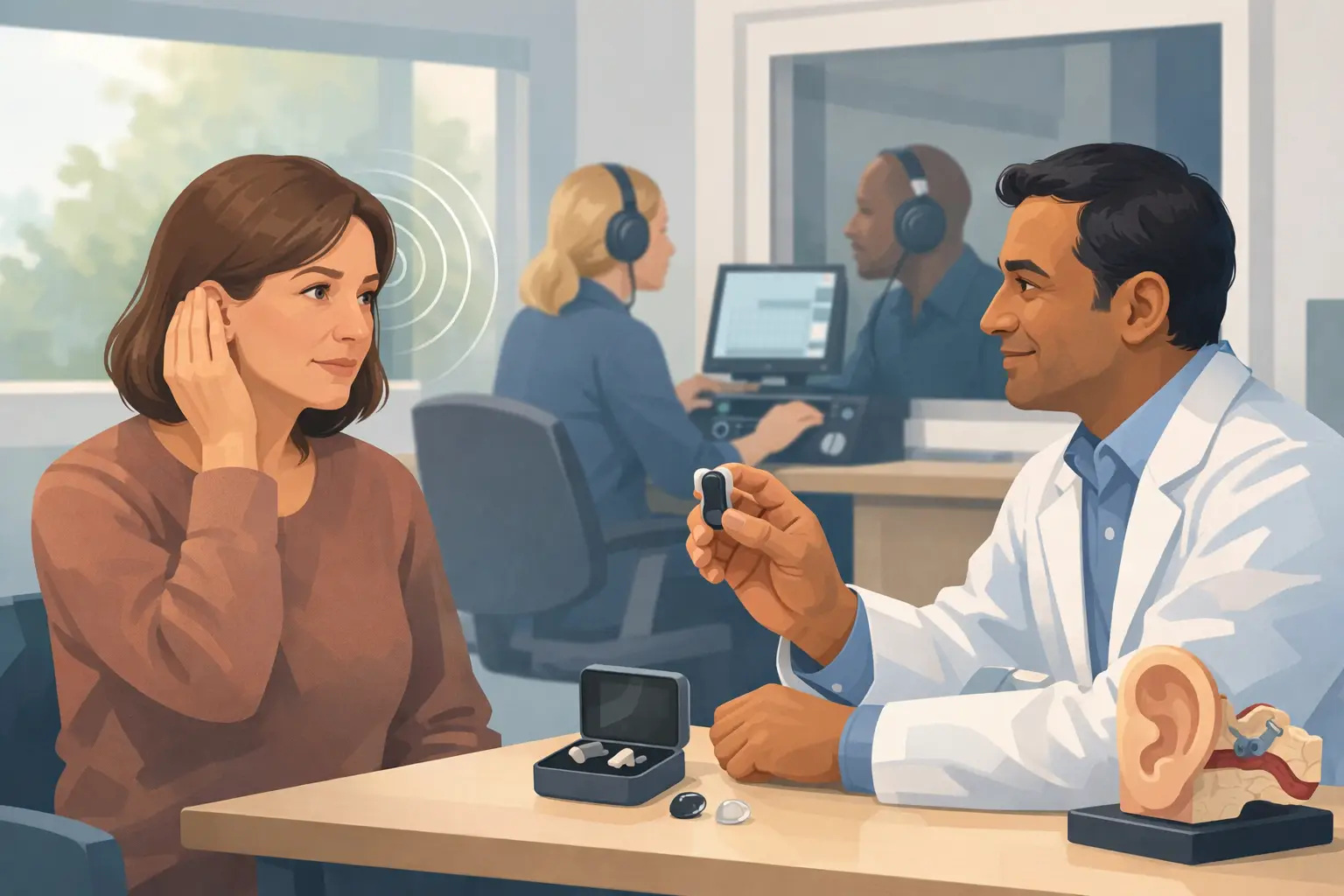
That constant ringing often becomes most obvious in the quietest moments – when the house settles at night, when a meeting pauses, or when you are trying to follow a conversation and your ears seem to do two jobs at once. For many people, hearing aids for tinnitus are suggested early on, but whether they help depends on why the tinnitus is there, whether hearing loss is involved, and how the devices are fitted.
Tinnitus is not a single condition with a single fix. It is a symptom, and it can sound like ringing, buzzing, hissing, humming or pulsing. In clinical practice, one of the most common patterns is tinnitus linked with hearing loss. That is where hearing aids can play a very useful role. They are not a cure, but for the right patient they can reduce the prominence of tinnitus and make day-to-day listening far less tiring.
How hearing aids for tinnitus can help
When hearing loss is present, the brain receives less sound input from the outside world. One theory is that the auditory system then becomes more sensitive, and internal sounds such as tinnitus are noticed more readily. A well-fitted hearing aid increases access to everyday environmental sound and speech, which can make tinnitus less dominant.
This happens in a few ways. First, amplified sound can partially mask tinnitus, so the ringing or buzzing is not the only thing the brain is focusing on. Secondly, improved hearing reduces listening effort. Many people with both hearing loss and tinnitus describe mental fatigue, especially in busy environments. If the hearing aid makes speech clearer, the overall strain reduces, and tinnitus often feels less intrusive. Thirdly, better sound stimulation may help the brain pay less attention to tinnitus over time.
That does not mean every hearing aid user experiences the same result. Some notice improvement quickly, while others need a longer adjustment period. Some find tinnitus is softer only when the aids are in, while others report a broader reduction in awareness after consistent use.
Who is most likely to benefit?
The strongest candidates are people who have tinnitus alongside measurable hearing loss. Even a mild loss, particularly in the high frequencies, can be relevant. Many patients are surprised to learn that they have hearing changes because they still feel they “hear enough” in quiet settings. It is often the more subtle signs that matter – struggling in restaurants, mishearing words, turning the television up, or feeling disproportionately tired after conversation.
If your hearing test is normal, standard hearing aids may be less useful unless there is another specific reason to use them. In those cases, a tinnitus management plan may focus more on sound therapy, counselling, sleep strategies, or investigation of other contributing factors. This is why assessment matters. Buying a device without understanding the hearing profile behind your symptoms can lead to frustration and unnecessary cost.
Tinnitus and hearing loss often overlap
Age-related hearing loss is a common factor, but it is not the only one. Noise exposure, some medications, ear disease, sudden hearing changes, or longstanding ear problems may all be relevant. The key point is that tinnitus should not be treated as a retail purchase. It should be assessed as part of your wider hearing health.
What features matter in hearing aids for tinnitus?
Not all hearing aids are identical, and not all tinnitus support features are worth paying for in every case. The foundation is always accurate fitting to your hearing levels. If amplification is poorly set, the hearing aid may be uncomfortable, speech may still sound unclear, and tinnitus benefit may be limited.
Many modern devices also include built-in tinnitus sound programmes. These may offer soft broadband noise, nature-inspired sounds, or adjustable relief sounds designed to make tinnitus less noticeable. For some people, these features are helpful, particularly during quieter parts of the day. For others, the main benefit comes simply from improved hearing rather than the extra sound options.
Comfort, discretion, battery type, connectivity and ease of use also matter. A hearing aid that sits in a drawer will not help tinnitus. Patients do best when the device suits their daily routine, their dexterity, and the listening situations they actually face.
What hearing aids cannot do
It is worth being direct here. Hearing aids do not remove the underlying cause of tinnitus in every case, and they do not guarantee silence. If anyone suggests otherwise, be cautious.
They also may not help if tinnitus is unrelated to hearing loss, if the sound is pulsatile and needs medical investigation, or if anxiety, sleep disruption and sound sensitivity are the main drivers of distress. In those situations, hearing aids might still form part of the plan, but they are unlikely to be the whole answer.
There can also be an adjustment period. New amplification changes the way everyday life sounds. Cutlery, footsteps, traffic and paper rustling can all seem unusually sharp at first. Good audiological support is essential because settings often need fine-tuning, especially when tinnitus and sound sensitivity occur together.
Why specialist assessment matters
A tinnitus appointment should do more than confirm that a ringing sound exists. It should explore when it started, what it sounds like, whether it is constant or intermittent, whether one ear is worse, and how much it affects sleep, concentration and emotional wellbeing. Hearing assessment is a core part of this process, but it is not the only part.
A specialist audiologist will also consider red flags, medical history, noise exposure, wax blockage, middle ear issues and whether onward referral is needed. This is particularly important if tinnitus is one-sided, pulsatile, sudden in onset, or associated with dizziness, pain or sudden hearing loss.
At a premium ear clinic, the value lies in getting beyond a basic sales appointment. You should expect expert assessment, qualified audiologists and a treatment plan shaped around your symptoms rather than a generic recommendation. For patients in Kent and South East London who want medically credible advice rather than a quick transaction, that distinction matters.
Hearing aids are often part of a wider tinnitus plan
For many patients, the best results come from combining hearing aid use with broader tinnitus support. That may include education about how tinnitus works, realistic expectation-setting, counselling-based tinnitus therapy, sleep management, and strategies to reduce the habit of monitoring the sound.
If hyperacusis or sound intolerance is also present, the plan needs even more care. Over-amplification can be counterproductive, while under-amplification may leave tinnitus too exposed. This balance is one reason specialist fitting is so important.
Stress is another factor. Tinnitus is generated in the auditory system, but the degree of distress it causes is often influenced by the brain’s threat response. When people become frightened by tinnitus, check it constantly, or lose sleep over it, the sound can feel louder and more intrusive. Hearing aids may reduce the auditory side of the problem, but many people also need support to break that cycle.
What to expect from a fitting
A proper fitting should not end when the hearing aids are handed over. You should be shown how to use them, what adjustment feels normal, how long to wear them initially, and when to come back for review. Follow-up is not a luxury. It is often where the real benefit is shaped.
Small changes in gain, sound balance, noise management and tinnitus programme settings can make a significant difference. The right support helps patients persist through the early adaptation stage instead of deciding too soon that hearing aids have failed.
Are over-the-counter devices a good idea?
For tinnitus, usually not as a first step. A basic amplifier bought without assessment may make some sounds louder, but it does not tell you why tinnitus is happening, whether hearing loss is present, or whether the settings are appropriate for your ears. It can also miss conditions that need medical attention.
That does not mean every person needs the most expensive technology on the market. It means they need the right technology, fitted for the right reasons. There is a difference.
When to seek help
If tinnitus has become persistent, if it is affecting sleep or concentration, or if you suspect your hearing is not as good as it used to be, it is sensible to arrange an expert assessment. You should seek prompt advice if the tinnitus is sudden, one-sided, pulsatile, or accompanied by sudden hearing loss or dizziness.
At Tragus-The Ear Specialists, this kind of presentation would usually warrant a structured hearing and tinnitus assessment rather than a simple hearing aid demonstration. That approach gives patients a clearer answer on whether amplification is likely to help and what else may be needed alongside it.
Hearing aids for tinnitus can be genuinely effective, but the best results come when the treatment matches the cause, the fitting is precise, and the support does not stop after the first appointment. If the noise in your ears is starting to dominate your day, do not wait in silence.