
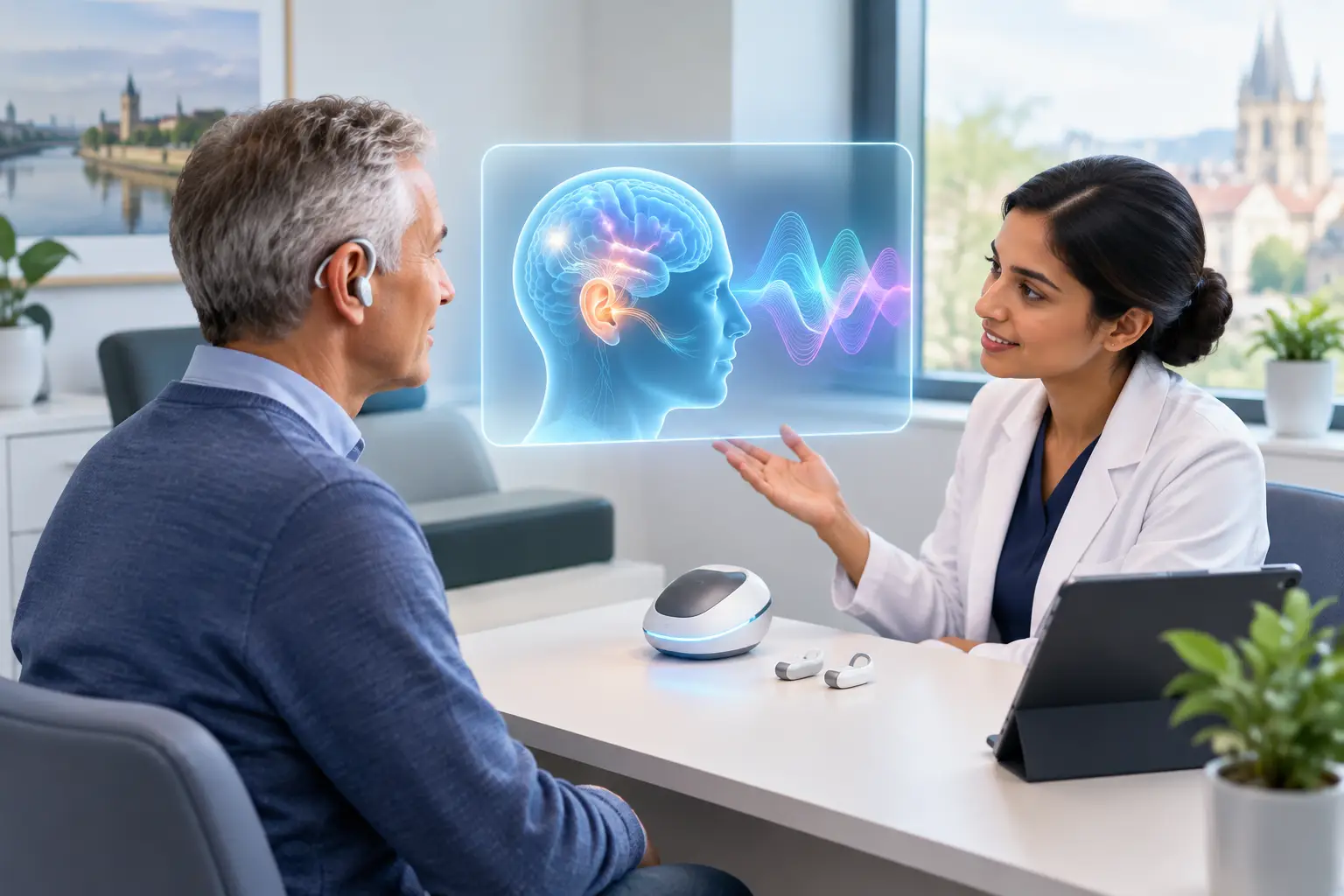
For someone living with tinnitus, the future of tinnitus therapy is not an abstract research topic. It is about a quieter night, clearer concentration at work, less anxiety in a silent room and the confidence to stop organising life around an internal sound. Progress is happening, but the most meaningful change is not likely to be one universal cure. It is likely to be more precise, personalised care that recognises why tinnitus affects each person differently.
At a specialist assessment, the aim is already broader than simply identifying a sound. Qualified audiologists consider hearing levels, the characteristics of the tinnitus, sound sensitivity, sleep, stress, communication needs and the effect on day-to-day wellbeing. Future developments should make this clinical picture even more individual.
The future of tinnitus therapy is personal
Tinnitus can be experienced as ringing, buzzing, hissing, humming or another internal sound. Two people may describe a similar noise yet need very different support. One may barely notice it during a busy day but struggle to sleep. Another may find it particularly intrusive in meetings, while a third may also have sound sensitivity or hearing difficulties.
This is why a single treatment approach has limitations. The future is likely to place greater emphasis on matching therapy to the factors that maintain distress for the individual. For some people, hearing rehabilitation may be central. For others, structured psychological support, sound enrichment, sleep strategies or help managing hyperacusis may be more relevant.
Personalisation does not mean offering an unproven solution for every problem. It means using a careful assessment to select evidence-informed options, set realistic goals and review progress. The goal is often to reduce the prominence and emotional impact of tinnitus, rather than promise that a sound will disappear completely.
Better assessment will shape better care
The strongest advances in tinnitus care begin with more detailed assessment. Hearing tests remain an essential part of this process, because changes in hearing can affect how tinnitus is perceived and how much benefit someone may gain from hearing technology or sound-based support.
Future assessments may also make more use of validated questionnaires, digital symptom tracking and repeat measures of sleep, concentration, mood and listening effort. These tools can help clinicians see patterns that are easy to miss in a single appointment. For example, a person may notice that their tinnitus becomes more intrusive after poor sleep, during periods of high stress or when they have avoided sound for several days.
This information matters because treatment should target the burden tinnitus creates in real life. A tone heard only at bedtime needs a different plan from tinnitus that disrupts conversations, school, work or family life.
Hearing rehabilitation will remain a key part of therapy
When hearing loss is present, professionally fitted hearing aids can be an important element of tinnitus management. By improving access to everyday environmental sounds and speech, they may reduce the contrast between tinnitus and silence. Better communication can also reduce listening fatigue and the strain that often makes symptoms feel harder to manage.
The next generation of hearing technology is likely to offer increasingly refined sound settings and more responsive personalisation. However, technology is most effective when it forms part of a wider rehabilitation plan. A device alone cannot address sleep disruption, worry about tinnitus or the habits that develop when someone starts withdrawing from situations they once enjoyed.
Digital support will extend, not replace, clinical care
Digital programmes have considerable potential in the future of tinnitus therapy. Carefully designed tools can support symptom diaries, guided relaxation, sleep routines, therapeutic exercises and progress monitoring between appointments. For people with demanding jobs, young families or long travel times, this could make support more accessible and consistent.
There is an important trade-off. Apps and online programmes can be useful, but they cannot replace an expert hearing assessment or the clinical judgement needed to interpret a person’s symptoms safely. Generic advice may also be unhelpful where tinnitus is accompanied by hearing changes, sound sensitivity or a significant impact on wellbeing.
The best use of digital care is likely to be blended care: specialist assessment and personalised planning first, followed by practical support that patients can use at home. Regular review allows the plan to adapt as confidence grows or circumstances change.
Neuromodulation research is promising, but needs perspective
One area receiving increasing attention is neuromodulation. This broad term describes approaches intended to influence neural activity through carefully delivered sensory or electrical stimulation. Some methods combine sound with stimulation elsewhere in the body, based on the understanding that tinnitus involves networks of hearing, attention and emotional response rather than the ear alone.
This research is encouraging, particularly because it recognises the complexity of tinnitus. Yet it is not a reason to overlook established therapeutic principles. Response can vary considerably between individuals, research methods differ, and longer-term evidence is still developing. A treatment that helps one group in a study may not be appropriate or effective for every person in routine practice.
Patients should be wary of any claim that presents emerging technology as a guaranteed answer. Specialist care means discussing potential benefits, limitations, cost implications and the quality of evidence honestly before deciding whether a new approach has a place in a treatment plan.
Therapy will increasingly address the whole impact of tinnitus
For many people, the distress associated with tinnitus is driven not only by the sound itself but by what the sound comes to mean. Fear that it will worsen, frustration about sleep, difficulty concentrating and repeated monitoring can make tinnitus feel more intrusive. This is where structured therapeutic approaches can be highly valuable.
Cognitive behavioural therapy-informed tinnitus care helps people examine unhelpful reactions and build practical coping strategies. It does not suggest that tinnitus is imagined. Rather, it focuses on reducing the cycle of alarm, attention and distress that can amplify the experience.
Sound therapy and sound enrichment may also have a role, especially when silence makes tinnitus more noticeable. The right approach depends on the person. Some benefit from low-level environmental sound at night; others need guidance on using sound without becoming dependent on masking it at all times. Where hyperacusis is present, sound exposure must be approached carefully and individually.
Sleep support will become a more visible part of tinnitus rehabilitation too. Poor sleep can lower resilience, increase awareness of internal sounds and make coping strategies harder to sustain. Small, consistent changes to evening routines, background sound and relaxation practices can be clinically meaningful when tailored to the individual.
What patients can do while research progresses
It is reasonable to feel hopeful about new developments, but there is no need to wait for future technology before seeking help. An expert tinnitus assessment can identify current options and provide reassurance about the next steps. It can also establish a useful baseline, making it easier to measure whether therapy is improving daily life.
Seek prompt medical advice for a sudden change in hearing, tinnitus that follows a head injury, a sound that seems to beat in time with the pulse, or symptoms accompanied by dizziness or other concerning changes. These situations need appropriate assessment rather than self-management alone.
For ongoing tinnitus, avoid trying to endure it in silence. A personalised plan may include hearing assessment, therapeutic guidance, sound strategies and support for the situations that matter most to you, whether that is sleeping, working, socialising or enjoying time with family.
The most positive future for tinnitus care is one in which people are heard properly: their hearing, their symptoms and the effect on their lives are all taken seriously. With specialist assessment and thoughtful rehabilitation, the focus can shift from fighting every sound to rebuilding comfort, confidence and quality of life.