
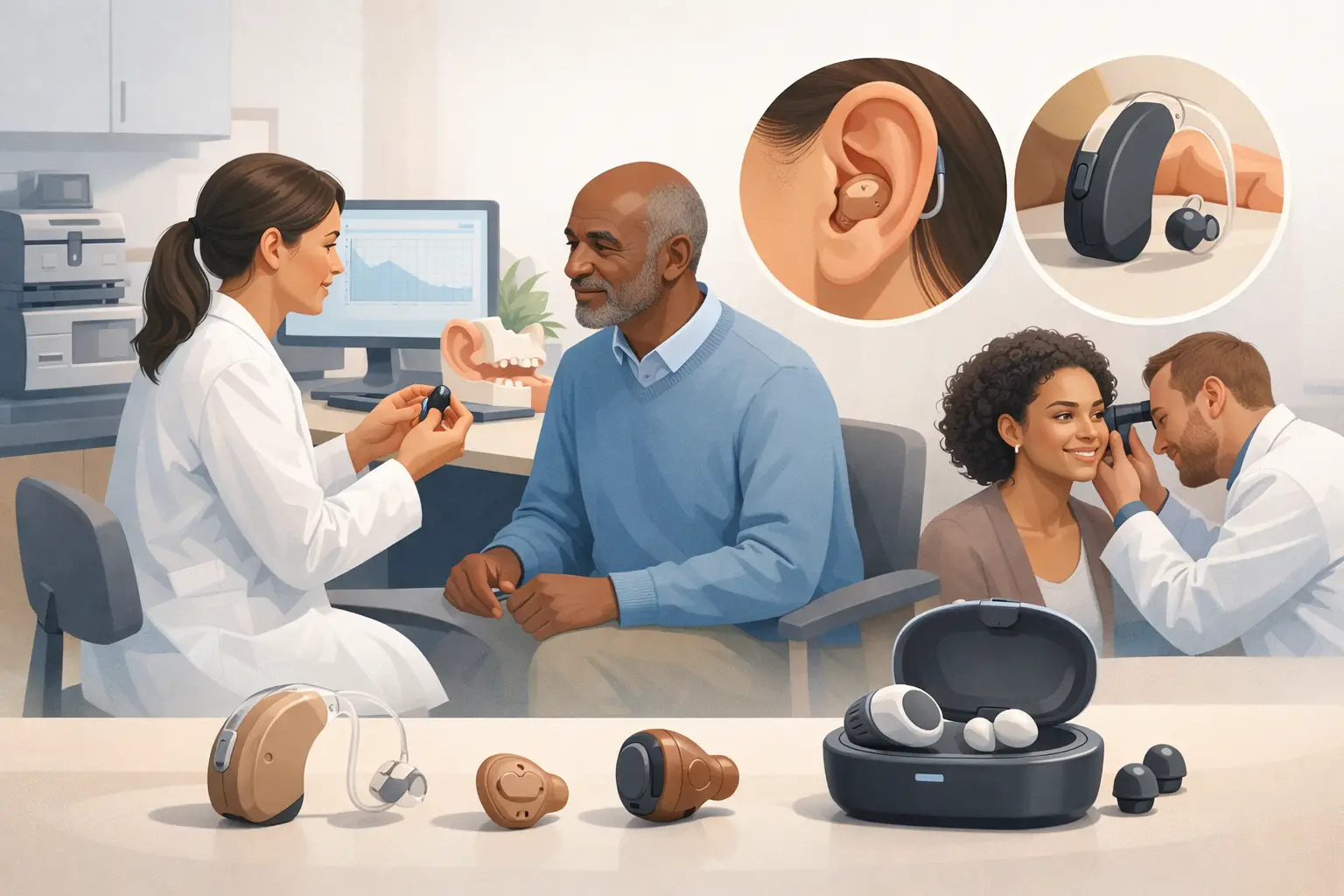
Missing the end of a sentence in a busy restaurant, turning the television up, or feeling exhausted after trying to follow conversations are not simply inconveniences. They can affect confidence, relationships, work and wellbeing. Everything you need to know about hearing aids starts with this: a hearing aid is not a one-size-fits-all amplifier. It is a carefully selected medical device that should follow an expert hearing assessment and form part of a personalised rehabilitation plan.
What hearing aids do – and what they cannot do
Modern hearing aids analyse sound continuously and amplify the frequencies you struggle to hear, rather than making everything indiscriminately louder. They can improve speech clarity, help you participate more comfortably in conversation and reduce the listening effort that often accompanies hearing loss.
They cannot restore hearing to exactly how it was before, and they cannot remove every challenge in a crowded environment. Background noise, distance and poor room acoustics remain demanding even with advanced technology. The goal is meaningful improvement in your day-to-day listening, not an unrealistic promise of perfect hearing.
Hearing loss is also not always permanent or age-related. Earwax blockage, ear infection, middle-ear conditions, certain medicines and sudden changes in hearing may need a different course of care. That is why the right assessment matters before choosing a device.
Start with a comprehensive hearing assessment
A qualified audiologist will discuss your symptoms, medical history, listening demands and the situations you find most difficult. They will examine your ear canals and eardrums, then measure how well you hear different tones and speech. Where appropriate, further tests may assess middle-ear function or clarify whether onward medical referral is needed.
This clinical step is particularly valuable if your hearing has changed suddenly, affects one ear more than the other, is accompanied by dizziness, ear pain or discharge, or comes with new tinnitus. These symptoms should not be addressed by purchasing an amplifier online and hoping for the best.
Your results are usually shown on an audiogram. This chart helps identify the degree and pattern of hearing loss, but the numbers are only part of the picture. Two people with similar results may need different solutions because their work, home life, dexterity, vision, tinnitus or sound sensitivity are different.
The main styles of hearing aid
The most suitable style depends on your hearing levels, ear anatomy, lifestyle and personal preference. A discreet device is often desirable, but the smallest option is not automatically the best option for sound quality, battery handling or the level of amplification required.
Behind-the-ear and receiver-in-ear aids
Behind-the-ear devices sit behind the pinna and deliver sound through a slim tube or a receiver placed in the ear canal. They are highly versatile and can suit mild through to more significant hearing losses. Many people find them comfortable, reliable and easier to manage than smaller styles.
Receiver-in-ear aids are now a common choice because they can be compact while retaining strong performance. Depending on the fitting, they may leave the ear canal relatively open, which can make your own voice sound more natural.
In-the-ear aids
In-the-ear devices are custom-made to fit within the outer ear or ear canal. They may be appropriate for people who prefer not to wear a device behind the ear, although they are not suitable for every hearing loss or ear shape. Their smaller size can make controls and batteries more fiddly, and wax management is especially important.
Rechargeable or disposable batteries
Rechargeable hearing aids are convenient for many users: place them in their charger overnight and they are ready for the next day. Disposable batteries can still be useful where charging is difficult, when travelling, or for certain device styles. Neither is universally better. The right choice depends on your routine, hand function and confidence with technology.
Features that genuinely make a difference
Hearing aid technology has moved well beyond basic volume control. Directional microphones can prioritise speech in front of you, while noise-management systems aim to make busy settings less tiring. Feedback management reduces whistling, and automatic programmes can adjust settings as you move from a quiet room to a café or outdoors.
Bluetooth connectivity may allow sound from a mobile phone, television or other compatible device to stream directly to your hearing aids. This can be useful, but it should not be the only reason to choose a model. Compatibility, ease of use and the quality of the clinical fitting matter just as much.
Some devices include tinnitus sound therapy features. For people with tinnitus, hearing aids may help by improving access to environmental sound and reducing the contrast between tinnitus and silence. However, tinnitus needs individual assessment, particularly when it is persistent, distressing, one-sided or has changed suddenly.
Why fitting and fine-tuning are essential
A hearing aid becomes useful through its fitting, not simply through its specification. Your audiologist programmes it to your hearing test results, checks physical comfort and considers the sounds that matter most to you. Real-ear measurements may be used to verify that the device is delivering the appropriate sound level in your own ear canal.
At first, everyday sounds can seem unusually sharp or prominent. Rustling paper, footsteps, running water and your own voice may take time to feel familiar. This does not necessarily mean the hearing aids are wrong. Your brain has been receiving reduced sound information and needs time to re-adjust.
Wear your hearing aids consistently, building up use as advised, and make a note of difficult situations. Follow-up appointments are where settings can be refined for your real life – whether that means family meals, meetings, school gates, television or social occasions. Rehabilitation is a process, and good aftercare is a clinical necessity rather than an optional extra.
Everything you need to know about hearing aids and cost
In the UK, hearing aids may be available through the NHS for those who meet local eligibility and referral arrangements. Private care offers a different route, often with broader technology choices, more appointment flexibility and a tailored package of assessment, fitting, follow-up and aftercare. The appropriate route depends on your priorities, clinical needs and budget.
When comparing prices, ask what is included. A lower initial figure may not include verification, adjustment appointments, warranties, repairs, ongoing support or replacement consumables. A clear care plan is more useful than choosing solely on the headline cost of the device.
For children, hearing care should always be specialist-led. Children may not describe hearing difficulties clearly, and even a mild loss can affect speech, learning, confidence and social development. Paediatric assessment considers developmental history, test reliability and the support a child needs at home and in education.
Caring for your hearing aids
Daily care protects both performance and comfort. Wipe the devices with a dry, soft cloth, check for wax around the sound outlet and store them safely away from heat and moisture. Do not use water or household cleaning products unless your audiologist has specifically advised it.
Earwax can block a hearing aid and mimic a fault. It can also reduce hearing independently of the device. If you suspect wax blockage, avoid inserting cotton buds or attempting to remove it with tools at home. Professional assessment and, where suitable, microsuction provide a safer route.
Arrange a review if your hearing aids become uncomfortable, whistle repeatedly, sound weaker than usual, or no longer meet your needs. Hearing can change over time, and a device that worked well two years ago may need reprogramming, servicing or replacement.
The best hearing aid is the one that has been selected around your hearing, fitted with precision and supported by expert follow-up. If hearing is making daily life smaller, do not wait in silence: an assessment can give you clarity about the cause and a practical route back to the conversations and sounds that matter.