
A television volume that has crept up, repeated requests for people to speak more clearly, or a blocked sensation after a shower can be easy to dismiss. Yet these small changes are often the reason an adult ear health check is worthwhile. It provides a clear, clinical picture of both your ear health and your hearing, so you can act on facts rather than adapt quietly around a problem.
For many adults, hearing changes develop gradually. The brain becomes remarkably good at filling in gaps, particularly in familiar settings, which can delay recognition that communication is becoming more difficult. A specialist assessment can identify whether the issue relates to earwax, the ear canal, middle-ear function, hearing sensitivity, tinnitus, noise exposure, or a combination of factors.
What happens during an adult ear health check?
A proper assessment is more than a quick look in the ear. It begins with a discussion about what you have noticed and how it affects daily life. Your audiologist may ask about difficulty hearing in background noise, phone conversations, work meetings, television, music, dizziness, tinnitus, ear infections, discharge, pain, medication and previous noise exposure.
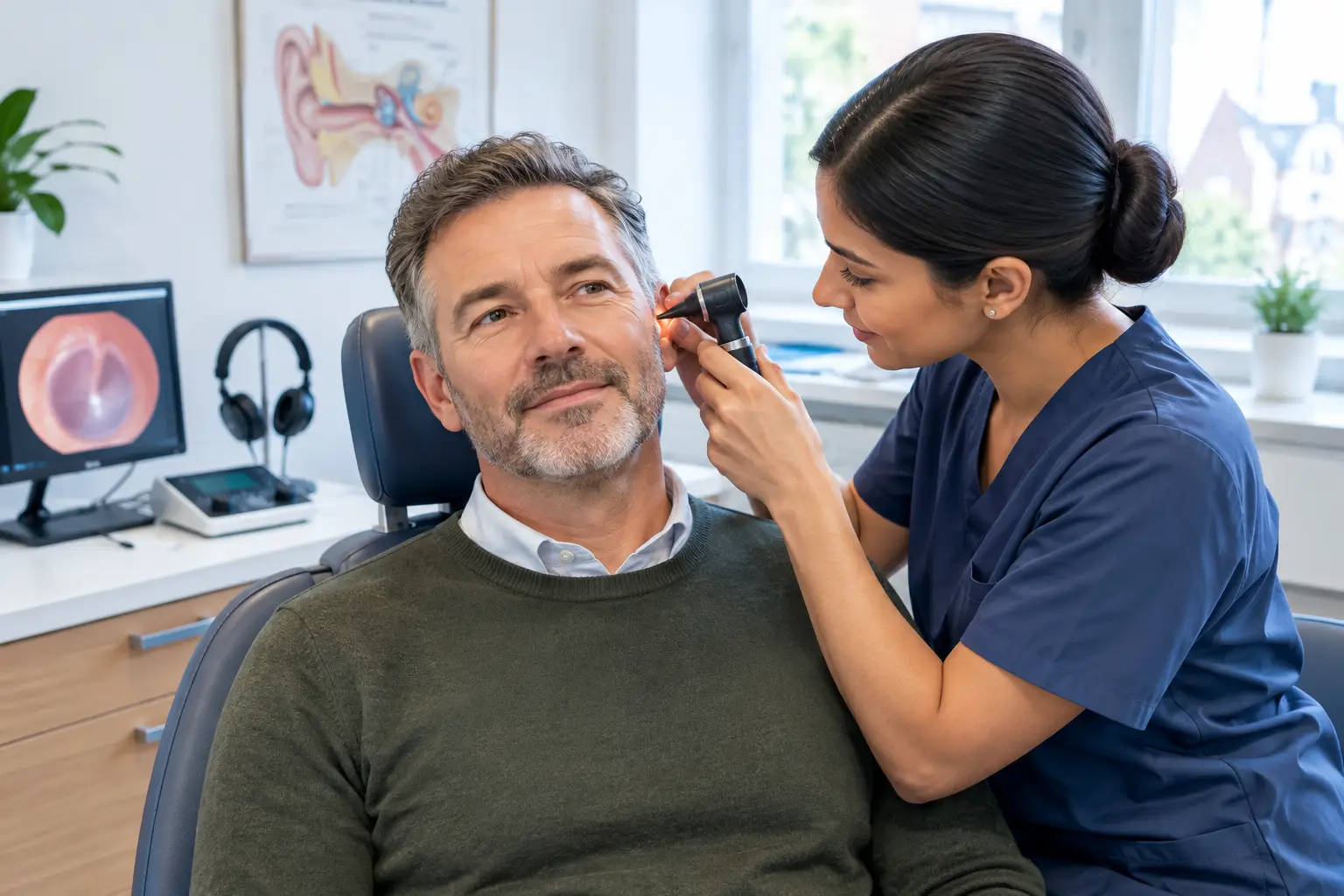
The ears are then examined using specialist equipment. This allows the clinician to assess the ear canal and eardrum, and to identify concerns such as wax build-up, inflammation, infection, skin conditions or a perforated eardrum. Not every symptom can be seen in the ear canal, but examination is an essential first step in establishing whether it is safe and appropriate to proceed with hearing tests or earwax removal.
Hearing assessment commonly involves pure tone audiometry. You listen for a range of tones through headphones and respond when you hear them. Speech testing may also be used to understand how clearly you hear words, which can be particularly relevant if conversations are difficult despite sounds seeming loud enough. Where indicated, tympanometry can assess how the eardrum and middle ear are functioning.
The value lies in interpretation. Hearing results should be explained in plain language alongside your symptoms, lifestyle and medical history. A graph alone does not determine whether treatment is needed. Two people with similar test results may have very different communication needs.
When to arrange an adult ear health check
There is no single age at which everyone needs routine hearing testing. The right interval depends on your hearing history, symptoms, work and leisure noise exposure, and any relevant health conditions. However, an assessment should not wait until hearing difficulty has become a major source of stress.
Consider booking if you notice a persistent change in hearing, struggle to follow conversation in restaurants or family gatherings, hear ringing or buzzing, or feel that one ear is blocked. It is also sensible after repeated ear infections, a sudden change in tinnitus, exposure to exceptionally loud sound, or when family members have commented on your hearing.
Adults who use headphones regularly, play or attend amplified music, shoot, work in noisy environments, or have a history of military or industrial noise exposure may benefit from a baseline assessment even without obvious symptoms. A baseline does not predict every future change, but it gives a useful point of comparison should concerns arise later.
Age-related hearing loss is common, but it should never be treated as something you simply have to put up with. Untreated hearing difficulty can affect confidence, relationships, fatigue and participation at work. Early advice gives you more options, from monitoring and communication strategies to hearing rehabilitation where appropriate.
Symptoms that need prompt medical attention
Some ear symptoms require urgent medical assessment rather than a routine appointment. Seek same-day advice through appropriate urgent healthcare services if you experience sudden hearing loss, particularly in one ear, or sudden hearing loss with dizziness. New facial weakness, severe ear pain, bleeding after injury, significant discharge, or a rapidly worsening neurological symptom also needs prompt assessment.
Sudden sensorineural hearing loss is time-sensitive. Do not assume that a blocked feeling is earwax without being examined. Similarly, one-sided hearing loss, persistent one-sided tinnitus or tinnitus that pulses in time with your heartbeat should be assessed clinically and may require onward medical referral.
Earwax, tinnitus and hearing loss are not interchangeable
A common mistake is to attribute every hearing problem to earwax. Wax can cause a temporary blocked sensation, reduced hearing, feedback from hearing aids and discomfort, but it is only one possible cause. If wax is present, safe removal may improve hearing immediately. If symptoms remain afterwards, further testing is still important.
Microsuction is often the preferred method of professional wax removal because the clinician can work under direct visual guidance. It may not be suitable for every ear at every appointment, particularly where there is pain, infection or a relevant ear history. A qualified clinician will assess this before treatment rather than treating wax removal as a one-size-fits-all procedure.
Tinnitus is another area where assumptions can be unhelpful. Ringing, hissing, humming or buzzing may be associated with hearing changes, stress, noise exposure, jaw problems, medication or other health factors. There is not one universal cure, but an expert tinnitus assessment can identify contributing factors and provide a personalised management plan. For many people, understanding the symptom and having practical support significantly reduces its intrusiveness.
Preparing for your hearing appointment
You do not need to do anything elaborate before an appointment, but a little preparation can make the consultation more useful. Make a note of when the problem began, whether it affects one or both ears, and the situations in which it is most noticeable. If tinnitus is present, describe its sound, timing and whether it changes with movement or position.
Bring details of hearing aids or ear products you already use, along with any relevant medication and previous hearing-test results if you have them. It can also help to consider your priorities. Perhaps you want to follow colleagues in meetings without exhausting concentration, enjoy family meals without withdrawing from conversation, or return to music at a comfortable level. These goals matter when deciding what support is right for you.
Avoid inserting cotton buds, hairpins or other objects into the ear canal before your visit. These can push wax deeper, irritate the skin and occasionally cause injury. Ear candles are not a safe method of wax removal and do not provide a clinical assessment of the ear.
What happens after the assessment?
The next step should be proportionate to the findings. If your ears and hearing are healthy, you may simply be advised when to check again and how to protect your hearing in noisy settings. If wax is the issue, removal may be recommended once the ear has been examined. If the test identifies hearing loss, your audiologist should discuss its type, degree and practical implications before considering management options.
Hearing aids can be highly effective for suitable patients, particularly when fitting and follow-up are based on accurate testing and real-world listening needs. They are not an automatic answer for every hearing concern, and successful rehabilitation includes careful programming, counselling and adjustment. The aim is not merely to make everything louder, but to improve clarity and comfort in the situations that matter to you.
Where findings suggest a medical issue, referral to a GP, ENT specialist or other healthcare professional may be appropriate. This joined-up approach is important. A premium ear clinic should be clear about the limits of its role and make sure patients receive the right pathway of care.
Protecting your hearing between checks
The best hearing protection is the kind you will genuinely use. For occasional loud events, suitable earplugs may be enough. Musicians, shooters, swimmers and people exposed to regular workplace noise often benefit from custom-moulded protection designed for their specific activity. The trade-off is that more specialised protection costs more than disposable options, but fit, comfort and consistent use can be considerably better.
Keep headphone volume at a level that still allows awareness of your surroundings, and give your ears recovery time after loud sound. If you find yourself regularly asking others to repeat themselves or avoiding busy social spaces because listening feels like hard work, do not wait in silence.
At Tragus-The Ear Specialists, qualified audiologists can provide an expert assessment of your ears and hearing, explain the findings clearly and recommend care that fits your needs. A timely check can replace uncertainty with a practical route back to clearer, more comfortable everyday listening.