
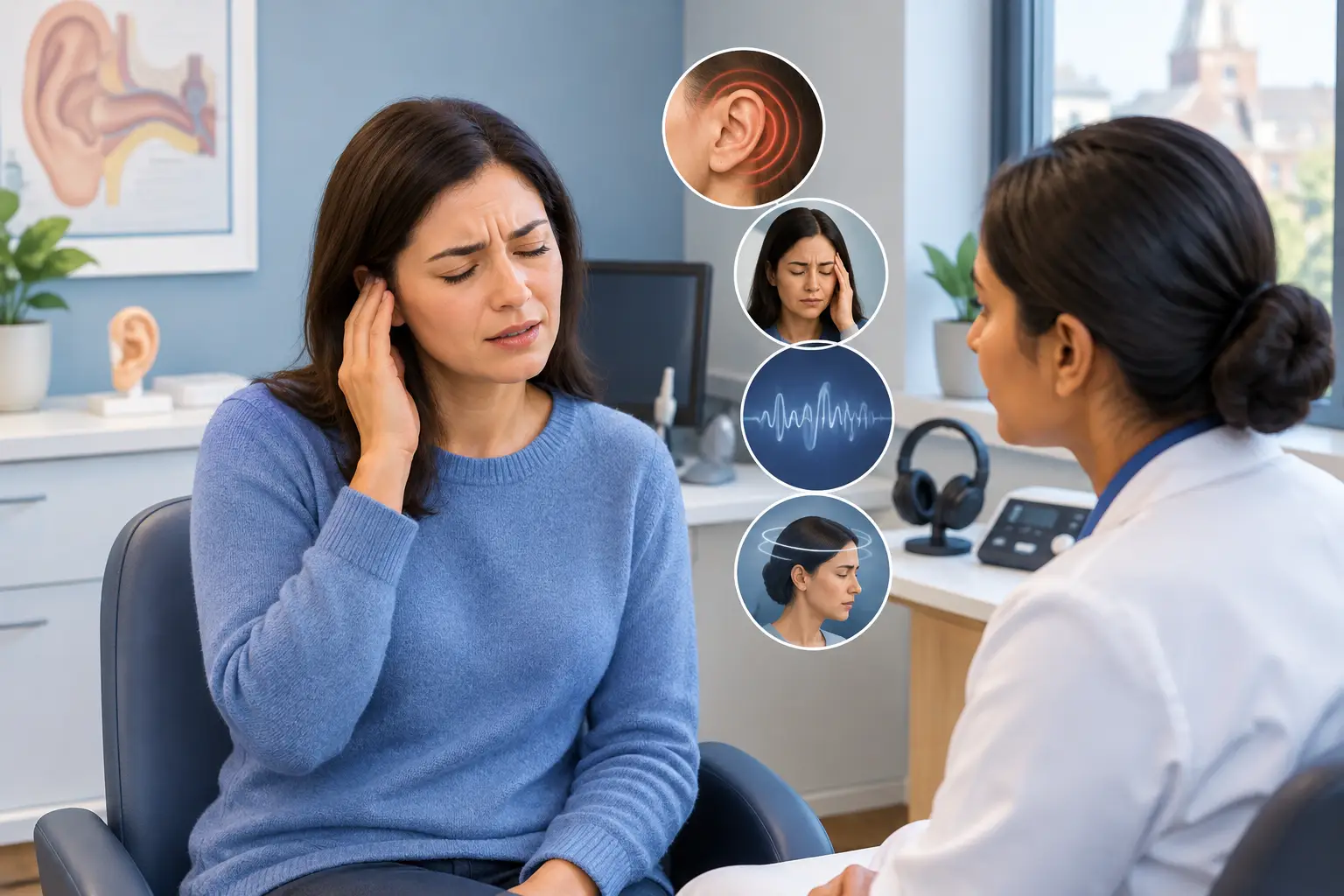
A sudden, piercing sound through a headset can leave more than a momentary ringing sensation. Some people develop persistent ear discomfort, sensitivity to ordinary noise or anxiety about using the phone again. These acoustic shock symptoms deserve careful attention, particularly when they interfere with work, sleep, communication or confidence.
Acoustic shock is a term often used when an unexpected, intense sound is delivered close to the ear, commonly through a telephone headset or earpiece. The sound may be a high-pitched tone, feedback, a screech, a dropped call or an unusually loud voice. The experience can be distressing even where a routine hearing test later appears within expected limits. That does not mean the symptoms are insignificant, nor that you should simply endure them.
What are acoustic shock symptoms?
Symptoms vary considerably from person to person. They may begin immediately after the incident or develop over the following hours and days. For some, the ear settles quickly. For others, discomfort and sound sensitivity can persist, especially if the incident has led them to become highly alert to sound.
Common symptoms include ear pain or a sharp ache, a blocked or pressured feeling, ringing or buzzing in the ear, and an increased awareness of everyday sounds. Voices, crockery, traffic, children playing or a television at ordinary volume may suddenly feel uncomfortable or overwhelming. Some people describe fluttering, fullness, burning, numbness or a sensation that the ear is not quite right.
Acoustic shock symptoms can also extend beyond the ear. Headache, jaw or facial discomfort, dizziness, nausea, poor concentration and disturbed sleep may occur. The emotional response matters too. A person who has experienced a frightening sound event may feel anxious before putting on a headset, avoid calls, or remain on edge in noisy settings. These reactions can amplify the impact on daily life, even when the original sound exposure was brief.
Why symptoms can continue after the sound has stopped
The ear is closely connected to systems involved in balance, facial sensation and the body’s protective stress response. Following an alarming sound, the hearing system may become more vigilant. This can make normal sounds feel intrusive and encourage a cycle of monitoring, tension and avoidance.
That cycle is not a sign that symptoms are imagined. It is a recognised pattern in sound sensitivity and tinnitus care: distress, disrupted sleep and repeated checking can make an auditory symptom more prominent. Equally, ear pain, pressure and hearing changes can have other causes, including wax build-up, middle-ear pressure difficulties or jaw tension. A professional assessment is therefore useful because the right next step depends on the whole picture, not the label alone.
It is also worth avoiding assumptions about the volume of the incident. A sound can feel exceptionally intense because it was sudden, close to the ear and unexpected. Conversely, prolonged exposure to moderately loud headset audio may be relevant even without one memorable event. A qualified audiologist can take a detailed history and consider both possibilities.
When should you seek an expert assessment?
If symptoms last beyond a day or two, recur with sound exposure, or are affecting your ability to work and communicate, arrange an audiology assessment. Prompt advice is particularly valuable for people who use headsets professionally, including call handlers, office staff, musicians, gamers and remote workers.
An expert hearing assessment may include a discussion of the sound event, your symptoms and medical history, alongside otoscopy to look at the ear canal and eardrum. Hearing tests can establish whether your hearing thresholds are within the expected range and whether there is a difference between ears. Depending on your concerns, an audiologist may also assess tinnitus, sound tolerance and the functional effect on work and wellbeing.
You should seek urgent medical advice rather than wait for a routine appointment if you experience any of the following after a sudden sound event:
- sudden or marked loss of hearing, especially in one ear
- severe spinning dizziness, loss of balance or vomiting
- bleeding or fluid leaking from the ear
- severe pain, facial weakness, or symptoms following a head injury
These symptoms need timely medical assessment. For less urgent but troubling symptoms, a specialist ear and hearing clinic can provide a structured evaluation and explain what the findings mean in practical terms.
What an audiology appointment can help clarify
Many people worry that their ears have been permanently damaged, while others feel dismissed because they can still hear a quiet test tone. Neither assumption is helpful without assessment. Hearing ability, tinnitus, ear discomfort and sound tolerance are related, but they are not the same thing.
A thorough appointment creates space to identify the main problem. Is it a change in hearing clarity? Is tinnitus the dominant concern? Does sound feel painfully loud, sharp or unpredictable? Are headaches, jaw clenching or stress reactions making symptoms harder to manage? Clear answers allow for an individual care plan rather than generic advice to “rest your ears”.
At Tragus-The Ear Specialists, qualified audiologists can assess hearing and tinnitus concerns with the clinical care needed for symptoms that affect everyday life. Where appropriate, advice may include sound-management strategies, tinnitus support, gradual work adjustments or referral onward when findings indicate this is needed.
Managing sound while you wait for help
The instinct after an acoustic incident is often to wear earplugs constantly or retreat into silence. Short-term protection from genuinely loud environments can be sensible. However, prolonged use of earplugs in ordinary quiet settings may make the hearing system more sensitive to normal sound for some people. The balance is to reduce harmful noise exposure without withdrawing from everyday sound altogether.
Keep headset volume at a comfortable level and use equipment with reliable volume controls. If you must take calls, ask whether temporary adjustments are possible, such as shorter call periods, alternative duties, a different headset or a quieter workstation. Taking regular breaks can reduce listening fatigue. Avoid turning up audio to overcome background noise; reduce the background noise where possible instead.
Try not to repeatedly test your hearing by exposing yourself to loud sounds or by comparing each ear in anxious moments. This can increase attention on the symptom without providing useful information. A brief note of when symptoms occur, what they feel like and what appears to aggravate or ease them is more useful at an assessment.
Sleep, hydration and jaw relaxation may sound simple, but they can be relevant. Tinnitus and sound sensitivity are often harder to tolerate when you are exhausted or tense. If you notice jaw pain, clenching or symptoms that change when chewing, mention this during your appointment so the wider pattern can be considered.
Returning to work and normal sound
There is no single timetable for recovery from acoustic shock symptoms. It depends on the nature of the exposure, the symptoms present, prior hearing or tinnitus concerns, and the demands of your work. A person whose discomfort settles in 48 hours may need only sensible listening habits. Someone with ongoing tinnitus, pain or sound sensitivity may benefit from a more gradual return to challenging sound environments.
The goal is not to avoid every sound. It is to restore confidence with sound at a pace that is manageable, while protecting your ears from genuinely excessive noise. For employers, this may mean taking a reported headset incident seriously, recording what happened and considering practical adjustments while the employee seeks clinical advice.
If a sudden headset sound has left you with persistent ringing, discomfort or a fear of ordinary noise, do not wait in silence. An expert assessment can distinguish the symptoms that need urgent attention from those that can be managed with informed, personalised support – and help you feel more secure around sound again.