
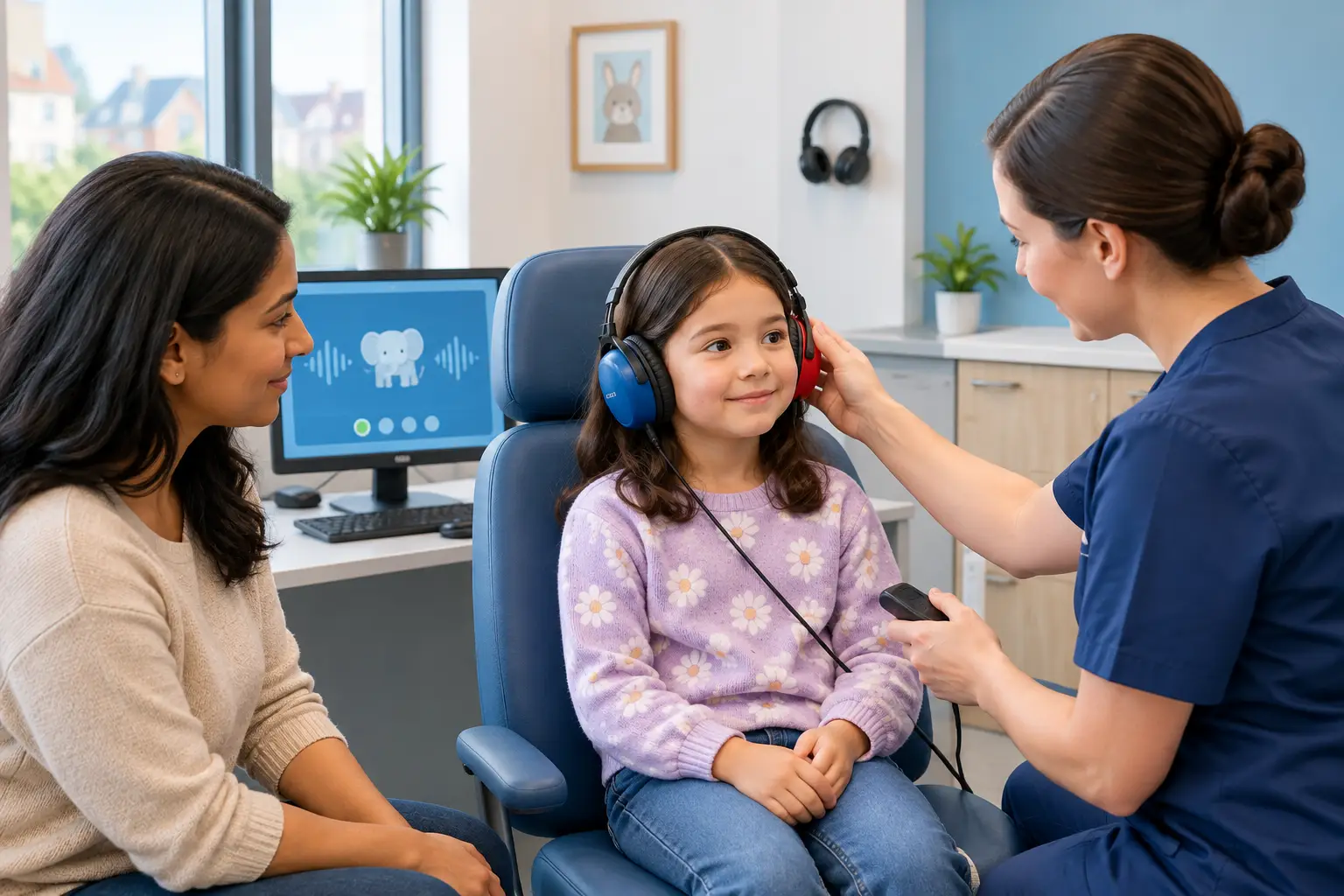
A paediatric hearing test review is about more than confirming whether a child can hear a beep. It looks at how well they detect sound, understand speech and use hearing in the situations that matter most – at home, in the classroom and with friends. Children often adapt remarkably well to hearing difficulty, so the signs can be subtle long before they can explain what feels different.
A specialist assessment provides clear, age-appropriate answers. It can distinguish between a temporary issue, such as middle-ear fluid, and a hearing loss that needs further investigation, monitoring or support. For parents, that clarity can replace uncertainty with a practical plan.
When should a child’s hearing be assessed?
Newborn hearing screening is valuable, but it is not a lifetime guarantee of normal hearing. Some hearing losses develop later, fluctuate with ear infections or become apparent only when listening demands increase at nursery or school.
Consider an expert assessment if your child frequently asks for repetition, turns one ear towards sound, watches faces closely when people speak or needs the television louder than others. Teachers may notice that they lose track of spoken instructions, appear distracted in busy classrooms or struggle with phonics and speech clarity. Younger children may seem unsettled by noise, fail to respond consistently to their name or have delayed speech and language development.
These signs do not automatically mean hearing loss. Attention, language development, neurodiversity and tiredness can affect listening too. That is precisely why a thorough assessment matters: it separates assumptions from evidence and considers hearing in the context of the individual child.
What happens during a paediatric hearing test review?
A high-quality paediatric appointment is adapted to the child’s developmental stage, confidence and communication needs. Qualified audiologists do not expect a toddler to complete the same test as a teenager. The aim is reliable clinical information without making the visit intimidating or overly long.
The appointment normally begins with a detailed discussion. Parents may be asked about pregnancy and birth history, newborn screening, ear infections, family history of hearing loss, speech and language milestones, school feedback and any concerns around sound sensitivity. This history helps the clinician decide which tests are most appropriate and how to interpret the results.
Looking at the ears first
The audiologist examines the ear canal and eardrum using an otoscope. Earwax, inflammation, a foreign body or signs of infection can affect hearing and may need addressing before a full result can be obtained. This simple step is especially important when a child’s hearing seems to have changed suddenly.
Testing middle-ear function
Tympanometry measures how the eardrum moves as air pressure changes gently in the ear canal. It does not test hearing directly, but it provides useful information about the middle ear.
For example, it may identify fluid behind the eardrum, commonly called glue ear, or reduced eardrum mobility after a cold or ear infection. Middle-ear fluid can cause a temporary conductive hearing loss, often making speech sound muffled, particularly in background noise. Whether it needs observation, medical review or further assessment depends on the duration, severity and impact on the child.
Measuring hearing in an age-appropriate way
For babies, an audiologist may use objective tests such as otoacoustic emissions. This checks whether the inner ear is producing a measurable response to sound. It is quick and non-invasive, although it can be affected by noise, movement, wax or middle-ear fluid. An absent response is not, by itself, a diagnosis of permanent hearing loss.
For babies and children who cannot yet respond consistently to tones, more specialist techniques may be considered, including auditory brainstem response testing where clinically indicated. These tests examine how the hearing system responds to sound and may be arranged as part of a wider diagnostic pathway.
Older babies and toddlers often respond well to visual reinforcement audiometry. They learn that turning towards a sound is rewarded with an engaging visual stimulus, such as an illuminated toy. For preschool children, play audiometry turns listening into a game: each time they hear a sound, they may place a figure in a box or complete another simple task.
School-age children can usually complete pure-tone audiometry by pressing a button or raising a hand when they hear sounds through headphones or inserts. Speech testing may also be used to assess how clearly they understand words, rather than simply whether they detect tones. This can be particularly relevant where parents report difficulty following conversation in a noisy environment.
Understanding the results
A hearing test result is not simply pass or fail. The audiologist considers the quietest sounds a child can hear across different pitches, whether both ears are affected equally, middle-ear findings and the reliability of the responses. They also relate the results to the child’s everyday communication and development.
A mild hearing loss can still have a meaningful effect. Children learn language through repeated access to speech, including quieter consonants that add detail and meaning to words. In a lively classroom, even a slight reduction in hearing can make it harder to follow teaching, join group work and listen while other children are talking.
Conversely, a normal hearing test is useful reassurance, but it may not end the conversation if a child is still struggling. Difficulties with auditory processing, attention, language or sound sensitivity require careful consideration and, in some cases, input from other professionals. A specialist clinic should explain what the tests do show, what they do not show and whether further steps are appropriate.
Common causes of hearing changes in children
Temporary middle-ear problems are common, particularly in younger children. Colds, recurrent infections and glue ear can all affect hearing for weeks or months. Wax blockage is another possible cause, though earwax should never be removed at home with cotton buds or improvised tools, as this can push it deeper or injure the ear.
Permanent hearing loss is less common but can be present from birth or develop later. It may be linked to genetic factors, certain infections, medical treatment, illness or no obvious cause. Prompt identification supports access to the right medical pathway, hearing technology, educational support and communication advice where needed.
Some children are more troubled by everyday sounds than by reduced hearing. Hyperacusis, or sound sensitivity, can make hand dryers, school bells, traffic or busy rooms feel uncomfortable or overwhelming. This needs a considered assessment rather than a blanket recommendation to wear earplugs all day, which can sometimes increase sensitivity over time.
How parents can prepare for the appointment
Tell your child they are visiting someone who will check how their ears listen, rather than warning them about a test. Keep the explanation calm and simple. If they use glasses, hearing devices or communication aids, bring them along. It is also helpful to note examples of situations where listening seems difficult, as well as any recent ear infections, medication and school observations.
Try to avoid placing anything in the ears before the appointment. If your child is unwell, very congested or has acute ear pain, let the clinic know, as this may influence what testing can be completed or how results are interpreted.
Parents should also feel able to ask direct questions. What type of hearing loss, if any, has been found? Is it likely to be temporary? Does one ear differ from the other? What does this mean for nursery, school and home? When should hearing be reviewed? Clear answers make it easier to act with confidence.
What happens after the assessment?
The next step depends on the findings. A child with normal results and no ongoing concerns may simply need reassurance. Where fluid or a mild temporary change is found, the plan may involve monitoring and a repeat test, particularly if hearing is affecting speech, behaviour or education. Suspected permanent hearing loss, recurrent ear disease or unusual findings may require onward referral for medical assessment and multidisciplinary support.
At Tragus-The Ear Specialists, paediatric assessments are delivered with the clinical care needed to help families understand both the result and the practical implications. The focus is not merely on completing a test, but on identifying what will help the child hear, communicate and participate more comfortably.
If you have noticed changes in how your child responds, speaks or manages noisy places, trust that observation. An expert hearing assessment can provide a calm, evidence-led starting point and ensure that small concerns do not have to become bigger barriers to learning and confidence.