
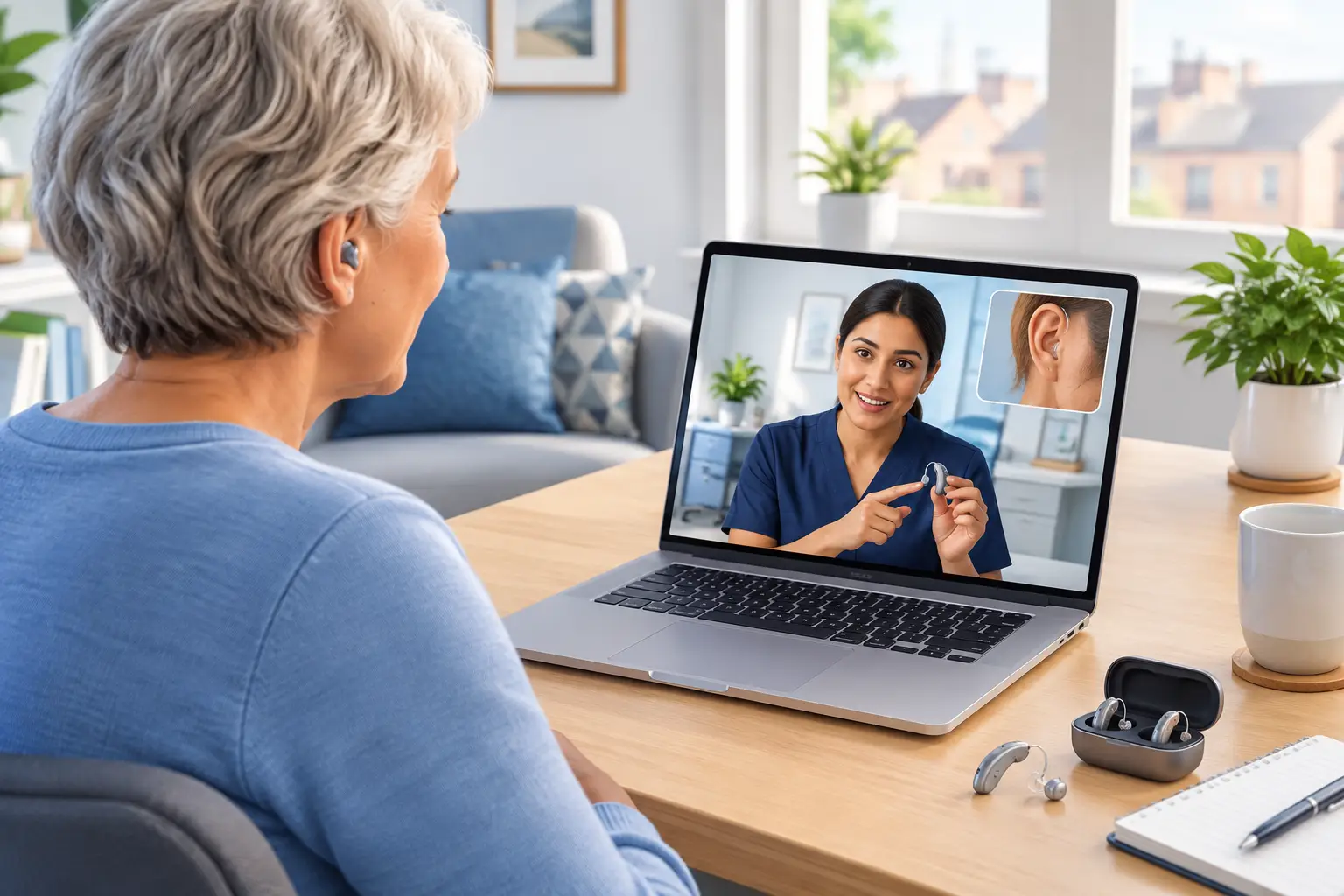
A hearing concern rarely arrives at a convenient time. Tinnitus may feel louder after a difficult week, a hearing aid may need adjustment before an important meeting, or a parent may notice their child is struggling to follow conversation at school. Audiology telehealth trends are changing how some of this support can be delivered, giving patients quicker access to qualified advice and follow-up care without suggesting that every ear problem can, or should, be managed remotely.
For a specialist ear clinic, the value of telehealth is not replacing clinical care. It is using technology carefully to make expert assessment, rehabilitation and ongoing support more accessible. The most effective approach is usually a hybrid one: in-person diagnostics and examination where they are clinically necessary, combined with remote appointments where they can genuinely improve continuity of care.
Why audiology telehealth trends matter
Telehealth has become a practical part of private healthcare because it can remove obstacles that prevent people from seeking help early. Travel, work commitments, caring responsibilities and mobility difficulties can all make a short review appointment harder to attend than it should be. For patients across Kent and London, a video or telephone consultation can provide a useful first conversation or follow-up without compromising the need for specialist input.
This matters particularly in audiology because hearing care is rarely a single appointment. A hearing assessment may lead to hearing aid fitting, fine-tuning, counselling, tinnitus therapy or a review of communication strategies. Progress is often measured over weeks and months, not minutes. Remote care can make it easier for patients to stay in contact with their audiologist between in-clinic visits.
That said, convenience is not the same as diagnosis. A remote conversation can identify concerns, guide the next step and support rehabilitation, but it cannot inspect the ear canal, remove impacted wax or replace a calibrated hearing test performed in appropriate clinical conditions. Patients should be wary of any service that presents a screen-based test as a complete substitute for a comprehensive audiological assessment.
Remote hearing aid care is becoming more useful
One of the clearest developments in audiology telehealth is remote hearing aid support. Many modern devices can be adjusted through secure manufacturer software, allowing an audiologist to make selected programming changes while the patient is at home. This can be particularly helpful when a new user is adapting to amplification or when sound preferences change in a familiar environment.
A patient may report that conversation is clearer but crockery sounds uncomfortably sharp, or that background noise remains difficult in a favourite restaurant. A remote review allows the audiologist to discuss these situations in detail, review hearing aid use and, where suitable, make an adjustment for the patient to trial. It also gives time for practical coaching on cleaning, charging, changing filters and using phone connectivity.
Remote fine-tuning is not always the best option. If hearing has changed, the fit is uncomfortable, the device is intermittently failing, or the patient has not had a recent hearing assessment, an in-person appointment is usually more appropriate. Real-ear measurement, physical inspection and face-to-face communication assessment remain central to high-quality hearing aid care. Technology should support professional judgement, not bypass it.
Tinnitus support is well suited to a hybrid model
Tinnitus is another area where telehealth can have real value. The distress caused by tinnitus is not determined solely by the sound itself. Sleep disruption, anxiety, concentration, stress and fear about what the symptom means can all make tinnitus feel more intrusive. These factors can be discussed thoroughly in a private remote consultation, often from the comfort of the patient’s own home.
Tinnitus counselling, education, sound enrichment guidance and structured management strategies can frequently be delivered remotely. For some people, this makes it easier to attend regular therapy sessions and maintain momentum with a treatment plan. It can also help the clinician understand the environments where tinnitus is most difficult, whether that is a quiet bedroom, a busy office or after a demanding day.
However, tinnitus should not be treated as an online-only problem. A proper tinnitus assessment may require hearing testing and consideration of the patient’s wider ear and medical history. Sudden hearing loss, one-sided tinnitus, pulsatile tinnitus, dizziness, ear pain or neurological symptoms need prompt clinical assessment and may require onward medical investigation. Remote triage can identify these warning signs, but it cannot replace examination.
Paediatric telehealth requires extra care
Families often welcome the flexibility of remote appointments, particularly where travel and school schedules are difficult to coordinate. Telehealth can be helpful for parent consultations, discussing hearing test results, explaining hearing aid management and supporting communication strategies at home and in the classroom.
Yet children are not simply smaller adult patients. Their hearing needs can affect speech, language, learning, behaviour and social confidence. Reliable paediatric hearing assessment depends on age-appropriate testing, skilled observation and equipment that meets clinical standards. A child’s ear canal may also need examination to identify wax, infection or other factors affecting hearing.
Remote appointments therefore work best as a complement to specialist paediatric care. They can give parents the time to ask questions and understand recommendations, while face-to-face assessment provides the evidence needed to make safe decisions about a child’s hearing.
The rise of home testing needs clinical perspective
Consumer hearing tests, smartphone checks and online questionnaires are becoming more visible. They can encourage people to think about their hearing and may prompt someone to seek professional advice sooner. That is a positive development when used with realistic expectations.
The limitation is that home checks are vulnerable to background noise, headphone quality, device settings and user technique. They do not allow an audiologist to look inside the ears, assess middle-ear function, investigate asymmetry in detail or understand the full impact of hearing difficulty on daily life. They may identify a possible concern, but they cannot establish the cause of it.
A clinically performed hearing test offers more than a chart of tones. It is part of an expert assessment that considers symptoms, ear health, communication needs and the most appropriate management plan. For someone who has noticed a gradual decline, tinnitus, blocked ears or difficulty hearing in noise, that distinction matters.
What good teleaudiology should include
As remote care expands, patients should expect the same standards of professionalism they would receive in clinic. A high-quality telehealth appointment should be led by a qualified audiologist, use appropriate privacy safeguards and have a clear purpose. The clinician should explain what can be assessed remotely, what cannot, and when an in-person appointment is necessary.
It should also be personalised. Hearing needs vary widely. A person who struggles in board meetings needs different support from someone who cannot hear family conversation clearly, plays music professionally or is managing tinnitus alongside poor sleep. Generic advice and automated results have limits. The strongest outcomes come from combining technology with careful listening, clinical expertise and follow-up.
Patients should also be given a clear route back into the clinic. If symptoms change, a hearing aid adjustment does not help, or a remote discussion raises a concern, care should move promptly to face-to-face assessment. Telehealth works well when it sits within a complete clinical service rather than operating as an isolated digital product.
Choosing the right appointment for your needs
A remote consultation may be appropriate if you need hearing aid support, a tinnitus follow-up, advice after an assessment, or a discussion about whether specialist care is needed. It can save time while keeping you connected to your clinician.
An in-clinic appointment is the safer choice for a first comprehensive hearing assessment, earwax removal, ear pain, discharge, sudden changes in hearing, persistent one-sided symptoms, dizziness, hearing aid fitting or paediatric diagnostic testing. Microsuction and ear examination, by their nature, must be performed in person by a suitably trained professional.
The direction of travel is clear: audiology will continue to use digital tools for communication, rehabilitation and support. But the best audiology telehealth trends will not make clinical care more distant. They will make it easier to receive the right level of specialist care at the right time.
If hearing, tinnitus or ear discomfort is affecting your work, relationships, sleep or confidence, do not wait in silence. A qualified audiologist can help you decide whether remote support is suitable or whether an expert in-clinic assessment is the right next step.