
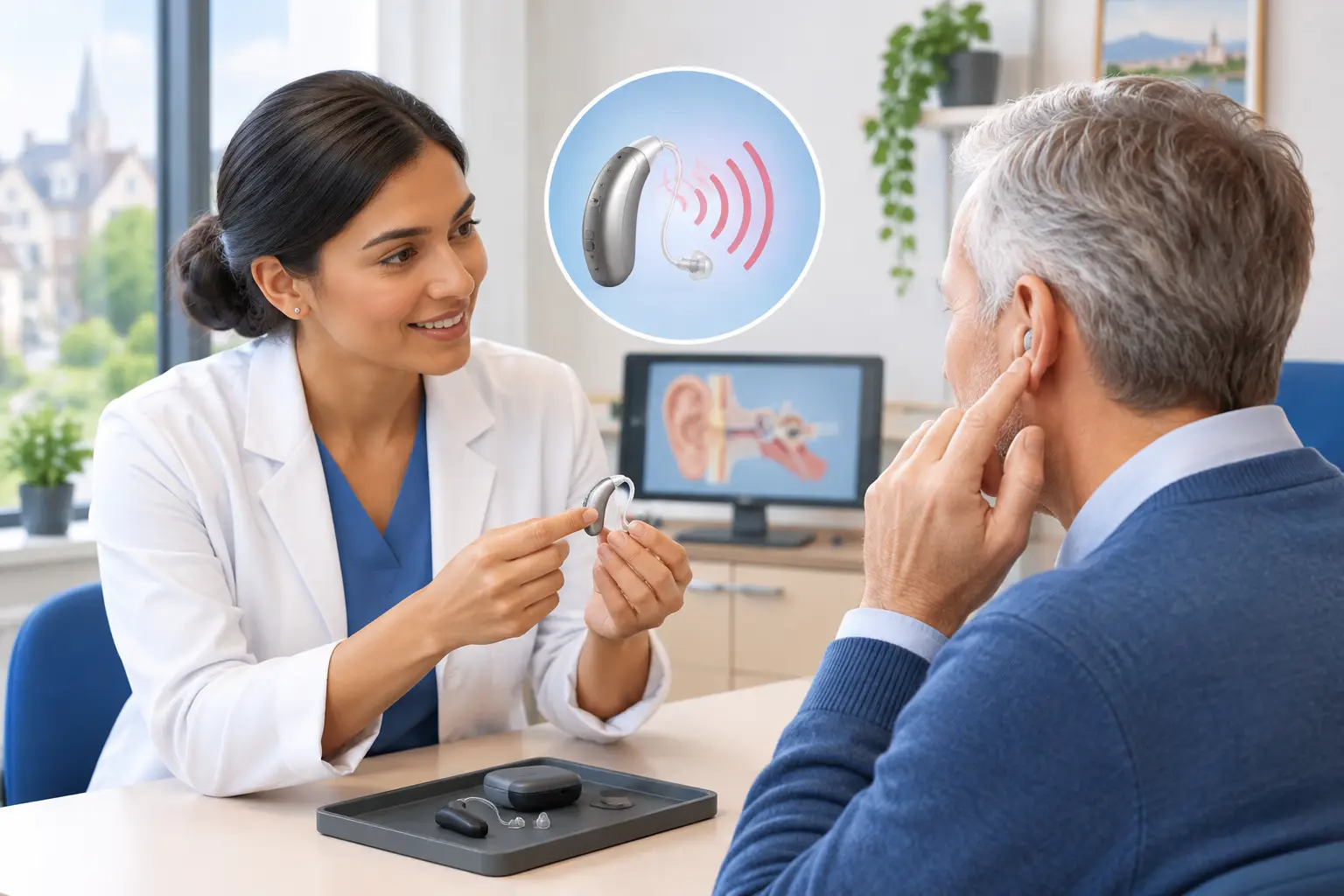
A hearing aid that suddenly whistles can make a quiet room feel uncomfortably loud. This sound, known as hearing aid feedback, is common and usually has a practical cause. It does not always mean the device is faulty, but persistent feedback should not be ignored. It can affect speech clarity, reduce confidence in wearing your hearing aids and, in some cases, indicate a change in your ears or hearing.
The good news is that many causes can be identified quickly. The right solution depends on when the whistling happens, the style of hearing aid you wear and whether anything has changed since your last fitting.
What is hearing aid feedback?
Feedback occurs when amplified sound escapes from the ear and is picked up by the hearing aid microphone. The device amplifies that sound again, creating a loop that produces a high-pitched whistle or squeal.
A brief whistle while inserting or removing a hearing aid can be normal, particularly before it is fully seated in the ear. Feedback that occurs while the aid is in place, when you hug someone, use the telephone or chew, is more likely to need attention.
Modern hearing aids use sophisticated feedback-management systems. These can reduce or cancel some whistling, but they cannot fully compensate for a poor fit, a blocked ear canal or an unsuitable setting. The device is working around a physical issue rather than resolving it.
Common causes of hearing aid feedback
Poor fit or a loose earpiece
For sound to stay in the ear, the earmould, dome or custom shell must form an appropriate seal. If it becomes loose, sound can leak out and return to the microphone. This is especially noticeable when the volume is higher or when you move your jaw while eating or speaking.
Ears can change over time. Weight changes, natural changes to skin and cartilage, or a child growing can all affect the fit of an earmould. A dome may also have been fitted in the wrong size, become damaged or simply not been inserted deeply enough.
If feedback only occurs on one side, compare how the two hearing aids sit. Do not force an aid further into the canal if it feels painful or resistant. Discomfort is a reason for assessment, not a reason to keep adjusting it at home.
Earwax or a blocked ear canal
Earwax can block the canal and alter the way sound travels around the hearing aid. Rather than moving naturally towards the eardrum, amplified sound may reflect back towards the microphone. The result can be feedback, reduced sound quality, a blocked sensation or a sudden need to turn the volume up.
People who wear hearing aids are often more prone to wax build-up because the device can affect the ear canal’s normal self-cleaning process. It is tempting to use cotton buds, hair grips or ear candles, but these can push wax deeper, injure the ear canal or damage the hearing aid.
Professional earwax removal, including microsuction where clinically appropriate, allows the canal to be checked properly. It also prevents an avoidable fitting problem from being mistaken for a hearing aid fault.
A cracked tube, blocked tubing or worn components
Behind-the-ear hearing aids with tubing can whistle when the tube has hardened, shrunk, split or detached from the earmould. Moisture and wax can also block tubing, reducing the sound entering the ear and changing the acoustic balance of the system.
Receiver-in-canal devices may develop feedback if the receiver wire is damaged or if the dome is torn, flattened or clogged with wax. A blocked wax filter can produce poor sound, although it is not always the direct cause of whistling.
Routine cleaning and timely replacement of consumable parts matter. Your audiologist can show you which parts are safe to change yourself and which should be handled in clinic.
Settings that no longer suit your hearing
Feedback may arise after a hearing aid is programmed to provide more amplification. Higher power can be clinically necessary, but it places greater demands on the seal between the device and ear canal. If hearing has changed, the hearing aid may need adjustment alongside a new hearing assessment.
This does not mean that reducing the volume is always the answer. Turning down a hearing aid may stop the whistle, but it can also reduce access to speech, particularly in meetings, family conversations and busy environments. A qualified audiologist can check whether the device settings, physical fit and your current hearing levels remain appropriately matched.
Objects close to the hearing aid
Feedback may occur only in particular situations. A telephone held near the hearing aid, a hat, hood, scarf, hand, pillow or another person’s shoulder can reflect amplified sound back into the microphones. This type of whistling is often intermittent and stops as soon as the object moves away.
If feedback occurs only when using the telephone, try holding it slightly above or behind the ear rather than directly over the hearing aid. Your audiologist can also advise whether a dedicated telephone programme or Bluetooth streaming option may be helpful for your device.
Safe checks you can make at home
Before arranging an appointment, check that the hearing aid is switched on, correctly inserted and free from visible wax or moisture. Replace the battery or fully charge the device if needed. A low battery does not usually cause classic feedback, but poor power can cause unpredictable performance.
Check the dome, mould and tubing for visible damage, discolouration or hardening. If you have been shown how to replace a wax filter or dome, follow the manufacturer’s guidance for your specific model. Avoid using pins or sharp objects inside the hearing aid.
It is also useful to notice the pattern. Does the whistle happen all day, only when you touch the aid, only in one ear, or after meals? Has your ear felt blocked, sore or itchy? These details help an audiologist identify the most likely cause efficiently.
When to arrange an expert hearing aid review
A hearing aid review is recommended if feedback persists after you have checked insertion and basic maintenance. It is particularly important if the whistle is new, one-sided, associated with reduced hearing benefit or accompanied by ear discomfort.
Arrange prompt clinical advice if you have pain, discharge, bleeding, dizziness, a sudden change in hearing or new significant tinnitus. These symptoms should not be treated as a routine hearing aid problem. They require an ear and hearing assessment to establish the cause.
At a specialist appointment, a qualified audiologist may examine the ear canal, assess for wax, test the hearing aid’s output and inspect the tubing, receiver, microphones and earmould. They may also carry out real-ear measurements, which assess how sound is delivered in your individual ear canal. This is far more precise than relying on a standard device setting alone.
If the fit has changed, the solution may be a new dome, adjusted receiver length, replacement tubing or a new custom earmould. If your hearing has changed, reprogramming should be based on current test results rather than guesswork. For children, regular review is especially important because their ears and hearing needs can change as they grow.
Preventing feedback from returning
Consistent care reduces the chance of repeat problems. Clean hearing aids as instructed, keep them dry overnight and replace wax filters, domes and batteries at the recommended intervals. Store them safely away from heat, moisture and pets, which are surprisingly capable of damaging small hearing aid components.
Regular hearing reviews are equally valuable. Hearing rehabilitation is not a one-off fitting. The aim is comfortable, clear hearing in the situations that matter to you, whether that is following conversation at work, hearing family members at home or feeling less isolated in social settings.
At Tragus-The Ear Specialists, hearing aid concerns are approached as clinical questions, not simply equipment problems. An expert assessment can establish whether feedback is caused by the device, the fitting, earwax or a change in hearing, then provide an appropriate solution.
You should not have to tolerate a whistle every time you wear your hearing aids. A well-fitted, well-maintained device should support your hearing quietly and comfortably, allowing you to focus on the conversation rather than the technology.