
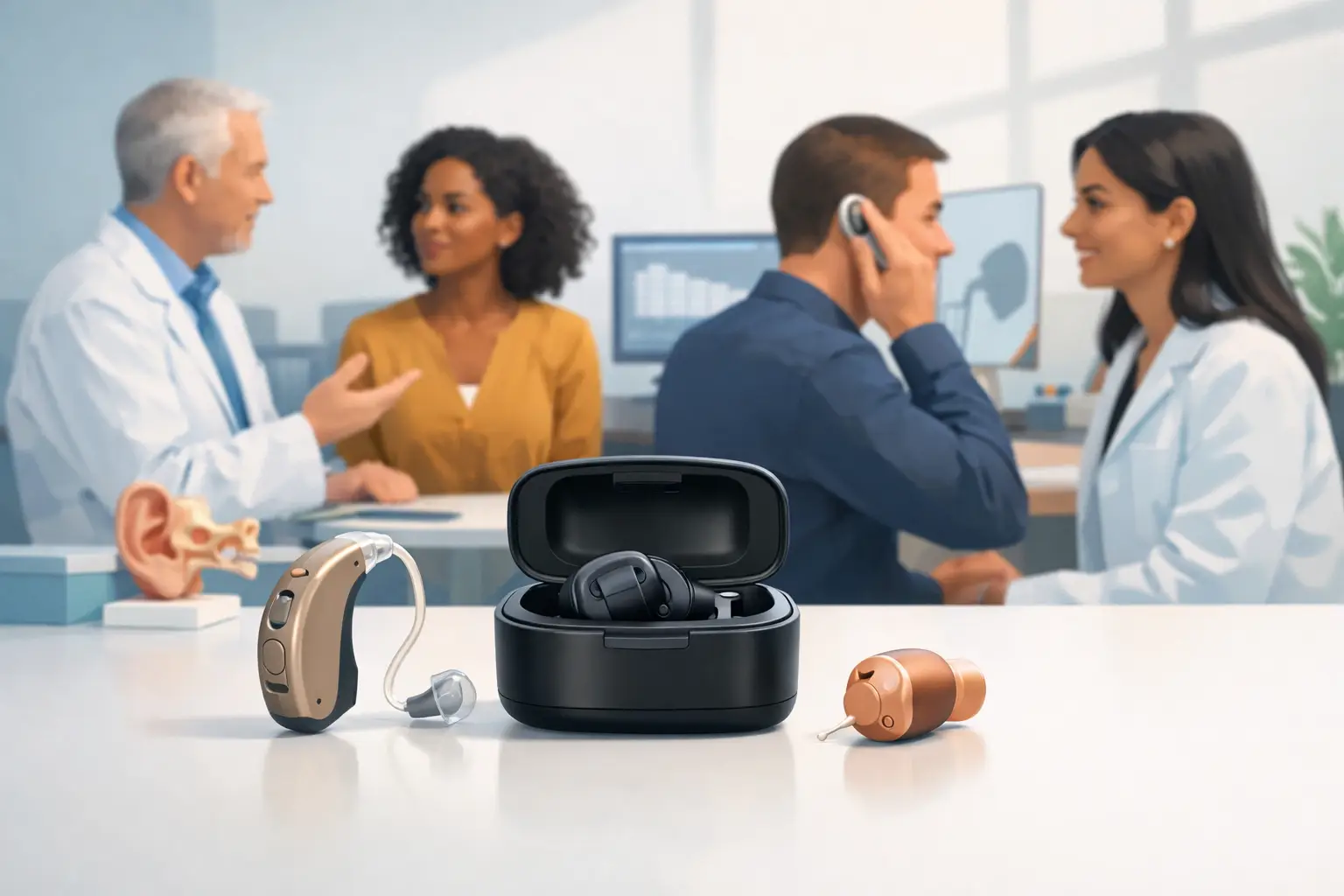
Choosing hearing aids is rarely about finding the most expensive model or the newest app. For most people comparing the best hearing aids 2026, the real question is simpler – which device will help me hear clearly, comfortably and consistently in the situations that matter to me?
That answer depends on your hearing profile, your ear anatomy, your dexterity, your listening environments and, just as importantly, the quality of the assessment and fitting behind the device. A hearing aid can be technically excellent and still be the wrong choice if it does not suit your day-to-day life.
What the best hearing aids 2026 really have in common
The best devices in 2026 are not defined by one brand or one headline feature. They tend to share a few core strengths: clearer speech understanding in background noise, better comfort over long wear, more reliable rechargeability, and more precise personalisation.
Modern premium hearing aids are increasingly effective at separating speech from competing sounds. That matters if you struggle in restaurants, family gatherings, meetings or busy public spaces. The improvement is real, but it is not magic. Even the most advanced hearing aid cannot make a noisy room silent. What it can do is reduce listening effort and improve access to speech, which often makes social situations feel less tiring.
Another common feature is connectivity. Bluetooth streaming, hands-free calls and app-based adjustments are now standard in many devices, not just top-tier models. For some patients this is genuinely useful. For others, especially those who prefer simplicity, it can become an unnecessary extra. The best choice is not the aid with the longest feature list. It is the one you will wear confidently every day.
Best hearing aids 2026: styles and who they suit
Style matters more than many people expect. The shape and size of the aid affect comfort, sound quality, maintenance and battery life.
Receiver-in-canal hearing aids
For many adults, receiver-in-canal devices remain the strongest all-round option in 2026. They sit discreetly behind the ear with a fine wire leading to a small speaker in the ear canal. They suit a wide range of hearing losses, often sound more natural than smaller in-ear options, and allow good flexibility during fine-tuning.
They are also usually easier to handle than tiny custom devices. That can be important if you have reduced dexterity, arthritis or vision changes. The trade-off is visibility. While modern designs are discreet, they are not invisible.
Behind-the-ear hearing aids
Behind-the-ear aids are slightly larger and often the most practical choice for more significant hearing loss, for ears that produce recurrent wax, or for people who prioritise durability over cosmetics. They can offer strong amplification, dependable controls and robust battery performance.
Some patients dismiss them too quickly because they imagine older, bulky models. Current devices are far more refined. In the right case, they are one of the most dependable solutions available.
In-the-ear and custom hearing aids
Custom in-the-ear styles appeal to people who want a more self-contained device with no external wire. They can work well for mild to moderate losses and may be preferred for comfort, appearance or ease of insertion.
However, smaller is not always better. Tiny custom aids can be more affected by earwax and moisture, may have shorter battery life, and can be harder to manage physically. If you have narrow ear canals or fluctuating wax problems, a custom option may be less practical than it first appears.
Which features are worth paying for?
This is where careful guidance matters. Marketing can make every new feature sound essential, but not every patient benefits equally from every upgrade.
Noise management and speech clarity
If you spend a lot of time in busy environments, this is often worth prioritising. Better directional microphones and smarter sound processing can improve speech access and reduce listening fatigue. For working adults, carers, grandparents and anyone socially active, this feature category often has real value.
Rechargeable batteries
Rechargeable hearing aids are now the preferred option for many patients. They are convenient, cost-effective over time and avoid the difficulty of changing tiny disposable batteries. For some users, especially older adults or those with reduced hand function, rechargeability is more than a convenience – it is the difference between independent use and daily frustration.
The limitation is routine. Rechargeable aids need consistent overnight charging. If you travel frequently, forget to charge devices or want the reassurance of swapping batteries instantly, disposable options still have a place.
Bluetooth and app control
For confident smartphone users, direct streaming and app control can be genuinely helpful. Adjusting programmes, checking battery levels and streaming calls or media directly to hearing aids can improve everyday use.
But there is no clinical prize for using more technology than you need. Some patients are better served by simple manual controls and stable programming. The right choice should reduce effort, not add to it.
Tinnitus support features
For patients with hearing loss and tinnitus, some hearing aids include sound therapy or tinnitus relief programmes. These can be valuable as part of a wider management plan, particularly when fitted by clinicians with experience in tinnitus assessment and therapy.
They should not be sold as a cure. Tinnitus management usually works best when hearing support, counselling, sound enrichment and realistic expectations are brought together.
Why the fitting matters as much as the device
A common misconception is that hearing outcomes depend mainly on the brand. In practice, the assessment, fitting and follow-up often make the difference between a hearing aid that sits in a drawer and one that changes daily life.
The best hearing aids 2026 still need accurate hearing diagnostics, careful programming and professional verification. Your prescription should reflect the pattern and degree of your hearing loss, but also your comfort levels and listening goals. If you mainly struggle one-to-one at home, your priorities may differ from someone who spends all day in meetings or teaching in noisy classrooms.
Good fitting is not a one-off transaction. Hearing aids usually need adjustment as your brain adapts to amplified sound. At first, ordinary sounds can seem surprisingly sharp or prominent. This does not always mean the aid is wrong. It often means the settings need refinement and you need a short period of guided adjustment.
That is one reason a specialist clinic has value beyond the device itself. Expert assessment, rehabilitation and aftercare help ensure that the technology works for you rather than against you.
How to judge what is best for you
Start with your hearing needs, not the brochure. If conversations are difficult in background noise, prioritise speech performance. If handling small objects is an issue, think carefully about device size and charging. If you have recurrent wax problems or narrow canals, ask whether a custom model is wise.
It is also worth thinking about your lifestyle honestly. Someone retired and mostly at home may not need the same specification as someone commuting, attending meetings and dining out several times a week. Neither choice is better in itself. The goal is appropriate technology, not over-specification.
Price also needs context. Premium hearing aids can offer meaningful improvements, especially in complex listening environments. But a mid-range device, well selected and properly fitted, may outperform a premium one that is poorly matched to the patient. More expensive does not automatically mean better for your ears.
Questions worth asking at a hearing aid appointment
When discussing options with an audiologist, ask how each recommendation relates to your hearing test, your communication goals and the environments you find hardest. Ask what follow-up is included, how adjustments are handled, and whether the clinician measures and verifies the fitting rather than relying only on manufacturer defaults.
You should also ask about maintenance, wax management, expected lifespan and realistic performance in noise. A careful clinician will not promise perfect hearing. They will explain likely benefits clearly, including where hearing aids help most and where limitations remain.
For families seeking support for older relatives, practical handling can be just as important as sound quality. If the wearer cannot insert, clean or charge the device comfortably, even an advanced aid may fail in practice.
A clinical view on the best hearing aids 2026
From a specialist audiology perspective, the best hearing aids in 2026 are the ones selected after a proper diagnostic assessment, fitted precisely, and supported with thoughtful aftercare. They should suit the patient’s hearing loss, communication demands and long-term ear health, not simply reflect a trend or promotion.
For many adults, that will mean a discreet rechargeable receiver-in-canal aid with strong speech-in-noise performance. For others, a more powerful behind-the-ear device or a custom in-the-ear option will be the better clinical fit. It depends.
If you are comparing hearing aids because hearing loss is starting to affect conversation, confidence or daily comfort, do not wait until it becomes overwhelming. A well-chosen hearing aid does more than increase volume. It can reduce strain, improve connection and help you hear the world in high-definition once more.
The most useful next step is not chasing the newest model name. It is getting an expert assessment that turns your symptoms into a clear plan.