
Missing part of a conversation is rarely a sudden event. It is more often a gradual pattern: asking people to repeat themselves, turning up the television, avoiding busy restaurants, or feeling exhausted after meetings because listening takes so much effort. An adult hearing screening in Kent provides a clear, clinically informed starting point when hearing no longer feels effortless.
A screening is not simply about whether sounds are loud enough. It is an opportunity to understand how your ears are functioning, identify possible causes of change and decide whether you need further assessment, treatment or hearing rehabilitation. For adults across Dartford, Sevenoaks, Swanley and the surrounding areas, prompt expert care can make a meaningful difference to communication, confidence and quality of life.
When should you arrange an adult hearing screening in Kent?
Many people wait until hearing difficulties become impossible to ignore. Yet early assessment is usually the more helpful approach. Hearing changes can be subtle, and the brain often works hard to fill in the gaps for a long time before a person recognises the extent of the problem.
It is sensible to arrange a screening if you regularly ask others to repeat themselves, especially in groups or places with background noise. You may notice that speech sounds unclear while other sounds seem loud enough, or that television dialogue is harder to follow than it used to be. Family members are often the first to spot these changes.
Tinnitus, which may sound like ringing, buzzing, hissing or humming in the ears, is another good reason to seek advice. Tinnitus does not always mean hearing loss is present, but the two commonly occur together. A professional assessment can help establish whether there is an underlying hearing change and guide appropriate support.
Other reasons to book include a persistent blocked sensation, difficulty hearing on the telephone, an increase in sound sensitivity, or concerns following regular exposure to loud noise at work, music events or shooting activities. If earwax is affecting your hearing, safe clinical removal may be all that is required before testing can give an accurate picture.
Symptoms that need more urgent medical attention
A routine hearing screening is not appropriate for every ear symptom. Sudden hearing loss, especially in one ear, should be treated as urgent and assessed promptly through appropriate medical services. The same applies to severe ear pain, discharge, dizziness with new hearing loss, facial weakness, or a sudden onset of one-sided tinnitus.
These symptoms can have several causes, some of which need timely medical treatment. Do not wait for them to settle or assume they are caused by wax.
What happens during a professional hearing screening?
A worthwhile hearing appointment should be more than a quick test in a noisy retail setting. At a specialist clinic, the process begins with your history: when you first noticed a change, whether it affects one or both ears, your noise exposure, general health, medication and the situations you find most difficult.
Your clinician will usually examine the ear canal and eardrum using otoscopy. This is important because wax, inflammation, a perforated eardrum or other visible ear conditions can influence hearing and may need addressing before testing proceeds.
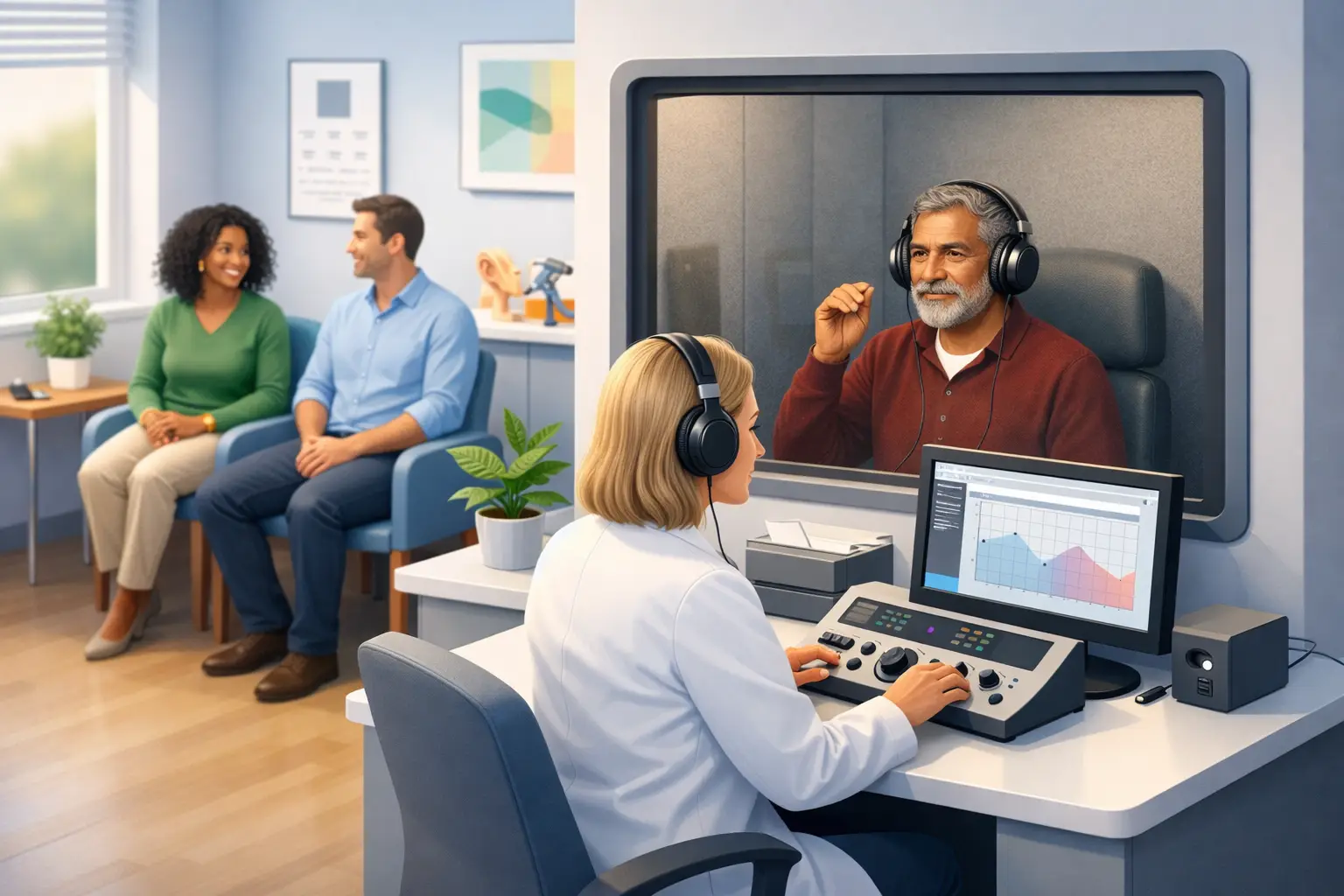
The hearing assessment itself normally includes pure-tone audiometry. You listen to a series of tones through headphones and indicate when you can hear them. This maps the quietest sounds you can detect at different pitches. Speech testing may also be used to assess how clearly you understand spoken words, which can be particularly relevant if your main concern is conversation in background noise.
The results should be explained in plain language, not handed over as a graph without context. A qualified audiologist will discuss the type and degree of any hearing loss, whether the pattern suggests a need for medical review, and what options are likely to help. Sometimes the result is reassuringly normal. That is still valuable, particularly where tinnitus, sound sensitivity or listening difficulty remains a concern.
Why an ear examination matters before hearing testing
Not all hearing difficulty is caused by permanent hearing loss. A blocked ear canal can reduce hearing significantly, and many people first notice wax when one ear suddenly feels muffled or their own voice sounds unusually loud.
It is tempting to use cotton buds or home remedies to clear the ear. In practice, these can push wax deeper, irritate the delicate skin of the ear canal or, in some circumstances, cause injury. If wax is present and affecting assessment, microsuction performed by a trained clinician is a precise method of removal that avoids flushing the ear with water.
There is also a practical point: testing through a blocked ear canal can produce misleading results. Looking at the ears first helps ensure that any hearing test reflects your hearing as accurately as possible.
Screening, diagnostic testing and hearing rehabilitation
The word ‘screening’ can mean different things. A brief check may indicate whether further investigation is advisable, while a full adult audiological assessment provides more detailed diagnostic information. The right appointment depends on your symptoms, history and goals.
If the assessment identifies hearing loss, hearing aids may be recommended. This is not an automatic outcome, and it should not be presented as one. Some people need medical referral, wax removal or monitoring instead. Others benefit from hearing technology, but the best results depend on careful fitting, appropriate programming and follow-up support rather than the device alone.
Modern hearing aids can improve access to speech, reduce listening effort and support participation in work, family life and social settings. They do not remove all background noise or restore hearing to exactly how it was decades ago. A good clinician will be clear about those limits while helping you choose technology that reflects your hearing profile, dexterity, lifestyle and communication needs.
For people with tinnitus or hyperacusis, support may extend beyond amplification. Tinnitus assessment and therapy can address the distress, sleep disruption, concentration difficulties or anxiety that can accompany persistent ear noise. Sound sensitivity also requires individual assessment, because overprotecting the ears in ordinary everyday sound can sometimes maintain the problem.
Choosing a specialist hearing clinic
When selecting an adult hearing screening in Kent, clinical credentials and the quality of aftercare matter. Hearing is closely connected to balance, communication, cognition, wellbeing and workplace performance. It deserves more than a rushed transaction.
Look for qualified audiologists who take a detailed history, examine the ears, use appropriate test equipment and explain what the findings mean for you. It is also helpful to choose a clinic able to manage the wider picture, including earwax, tinnitus, hearing aids and onward referral where needed. This avoids treating a single symptom in isolation.
At Tragus-The Ear Specialists, adults can access assessment from experienced clinicians in a private, specialist setting. The focus is on establishing the cause of your concern and recommending a proportionate next step, whether that is reassurance, ear care, hearing rehabilitation or further medical investigation.
Preparing for your appointment
You do not need to do anything complicated before a hearing screening. Make a note of when your symptoms began and the situations in which hearing feels most difficult. If you use headphones, work around loud equipment, have served in the armed forces, or attend frequent live music events, mention this. Bring details of relevant medication and previous hearing test results if you have them.
Try not to insert anything into your ears beforehand. If you suspect wax, say so when arranging the appointment, as this may affect the most suitable booking type. If a partner, friend or relative has noticed changes in your hearing, their observations can be useful too.
Hearing loss is common, but struggling in silence should never be treated as an unavoidable part of getting older. A timely assessment offers clarity, and clarity makes it easier to take the next step towards hearing conversations, music and everyday life with greater ease.