
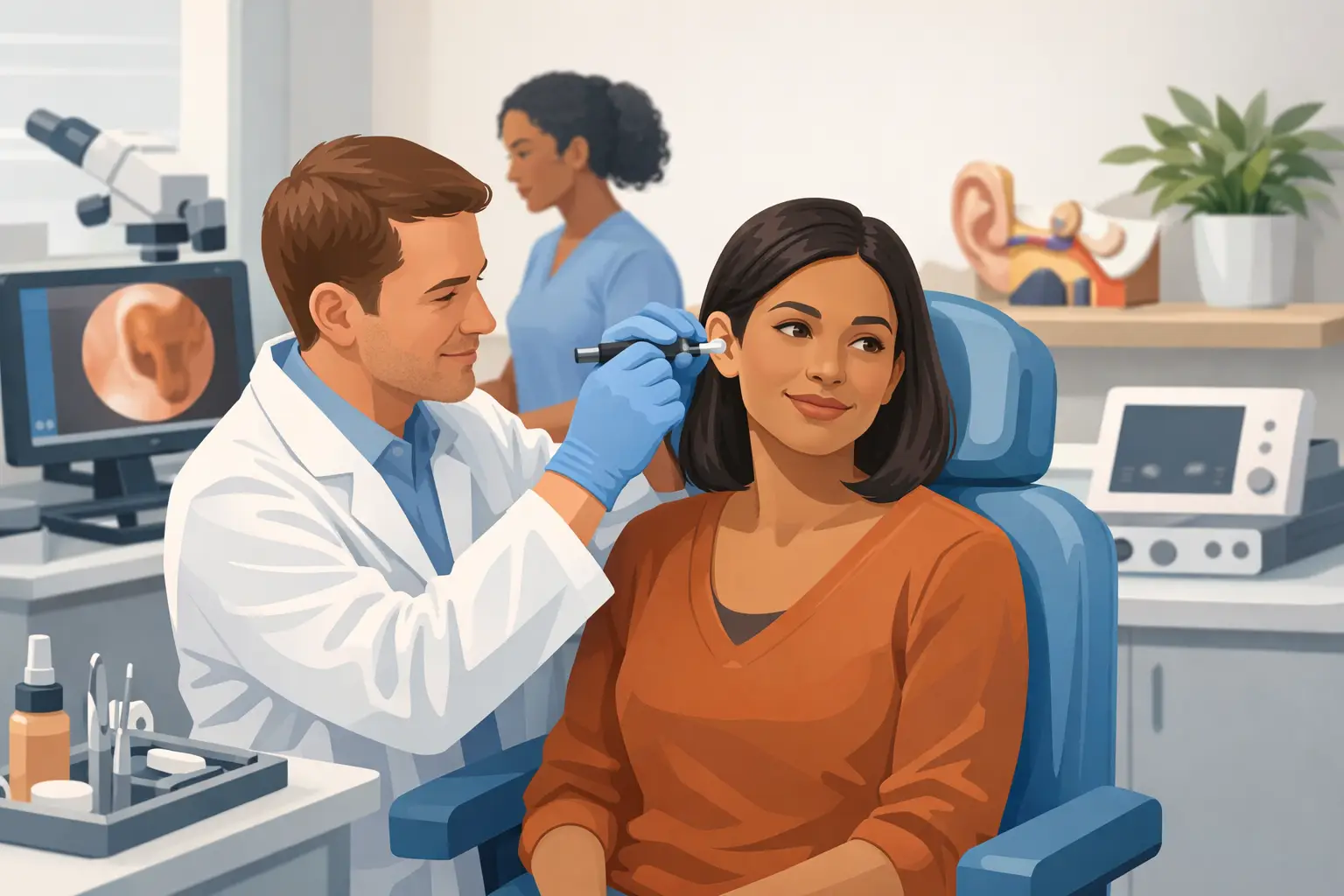
When one ear suddenly feels blocked, voices sound distant, or your own footsteps seem oddly loud inside your head, it is rarely just an annoyance. Impacted earwax can interfere with hearing, trigger discomfort, worsen tinnitus symptoms, and make everyday communication harder than it should be. If you are looking for an earwax removal Dartford clinic, the right choice is not simply the nearest appointment – it is a service led by qualified clinicians who can tell the difference between routine wax build-up and a problem that needs wider ear assessment.
Why earwax sometimes needs clinical removal
Earwax is not a sign of poor hygiene. It is a normal, protective substance made by the ear canal to trap dust, debris and bacteria. In many people, it moves out of the ear naturally without any treatment at all.
Problems begin when wax becomes impacted. This can happen for several reasons. Some people naturally produce more wax. Others have narrower ear canals, wear hearing aids or earbuds regularly, or use cotton buds that push wax deeper rather than removing it. Even careful self-care can make the blockage worse if wax has already hardened.
The result is often more than a muffled sensation. Patients commonly report reduced hearing, a feeling of pressure, earache, itching, dizziness, feedback from hearing aids, or a flare-up in tinnitus. For children and older adults, the effects can be especially disruptive because blocked hearing may be mistaken for inattention, confusion or worsening hearing loss.
That is where a specialist ear clinic adds value. Wax removal should not be treated as a quick retail transaction when symptoms could overlap with infection, perforation, inflammation, Eustachian tube dysfunction or an underlying hearing issue.
Choosing an earwax removal Dartford clinic
If you are comparing providers, it helps to look beyond availability and price alone. Ear care is safest and most effective when carried out by qualified audiologists or clinicians who are trained to examine the ear properly before treatment begins.
A good earwax removal Dartford clinic should start with assessment, not assumptions. The clinician should inspect the ear canal, confirm that wax is the cause of the problem, and decide whether removal is appropriate on that day. That matters because not every blocked ear is caused by wax, and not every ear is suitable for every technique.
Specialist clinics also tend to be better equipped for patients with more complex needs. That includes people with previous ear surgery, a history of perforated eardrums, recurring infections, sensitive ear canals, tinnitus, hyperacusis, hearing aid use, or children who may need a calmer and more experienced approach.
For many patients in Dartford and surrounding parts of Kent, reassurance comes from knowing they are being seen in a clinical setting by professionals whose work extends well beyond wax removal. A broader ear and hearing service means symptoms can be placed in the right context rather than treated in isolation.
Why microsuction is often the preferred method
Microsuction is widely regarded as one of the safest and most precise ways to remove earwax when performed by an appropriately trained clinician. Instead of flushing the ear with water, the clinician uses magnification and a fine sterile suction device to remove wax under direct vision.
The main advantage is control. Because the ear canal is viewed clearly throughout the procedure, the clinician can remove wax carefully and stop if the canal is irritated or the wax is too adherent to clear comfortably in one sitting. That level of precision is one reason microsuction is often preferred for patients with a history of ear problems, grommets, perforations, infections or hearing aid use.
It is also generally a cleaner and quicker procedure than irrigation. There is no need to fill the ear with water, which can be helpful for patients prone to infection or those who simply find water-based methods unpleasant.
That said, the best method can depend on the ear itself. Very hard wax may sometimes need softening drops for a few days beforehand. In some cases, a partial removal is the safest first step, with a second appointment arranged if needed. Good care is not about forcing a result in one sitting. It is about clearing the ear safely while protecting the canal and eardrum.
What happens at your appointment
At a specialist clinic, the process is usually straightforward but properly clinical. You should expect a short history, questions about symptoms, and an examination of the ears with appropriate equipment before any treatment is started.
If wax is present and suitable for removal, the clinician will explain the procedure and begin treatment. Microsuction can be noisy because you hear the suction from inside the ear canal, and some patients notice a temporary sensation of suction or tickling. Most find it very tolerable. For wax that is deeply impacted or dry, there can be brief discomfort, but treatment should not feel rushed.
Once the ear is cleared, the clinician will usually re-examine the canal and eardrum. This is an important part of the appointment because it confirms whether wax was the only issue. If there are signs of irritation, infection, a perforation or another concern, you can be advised on the next steps rather than being sent away with unresolved symptoms.
That fuller clinical picture is one reason many patients prefer an expert-led service. Relief is important, but so is knowing what was actually happening in the ear.
When to seek help rather than trying to manage it yourself
Home remedies have limits. Olive oil or sodium bicarbonate drops may help soften wax in some cases, but they do not guarantee removal, and they are not suitable for everyone. If you have ear pain, discharge, bleeding, sudden hearing loss, previous ear surgery, a known perforation, or recurrent infections, self-treatment is not the best place to start.
Cotton buds, ear candles and improvised tools should be avoided. Cotton buds commonly compact wax further. Ear candles have no proven benefit and carry a risk of burns and injury. DIY removal attempts are a frequent reason patients end up with more discomfort than they began with.
You should also seek prompt assessment if one-sided blockage comes with significant pain, dizziness, fever, or a sudden marked drop in hearing. Wax may still be part of the picture, but those symptoms deserve proper examination.
Specialist care matters if you wear hearing aids or have tinnitus
Wax build-up can be particularly frustrating for hearing aid users. Even a small amount can alter sound quality, increase feedback and make devices seem ineffective. The issue is not always the hearing aid itself – sometimes the canal is simply blocked.
For patients with tinnitus, impacted wax can make internal sounds seem louder by reducing access to external sound. Removing the blockage may help, but it is also important to recognise that tinnitus has many causes. A clinic with wider audiology expertise can assess whether symptoms are likely to settle after wax removal or whether further support would be sensible.
This is where a specialist provider such as Tragus-The Ear Specialists stands apart from a basic wax service. When earwax sits alongside hearing changes, tinnitus or sound sensitivity, access to experienced audiologists can make the path forward much clearer.
How to prepare for the best result
If the clinic advises ear drops before your appointment, use them exactly as directed. Softening the wax can make removal easier and more comfortable, although some ears do not require any preparation. If you are unsure because of previous surgery, a perforation or irritation, ask before using anything in the ear.
It also helps to mention any relevant ear history when booking. Prior microsuction, infections, pain, dizziness, tinnitus, hearing aids and childhood ear problems can all influence how the appointment is approached. In a premium clinical setting, that history is not a formality. It helps guide safe treatment.
For parents booking on behalf of a child, preparation is often about reassurance rather than detail. Children usually cope best when they know someone will simply look in the ear first and explain each step clearly. Experienced clinicians understand that cooperation improves when the pace is calm and age-appropriate.
The difference between quick relief and proper ear care
There is nothing wrong with wanting fast relief from a blocked ear. Most people seek wax removal because they want to hear clearly again, sleep better, or stop the constant pressure and irritation. But the best care does not reduce the appointment to a five-minute procedure with little context.
A medically credible ear clinic combines effective treatment with proper assessment, experienced judgement and a clear plan if something more than wax is found. That is especially relevant for adults balancing work and communication demands, older patients noticing hearing changes, and families who want confidence that a child’s symptoms are being handled appropriately.
If your hearing feels dulled, your ear feels blocked, or your hearing aids are no longer performing as they should, timely assessment can make a genuine difference. Hear the world in high-definition once more – and if wax is only part of the story, make sure the clinic you choose is equipped to tell you the rest.