
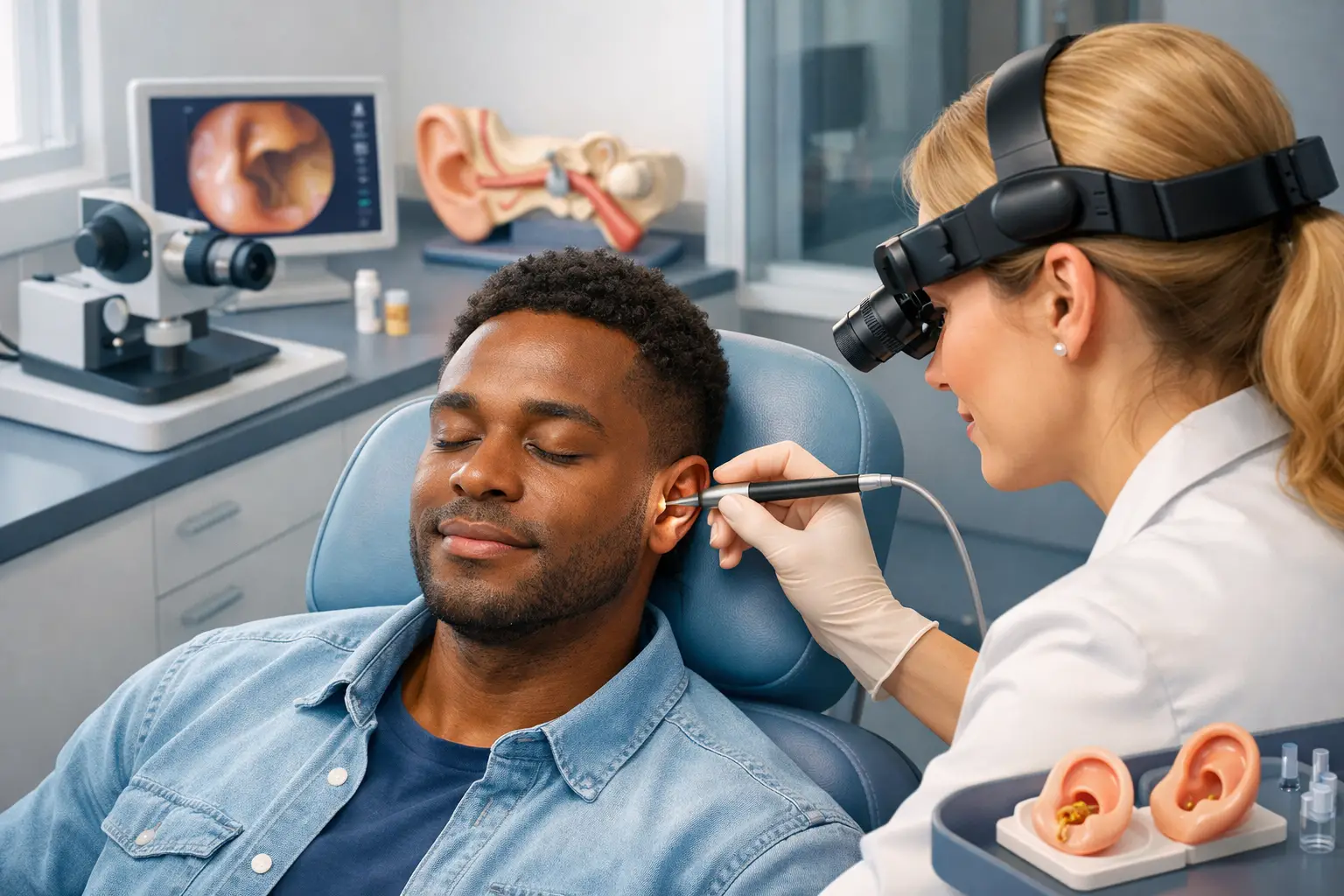
Blocked ears can make everyday sound feel distant: conversations become harder to follow, your own voice may seem unusually loud, and hearing aids can whistle or feel less effective. If earwax is the cause, a professional removal appointment may provide welcome relief. But what is microsuction, and why is it widely regarded as a precise method of earwax removal?
Microsuction is a clinical procedure that removes earwax using a small, gentle suction device. A qualified clinician examines the ear canal under magnification, then uses a fine suction tube to lift wax away. Unlike ear syringing or irrigation, it does not rely on flushing water into the ear canal.
What is microsuction used for?
Microsuction is most commonly used to remove earwax that is causing a blockage or preventing an accurate ear examination. Earwax is not inherently a problem. It is a normal, protective substance that helps trap dust and debris, lubricates the ear canal, and has mild antimicrobial properties. In many people, it naturally moves out of the ear over time.
Difficulties arise when wax builds up, becomes dry or impacted, or is pushed deeper into the canal by cotton buds, fingers, earbuds or hearing devices. This can lead to reduced hearing, a feeling of fullness, discomfort, itching, feedback from hearing aids, or difficulty having the eardrum properly assessed.
A clinician may also recommend microsuction where there is a history of ear surgery, a perforated eardrum, recurrent ear infections, narrow ear canals, or a need for a careful view of the ear. Whether it is the right approach depends on your ears, your symptoms and the nature of the wax itself.
How microsuction earwax removal works
A microsuction appointment begins with an assessment, not simply wax removal. The clinician will ask about your symptoms, ear history and any relevant medical conditions. They will then look into your ears using specialist equipment, often including magnification and illumination, to check whether wax is present and whether removal is appropriate.
If wax needs to be removed, a slim suction instrument is positioned carefully at the entrance to, or within, the ear canal. The clinician uses controlled suction to remove small amounts of wax while maintaining a clear view. Depending on the wax, they may also use a fine curette or other specialist instrument.
The treatment is usually completed in one appointment, although very hard, deeply impacted wax may need softening drops beforehand or require a further visit. This is not a failure of the procedure. Taking a staged approach can be the safest and most comfortable option when wax is tightly packed against sensitive skin or close to the eardrum.
Does microsuction hurt?
Most people find microsuction comfortable, though it can feel and sound unusual. You may hear a loud sucking or crackling noise because the device is working inside a small, enclosed space. Some people notice a brief tickling sensation or mild pressure.
It should not be painful. If you feel sharp discomfort, dizziness or distress at any point, tell the clinician immediately. A qualified audiologist can pause, adjust their technique or decide that the ear needs further preparation before removal continues.
The ear canal is sensitive, and the experience varies. Wax that is dry, compacted, attached to canal skin or very close to the eardrum can make treatment more challenging. This is one reason expert assessment and clear communication matter more than a rushed, one-size-fits-all service.
Microsuction compared with ear irrigation
Ear irrigation removes wax by directing warm water into the ear canal. It can be effective for suitable patients, particularly where wax has been softened beforehand. However, it is not appropriate for everyone and may be avoided if there is a perforation, grommets, previous ear surgery, an active infection or certain other ear conditions.
Microsuction offers a different approach. Because the clinician can see the wax during removal, it allows for careful, targeted treatment without introducing water into the ear. This makes it a useful option for many people with more complex ear histories or when a detailed examination is needed.
Neither method should be treated as an automatic answer for every blocked ear. A blocked sensation can also be caused by infection, fluid behind the eardrum, inflammation, a foreign body, pressure changes or hearing loss. Removing wax will not address a problem that is not caused by wax, so an examination is essential.
Who should consider microsuction?
Microsuction may be suitable if you have symptoms of wax blockage, wear hearing aids, use earplugs regularly, or have been told that wax is preventing a hearing test or ear examination. It is often considered when irrigation is unsuitable or when a more precise method is preferred.
Children can also develop problematic wax, but paediatric ear care requires particular care. A child’s ear canal is smaller, and cooperation, comfort and the cause of symptoms all need to be considered. A specialist assessment can establish whether wax is genuinely responsible before any treatment is attempted.
You should seek clinical advice rather than arranging routine wax removal if you have severe ear pain, discharge, bleeding, sudden hearing loss, significant dizziness, facial weakness or a high temperature alongside ear symptoms. These can indicate a condition that needs medical assessment rather than wax management.
Preparing for your appointment
If you have been advised to use earwax-softening drops, follow the instructions given by your clinician. Drops can make dry wax easier to remove, but they are not always necessary and are not suitable for every ear. Do not use them if you have been told you have a perforated eardrum, or if you have had ear surgery, unless a clinician has specifically advised it.
Avoid putting cotton buds, hair grips, tissue or any other object into the ear canal. These often push wax further in and can scratch delicate skin. They can also make later removal more difficult.
Bring your hearing aids if you use them, particularly if you have noticed reduced benefit or feedback. Once wax has been removed, your clinician may be able to check whether the change in hearing is consistent with the blockage or whether further hearing assessment would be helpful.
What happens after microsuction?
Many patients notice clearer hearing straight away, especially when the ear was fully blocked. Sounds may initially seem brighter or louder than expected because your brain has adjusted to reduced sound input. This usually settles quickly.
You may be advised to keep the ear dry for a short period if the canal skin was irritated or if there are signs of inflammation. If the wax removal reveals an infection, eczema, a perforation or another concern, the next step may be medical treatment, monitoring or a more detailed hearing assessment.
It is possible for wax to build up again, particularly if you have narrow canals, wear hearing aids, produce naturally dry wax or have a skin condition affecting the ear canal. The right interval for review is personal. Some people need occasional maintenance, while others may not need professional removal again for years.
Why qualified ear care matters
Microsuction is a precise procedure, but precision comes from the person performing it as much as the equipment being used. The clinician needs to recognise normal ear anatomy, identify when wax removal should stop, and distinguish a wax blockage from other causes of hearing or ear symptoms.
At Tragus-The Ear Specialists, microsuction forms part of a wider ear-health assessment delivered by qualified audiologists. That broader clinical view is valuable when symptoms are affecting communication, work, school, hearing aid use or peace of mind.
If your ear feels blocked, resist the urge to clear it yourself. A careful examination can establish what is really happening and help you move towards clearer, more comfortable hearing with the treatment your ears actually need.