
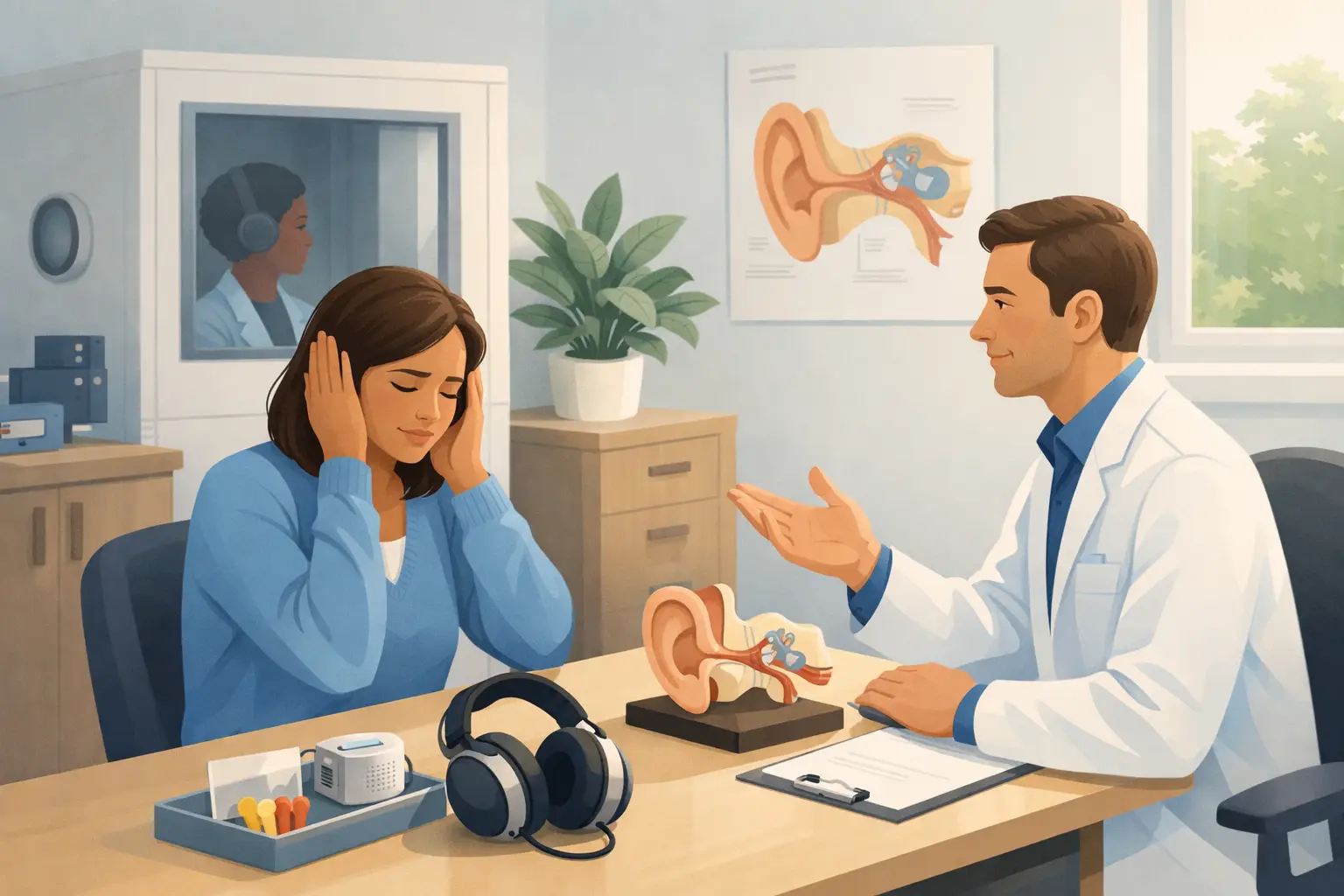
A kettle boiling, cutlery touching a plate or a child’s excited voice can feel physically painful when you have hyperacusis. If you are wondering how to manage hyperacusis symptoms, the aim is not to force yourself through distressing noise or block out the world completely. It is to understand what is driving your sound sensitivity and follow a measured plan that helps everyday sounds feel safer again.
Hyperacusis can affect work, family life, travel, sleep and confidence. It may occur alongside tinnitus, migraine, hearing loss, stress or following a period of noise exposure, but the experience is individual. A specialist assessment can help identify the right route forward.
What hyperacusis feels like
Hyperacusis is reduced tolerance to ordinary environmental sounds. For some people, sounds seem unbearably loud. For others, particular noises cause pain, tension, fear, irritation or a strong urge to leave the room. It is different from simply disliking loud noise.
The reaction can be immediate and physical. You may find yourself anticipating sound before it happens, avoiding cafés, supermarkets or busy family gatherings, and wearing earplugs far more often than you used to. This makes complete sense when sound has become uncomfortable. However, prolonged avoidance can sometimes make sensitivity harder to manage.
An audiologist will consider your hearing, medical history, noise exposure, tinnitus and the situations in which symptoms occur. This matters because treatment for sound sensitivity is most effective when it is tailored, rather than based on a one-size-fits-all approach.
How to manage hyperacusis symptoms day to day
Protect your ears from genuinely harmful noise
Hearing protection has an important role where noise is loud enough to pose a risk, such as power tools, live music, shooting, motorcycling or noisy workplace environments. Properly fitted earplugs or earmuffs can reduce the risk of further noise damage and give appropriate protection in these settings.
The key distinction is between hazardous sound and normal daily sound. Wearing earplugs for routine activities such as watching television quietly, speaking with family or walking outside may provide short-term relief, but it can increase your awareness of sound and reinforce avoidance for some people. The right balance depends on symptom severity, your environment and clinical advice.
Custom-moulded earplugs can be particularly useful for predictable loud-noise situations because they offer more consistent fit and protection than many off-the-shelf options. They are not, however, a substitute for a hyperacusis rehabilitation plan.
Keep gentle, controlled sound in your routine
When sound sensitivity has led to avoidance, carefully maintaining exposure to comfortable everyday sound can help prevent your world becoming progressively quieter. This may mean having low-level background sound at home, taking a calm walk outside or spending short, manageable periods in places you would otherwise avoid.
The word is comfortable. Do not deliberately expose yourself to painful sound or attempt to “push through” severe distress. A useful starting point is sound that is noticeable but not threatening, with the volume and duration increased only gradually. If symptoms flare significantly and remain worse, you may have progressed too quickly.
Some people benefit from structured sound therapy prescribed or guided by an audiologist. This approach uses carefully selected sound exposure as part of rehabilitation, rather than relying on random loud sounds or prolonged headphone use. It is especially relevant where hyperacusis occurs with tinnitus or anxiety around sound.
Plan for difficult places rather than withdrawing from them
Busy settings can be challenging, but practical adjustments can make them more manageable without turning avoidance into the default. Choose a quieter table in a restaurant, visit shops at less busy times, take short breaks during social events and let trusted people know that sound is difficult at present.
For work, consider whether a quieter desk position, noise-reducing measures, advance notice of noisy tasks or short recovery breaks would help. These are reasonable adjustments, not a failure to cope. A clear plan often reduces the anticipatory stress that can make sound feel even more intense.
Children with sound sensitivity may need similar support at school. Parents should avoid assuming that a child is being difficult or overly sensitive. A paediatric hearing assessment can establish whether there are hearing concerns and help guide suitable strategies for home and education.
Address sleep, stress and physical tension
Hyperacusis is not “all in the mind”, but the nervous system can become more reactive when you are exhausted, stressed or constantly on alert for the next uncomfortable sound. Poor sleep, jaw tension, migraine and high anxiety can all amplify the burden of sound sensitivity.
Small changes can be clinically useful: regular sleep and wake times, gentle movement, paced breathing when symptoms spike, and reducing caffeine if you notice it worsens tinnitus, anxiety or sleep. If jaw clenching or facial pain is present, discuss this with an appropriate healthcare professional. If migraines are frequent, medical review is sensible, particularly when sound sensitivity forms part of an attack.
The objective is not to eliminate every trigger. It is to reduce the sense of threat around sound and restore more control over your day.
Why assessment should come before self-treatment
Online advice about hyperacusis can be contradictory. Some sources recommend constant ear protection, while others encourage immediate exposure to sound. Neither approach is right for everybody.
A qualified audiologist can assess hearing thresholds, discuss loudness discomfort, review tinnitus and identify whether referral to another clinician is needed. They can also explain whether sound therapy, counselling-based support, hearing rehabilitation or a combination of approaches is most appropriate. If hearing loss is present, treating it may alter how sound is perceived and improve communication without simply making everything louder.
At Tragus-The Ear Specialists, hyperacusis support begins with expert assessment and a personalised discussion of how symptoms affect your life. For patients in Kent, this offers a more precise route than trying to manage a complex sound sensitivity alone.
When to seek urgent medical advice
Most hyperacusis requires thoughtful assessment rather than emergency treatment. However, seek urgent medical advice if sound sensitivity begins suddenly with sudden hearing loss, severe dizziness, facial weakness, a head injury, ear discharge, severe ear pain or new neurological symptoms.
You should also arrange an assessment if symptoms are causing you to avoid work, education, social contact or essential travel, or if tinnitus has become persistent and distressing. Early support can prevent coping strategies such as isolation or constant earplug use from becoming entrenched.
A realistic expectation for recovery
Improvement is rarely about finding one perfect product or avoiding every uncomfortable situation. It usually comes from a combination of accurate diagnosis, sensible protection from dangerous noise, gradual re-engagement with safe sound and support for the stress that symptoms can create.
Progress may be uneven. A noisy event, poor sleep or a migraine can temporarily raise sensitivity, even when you are otherwise improving. That does not mean treatment has failed. Keeping a brief record of triggers, recovery time and what helped can give your clinician useful information and show changes that are easy to miss day to day.
Hyperacusis can make ordinary life feel restricted, but it does not have to define your routines indefinitely. With specialist guidance and a plan paced to your symptoms, many people can rebuild tolerance, confidence and comfort in the sounds that matter to them.