
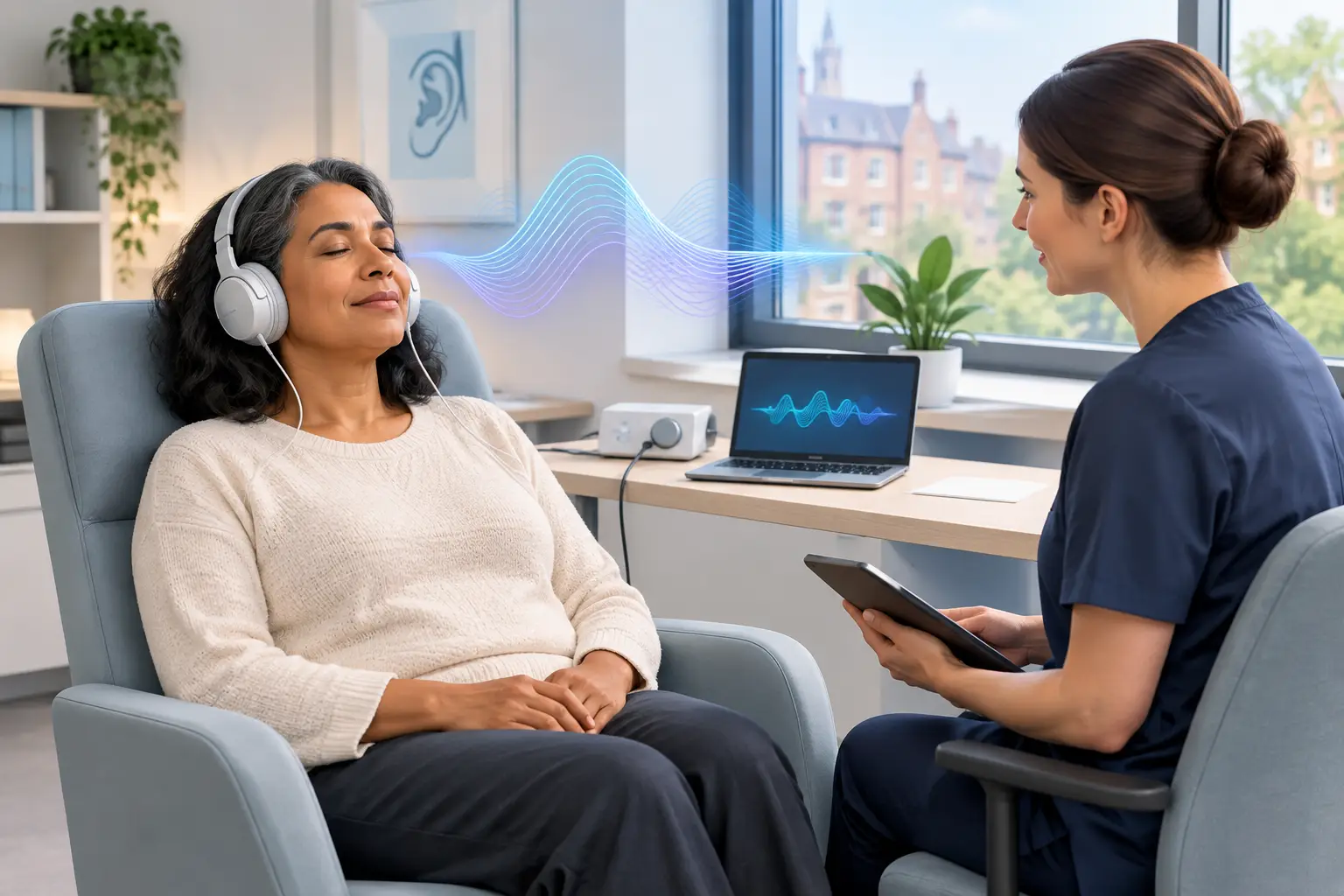
A quiet bedroom can make tinnitus feel anything but quiet. For many people, the ringing, hissing or buzzing becomes most noticeable when external sound drops away, affecting sleep, concentration and emotional wellbeing. Sound therapy is one clinically recognised way of reducing the prominence and distress of tinnitus, but it is not a one-size-fits-all recording or a guaranteed cure. The right approach begins with understanding your hearing, your symptoms and the situations in which tinnitus is hardest to manage.
What is sound therapy?
Sound therapy uses carefully chosen external sound to change the contrast between tinnitus and silence. This may make tinnitus less noticeable in the moment, but the broader aim is often more significant: to help the brain place less attention and emotional weight on the internal sound over time.
Tinnitus is not usually produced by a sound in the ear that can simply be switched off. It is a perception generated within the hearing system and brain. When it becomes intrusive, the nervous system can start to treat it as a threat. That response can create a difficult cycle: the more closely you monitor the tinnitus, the more intrusive it can seem; the more intrusive it seems, the harder it is to stop monitoring it.
Appropriate background sound can interrupt that cycle. It gives the auditory system something neutral to process, reduces the harsh contrast of silence and may make it easier to redirect attention to daily life. For some people, it also supports habituation – the process by which the brain learns that tinnitus does not require an alarm response.
Sound therapy is not the same as masking
Masking is one form of sound therapy, but the two terms are not interchangeable. Complete masking aims to cover tinnitus so it cannot be heard. This can bring short-term relief, particularly during a difficult spell or at bedtime. Yet it is not always necessary, comfortable or helpful to fully cover the tinnitus.
Many programmes use sound at a lower level, so the tinnitus remains faintly audible alongside the external sound. This is often called partial masking or sound enrichment. The goal is not to win a volume battle with tinnitus. It is to reduce its dominance and support a calmer, less reactive response.
The best option depends on the individual. Someone with intermittent tinnitus that is mainly troublesome at night may benefit from gentle environmental sound. Someone with hearing loss and persistent tinnitus may gain more from well-fitted hearing aids with suitable tinnitus features. A person with significant sound sensitivity may require a more cautious, specialist-led plan.
Which sounds can be used?
The sound itself should be acceptable and sustainable. If it is irritating, too loud or demands attention, it is unlikely to provide the intended benefit. A qualified audiologist may discuss several options, including:
- low-level broadband sound, such as white, pink or nature-based noise
- gentle environmental sound, including a fan, quiet radio or ambient audio
- hearing aid amplification for people with hearing loss
- personalised sound programmes delivered through appropriate devices or apps
There is no universally superior sound. Rainfall may feel calming to one person and distracting to another. White noise can be useful for some, while others find a softer, lower-frequency sound more comfortable. Preference matters because therapy only works if it can be used consistently without adding strain.
Volume matters just as much. Sound therapy should not be loud enough to cause discomfort, worsen sound sensitivity or create unnecessary listening fatigue. If you have hyperacusis, ear pain, a history of noise injury or a marked change in tolerance to everyday sounds, seek an expert assessment before experimenting with louder masking audio.
Why a hearing assessment comes first
Tinnitus commonly occurs alongside hearing loss, even when a person has not noticed obvious difficulty in conversation. A comprehensive hearing assessment can identify changes across different pitches, assess how the ears are functioning and establish whether hearing support could form part of the solution.
When hearing loss is present, hearing aids may reduce tinnitus awareness by restoring access to everyday sound. Improved audibility can make the environment feel fuller and reduce the contrast that allows tinnitus to stand out. Modern devices may also offer adjustable sound programmes, but these should be fitted and reviewed as part of a personalised rehabilitation plan rather than selected as a generic setting.
An assessment also allows the clinician to consider the character and history of the tinnitus. Important questions include whether it is in one ear or both, constant or occasional, linked to hearing changes, associated with dizziness, or pulsing in time with the heartbeat. These details guide appropriate care and help identify when further medical investigation is needed.
What a specialist tinnitus appointment may involve
A meaningful tinnitus assessment goes beyond a quick hearing screen. Your audiologist should take time to understand how the symptom affects sleep, work, communication, mood and family life. The burden of tinnitus is not measured only by its loudness. A relatively soft sound can be deeply distressing if it prevents rest or triggers anxiety, while a louder sound may be less troublesome for someone who has learned not to fear it.
The appointment may include otoscopy to examine the ear canal and eardrum, hearing tests, discussion of sound tolerance and a detailed tinnitus history. If earwax is blocking the canal, safe removal may be needed before hearing can be accurately assessed. In some cases, questionnaires help establish which areas of life need the most support and provide a useful baseline for monitoring progress.
From there, a specialist can recommend whether sound therapy is appropriate, which delivery method is realistic and how it should sit alongside education, hearing rehabilitation and wider tinnitus support. At Tragus-The Ear Specialists, qualified audiologists take this personalised approach because tinnitus management should reflect the patient, not simply the sound they hear.
Using sound therapy at home and at night
For many people, the first practical step is to avoid prolonged, absolute silence. This does not mean filling every moment with noise. It means creating a comfortable sound environment when tinnitus is most noticeable, such as while reading, working quietly or preparing for sleep.
At night, a bedside sound source at a low level may help reduce the focus on tinnitus. Keep the volume soft enough that it fades into the background. If you find yourself listening closely to the sound, it may be too distinctive or too loud. Some people prefer a timer; others find a steady, all-night sound more reassuring. It depends on sleep habits, room acoustics and the nature of the tinnitus.
During the day, ordinary life often supplies useful sound enrichment: conversation, outdoor ambience, gentle music or a quiet household appliance. Headphones are not always required, and using them for long periods can be unhelpful if the volume is high. If headphones are used, keep levels comfortable and take regular breaks.
What sound therapy can and cannot do
Sound therapy can reduce awareness of tinnitus, ease the distress attached to it and make silence, sleep and concentration more manageable. Progress is often gradual. Some people notice relief quickly, while others need weeks or months of consistent use and supportive counselling before the tinnitus feels less central to their day.
It should not be presented as a cure, nor should it replace a proper assessment where symptoms are new, changing or concerning. Tinnitus can be influenced by hearing loss, stress, sleep disruption, medication, jaw problems and exposure to loud sound. Addressing the relevant factors may be as important as the therapy itself.
Seek prompt medical advice if tinnitus is sudden, occurs with sudden hearing loss, follows a head injury, is accompanied by severe dizziness or neurological symptoms, or pulses in time with your heartbeat. These situations need timely assessment rather than self-management alone.
A calmer relationship with tinnitus is possible
The aim is not necessarily to eliminate every trace of tinnitus before life can feel normal again. Effective care helps you sleep more soundly, concentrate with greater ease and spend less time checking whether the noise is still there. With an expert assessment and a plan matched to your hearing and daily routine, sound can become a practical tool for reducing tinnitus’s hold on your attention. Do not wait in silence when specialist support could help you regain confidence in everyday sound.