
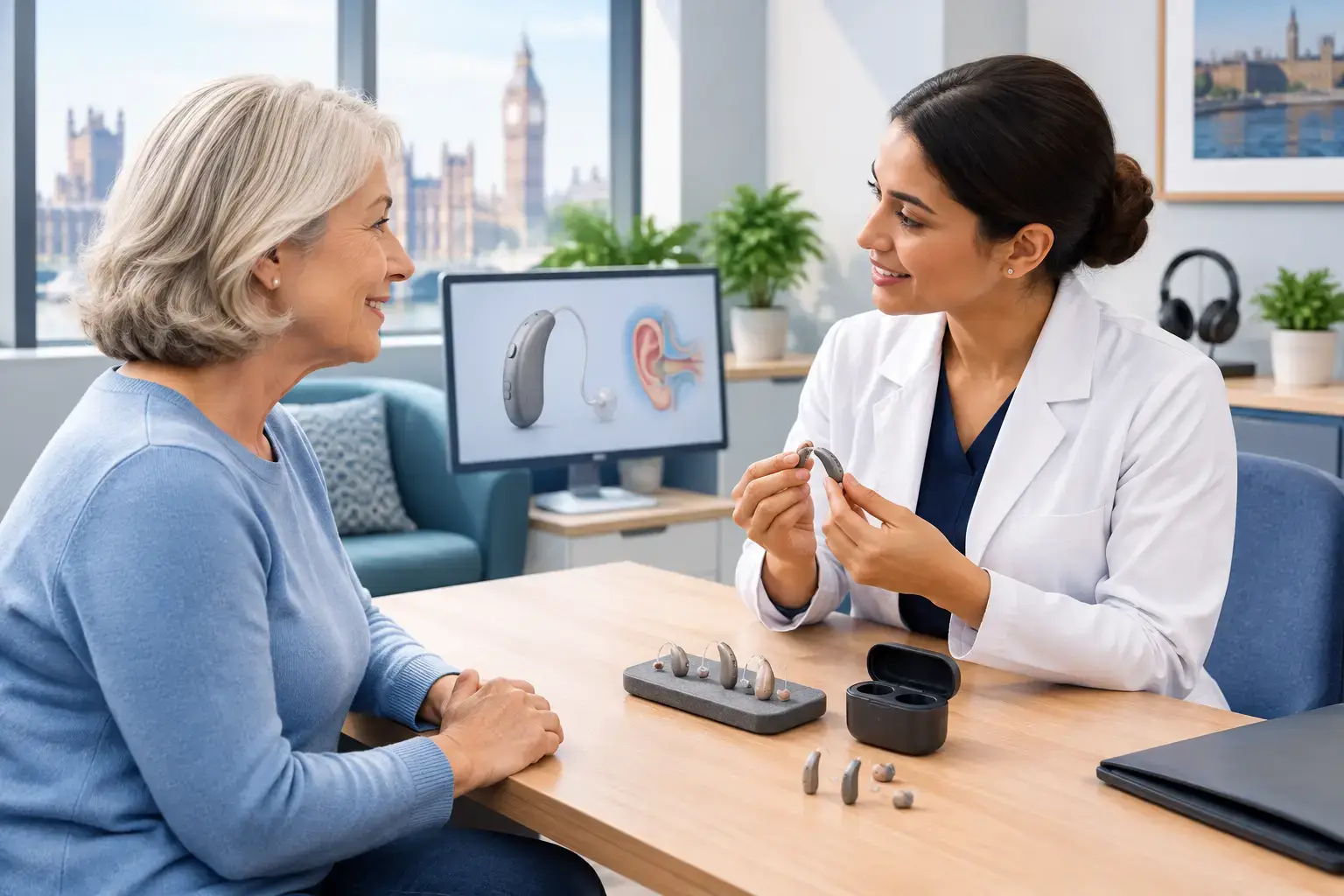
A hearing aid can look perfectly fine while no longer giving you the clarity, comfort or confidence you need in conversation. For people researching ReSound Sensia hearing aids UK options, the most useful question is not simply whether the device was well regarded when it was fitted. It is whether it still suits your hearing, listening environments and everyday life now.
ReSound Sensia hearing aids were designed to provide digital amplification with features intended to support speech understanding and listening comfort. Many people have used them successfully for years. However, hearing technology develops steadily, and individual hearing needs can change too. A proper assessment helps separate a device issue from a change in hearing, ear health, fitting or expectations.
What are ReSound Sensia hearing aids?
ReSound Sensia is an earlier generation of digital hearing aid technology. Devices were available in a range of styles, including behind-the-ear and discreet in-the-ear options, depending on the wearer’s hearing levels, dexterity and cosmetic preferences.
As with any hearing aid range, the experience depends on more than the name on the casing. The programmed settings, the condition of the microphones and receiver, the fit of the earmould or dome, and the hearing profile they were set for all influence performance. Two people wearing the same model can have very different results.
If you already wear Sensia devices, they may still be appropriate if they are reliable, comfortable and meeting your communication needs. Equally, persistent difficulty in restaurants, meetings or family gatherings is worth investigating rather than accepting as inevitable.
Why age of technology matters
Earlier digital hearing aids can provide valuable amplification, but newer platforms may offer refinements in areas that matter greatly to many wearers: managing changing background noise, focusing on speech from different directions, connecting to modern phones and supporting more flexible remote adjustments.
That does not mean that newer is automatically better for every person. A person whose main difficulty is hearing one-to-one at home may prioritise comfort, simplicity and a dependable fit. Someone who regularly works in busy spaces, attends social events or struggles with phone calls may benefit more noticeably from current features. The right choice starts with the listening situations that matter to you.
When to have your Sensia hearing aids checked
A gradual decline in hearing can be easy to miss. Often, family members notice first: the television volume rises, instructions need repeating, or conversations become tiring. These changes should not be assumed to be a fault with the hearing aid alone.
Arrange an expert hearing assessment and device review if you notice that speech sounds less clear than before, you avoid group conversations, one aid seems weaker than the other, or feedback and whistling have become common. A blocked sound quality may also be related to earwax, which can affect both unaided hearing and the performance of a hearing aid.
A qualified audiologist can check your ears, assess your hearing levels and examine the devices themselves. This is more informative than replacing batteries or adjusting volume repeatedly without knowing what is causing the problem.
A hearing aid review should be personal
A meaningful review is not just a quick listen to the devices. It should consider how you hear in daily life, the situations you find most difficult and whether your current settings remain suitable. For example, a person may hear speech well in a quiet clinic room but still struggle to follow grandchildren at a busy family meal.
At Tragus-The Ear Specialists, our approach is centred on clinical assessment and rehabilitation, not a one-size-fits-all product decision. We consider the whole hearing picture, including ear health, hearing test results, communication goals and practical factors such as handling controls or changing batteries.
Can ReSound Sensia hearing aids be repaired or adjusted?
In many cases, an existing hearing aid can be cleaned, maintained or reprogrammed to improve its performance. Whether this is possible depends on the specific device, its condition and the availability of suitable parts or manufacturer support for an older model.
Common causes of reduced output are straightforward. Wax can block the sound outlet or receiver, moisture can affect performance, and tubing or domes can harden or become worn. A poor physical fit can also reduce clarity or cause feedback. These are practical issues, but they should be addressed carefully rather than with improvised tools that could damage the device.
Programming adjustments may help where hearing levels or listening needs have changed. Yet there are limits. If a hearing aid no longer provides enough usable amplification, has intermittent faults, or lacks features that are now central to your daily communication, repair may not be the most sensible long-term route.
Deciding whether to keep or replace older hearing aids
There is no fixed replacement timetable that suits everyone. Some people continue happily with older devices, while others find that changes in lifestyle or hearing make an upgrade worthwhile sooner. The decision should be based on benefit, reliability and support, rather than pressure to own the newest technology.
Consider how consistently you wear your aids. If they spend most of the week in a drawer because they feel uncomfortable, make noise seem harsh or do not help in the places you need them, the fitting deserves attention. Hearing aids work best when they are worn regularly and adjusted as part of an ongoing rehabilitation plan.
It is also sensible to think about practical support. If batteries are difficult to manage, controls are fiddly, or phone calls have become a source of frustration, a modern solution may offer a better fit for your routine. For some people, simple and reliable remains the priority. For others, improved connectivity and more sophisticated noise management can make work, travel and social contact far less demanding.
Questions to ask at your appointment
Before deciding what to do with ReSound Sensia hearing aids, be clear about the outcome you want. You may wish to ask whether your hearing has changed, whether the current devices are functioning to specification, and whether the fit is contributing to the difficulty you notice.
It is also helpful to describe real examples rather than saying only that hearing has worsened. Mention whether the problem occurs with a partner in the car, during video calls, at a restaurant, in meetings or when watching television. These details allow the audiologist to assess whether a programming change, maintenance, earwax management or a different hearing solution is most appropriate.
The value of professional fitting and follow-up
A hearing aid is not simply a sound amplifier. It is a clinical device that needs to be selected, programmed and verified for the individual wearer. The fitting process should account for the degree and pattern of hearing loss, comfort, physical ear shape, communication demands and ability to manage the device.
Follow-up is equally important. Your brain needs time to adapt to amplified sound, especially if you have lived with reduced hearing for some time. Everyday sounds can initially seem more noticeable, and settings may need fine-tuning after you have tested them in the environments that matter most.
This is where specialist audiology care has real value. Qualified audiologists can interpret hearing test findings, make evidence-led adjustments and provide practical guidance without treating your concerns as a simple retail transaction. If tinnitus or sound sensitivity is also affecting your wellbeing, it is particularly important that hearing care is considered within the wider ear-health picture.
Looking after your current devices
If you are continuing to use Sensia hearing aids, routine care can protect their performance. Keep them dry, follow the manufacturer’s cleaning guidance, and avoid inserting anything sharp into microphone ports or sound outlets. Replace consumable parts only as advised for your style of aid.
Most importantly, do not ignore a sudden change in hearing, discomfort, discharge, pain or a marked difference between ears. These symptoms warrant prompt clinical advice rather than repeated hearing-aid adjustments.
Hearing well is about staying present in the conversations, work and family moments that shape daily life. Whether your ReSound Sensia devices need careful attention or it is time to discuss newer options, an expert assessment can give you a clear, reassuring next step.