
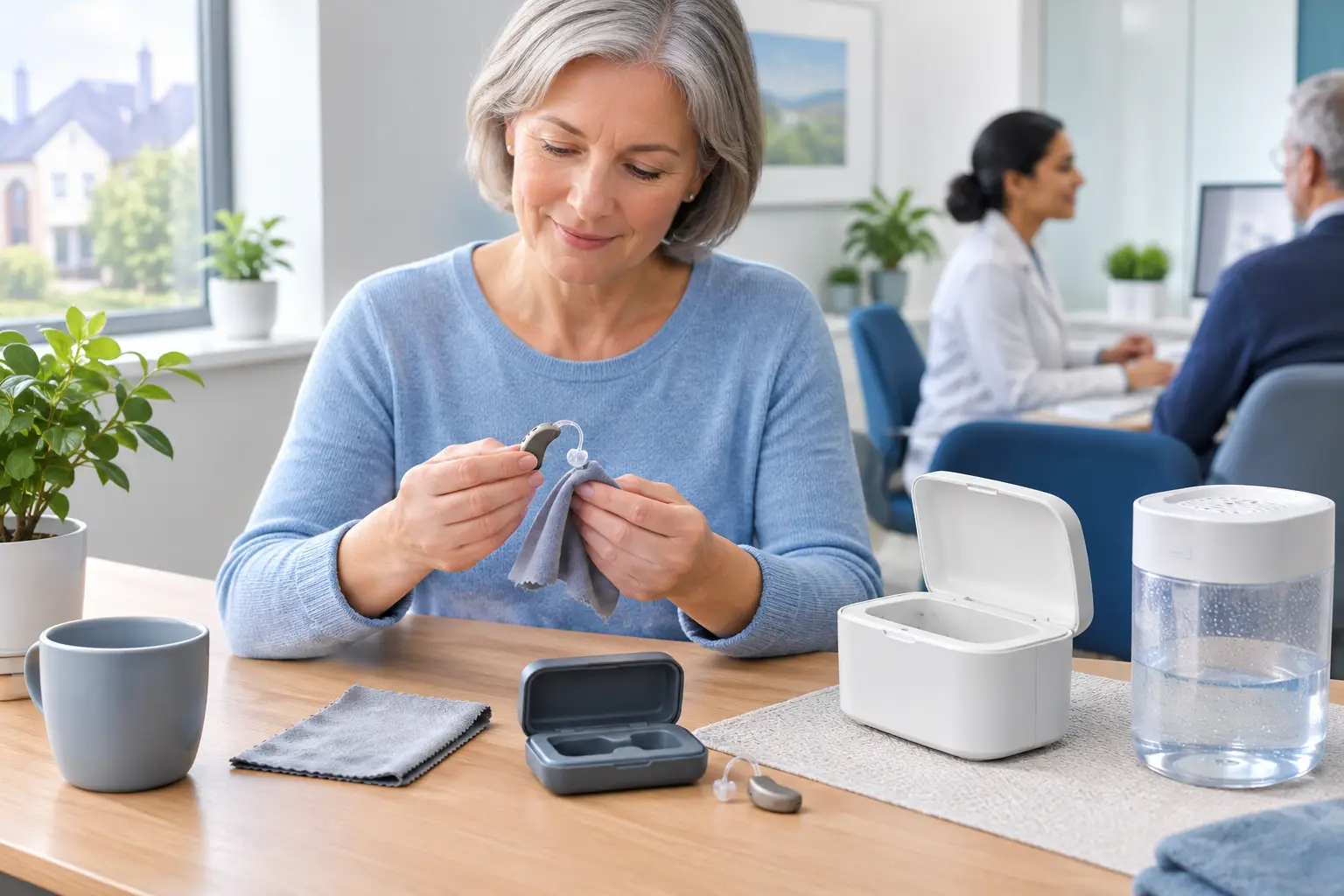
A hearing aid can stop sounding clear after a rainy walk, a vigorous gym session or a long day in warm weather. Hearing aid moisture damage is a common reason for sudden crackling, weak sound, intermittent performance and complete device failure. It can affect any style of hearing aid, from discreet in-ear models to behind-the-ear devices, and it is not always obvious from the outside.
Modern hearing aids are designed for everyday life and many have useful water and dust resistance ratings. That does not make them waterproof. Moisture can enter through microphone ports, battery doors, charging contacts and tiny seams in the casing. Once inside, it may interfere with delicate electronics or lead to corrosion over time.
Why moisture is hard on hearing aids
Hearing aids sit in one of the warmest, most humid parts of the body. Ear canal humidity, perspiration and condensation are routine challenges, particularly for people who wear their devices all day. In-ear hearing aids can be especially exposed because the shell sits within the ear canal, while behind-the-ear models may be affected by sweat collecting around the ear or rain entering the microphone area.
The problem is not limited to obvious water exposure. Moving from cold outdoor air into a centrally heated room can create condensation. Leaving hearing aids in a bathroom, putting them on before using hairspray, or wearing them during exercise may expose them to enough moisture to affect their performance.
A device may appear to recover once it dries, but repeated exposure can shorten its working life. Corrosion can develop gradually on battery contacts, receiver connections and charging components. Protecting a hearing aid early is usually simpler and less costly than addressing a preventable repair later.
Signs of hearing aid moisture damage
Moisture does not always cause an immediate shutdown. Instead, sound quality may change from one day to the next, or the device may work intermittently. If you notice a change, do not assume your hearing has worsened before checking the aid itself.
Common warning signs include:
- crackling, popping or distorted sound
- sound that fades in and out or becomes unusually quiet
- a hearing aid that switches off unexpectedly
- reduced battery life or charging problems
- visible condensation, corrosion or residue around the battery compartment or charging contacts
Feedback or whistling can also occur if moisture changes the way a receiver, earmould or wax filter is functioning. However, whistling may equally be caused by earwax, a poor fit or a change in the ear canal. An expert assessment can identify the cause rather than relying on guesswork.
What to do when a hearing aid gets wet
Act promptly, but avoid improvised drying methods that may do more harm than good. If the device has been splashed, caught in rain or exposed to heavy perspiration, remove it from your ear and switch it off if possible.
For a disposable-battery hearing aid, open the battery door and remove the battery. Gently dry the outer casing with a clean, soft cloth, leaving the battery compartment open. For a rechargeable model, do not place it in its charger while it is wet. Wipe it carefully and allow it to air-dry before charging.
Do not use a hairdryer, radiator, oven or microwave. High heat can damage the microphone, receiver, casing and battery system. It is also best to avoid placing a hearing aid in uncooked rice. Rice does not reliably remove internal moisture and fine particles can enter openings in the device.
A purpose-made hearing aid dehumidifier or drying system is the safer option for routine care. These are available in passive and electronic formats. The best choice depends on the hearing aid style, whether it is rechargeable, and the manufacturer’s instructions. Some electronic drying units are not suitable for every rechargeable device, so it is sensible to check before use.
If the hearing aid remains weak, distorted or unreliable after drying, arrange a professional check. Continuing to wear a malfunctioning device can be frustrating, but it may also delay the repair needed to prevent further deterioration.
Preventing hearing aid moisture damage every day
Small habits make a meaningful difference. Remove your hearing aids before showering, bathing or swimming, even if the devices have a high water-resistance rating. Water resistance describes protection under specific test conditions, not permission to submerge the device or expose it to soap, steam and chlorinated water.
Apply moisturiser, sun cream, hairspray and fragrance before inserting your hearing aids. Allow these products to dry fully first. Aerosols and oily residue can block microphone ports and filters as well as trapping moisture around the casing.
After a day of wear, wipe the hearing aid with a dry, clean cloth and inspect the microphone openings, earmould or dome, and battery or charging contacts. Store it overnight in a dry, ventilated place, ideally in a suitable drying system. A bathroom cabinet is rarely a good storage location because steam and humidity linger long after a shower.
For people who perspire heavily, work outdoors or exercise regularly, more frequent drying may be appropriate. A hearing aid sweatband or protective cover can help in some situations, but it must be designed for the device and must not obstruct the microphones. The aim is protection without compromising sound quality.
Rechargeable hearing aids need particular care
Rechargeable technology has made hearing aids easier to manage, but the charging contacts need to stay clean and dry. Moisture or skin oils on the contacts may prevent reliable charging and can be mistaken for a battery fault.
Before placing devices in the charger, check that they are dry. Wipe the charger wells and contacts only as advised by the manufacturer. If a charger has been exposed to water, disconnect it from the mains and seek advice before using it again. Never attempt to charge a wet hearing aid.
When the problem may be something else
Not every sound issue is hearing aid moisture damage. Earwax is one of the most common reasons for muffled hearing, feedback and a feeling that the hearing aid has suddenly become less effective. A blocked wax filter, damaged receiver wire, flattened dome or expired battery can produce similar symptoms.
Equally, a genuine change in hearing should not be overlooked. If sounds remain unclear after the hearing aid has been checked, or if you experience sudden hearing loss, new one-sided symptoms, pain, discharge, dizziness or a marked increase in tinnitus, seek urgent clinical advice. Sudden changes in hearing require timely assessment.
At Tragus-The Ear Specialists, qualified audiologists can assess both the hearing aid and the ear. This matters because the right solution may be a careful clean, a wax filter replacement, microsuction earwax removal, a repair or an adjustment to the hearing aid programme. A proper evaluation avoids treating the wrong problem.
A seasonal care routine that protects your devices
Moisture risk changes across the year. In summer, perspiration and outdoor activity are usually the main concerns. In winter, rain, hats and rapid temperature changes can create condensation. Holidays may add swimming pools, sea air and unfamiliar storage conditions.
Keep a protective case with you when travelling, rather than wrapping your hearing aids in tissue or leaving them loose in a pocket or bag. If you are heading out in persistent rain, a hat or umbrella offers sensible protection for both you and your devices. After exercise or a wet journey, take a moment to dry the exterior rather than putting the aids straight into a closed case.
Your hearing aids are precision medical devices that support conversation, confidence and independence. Consistent daily care gives them the best chance of delivering clear, dependable sound. If performance changes after moisture exposure, do not wait in silence – a timely specialist check can protect your hearing aid and restore the clarity you rely on.