
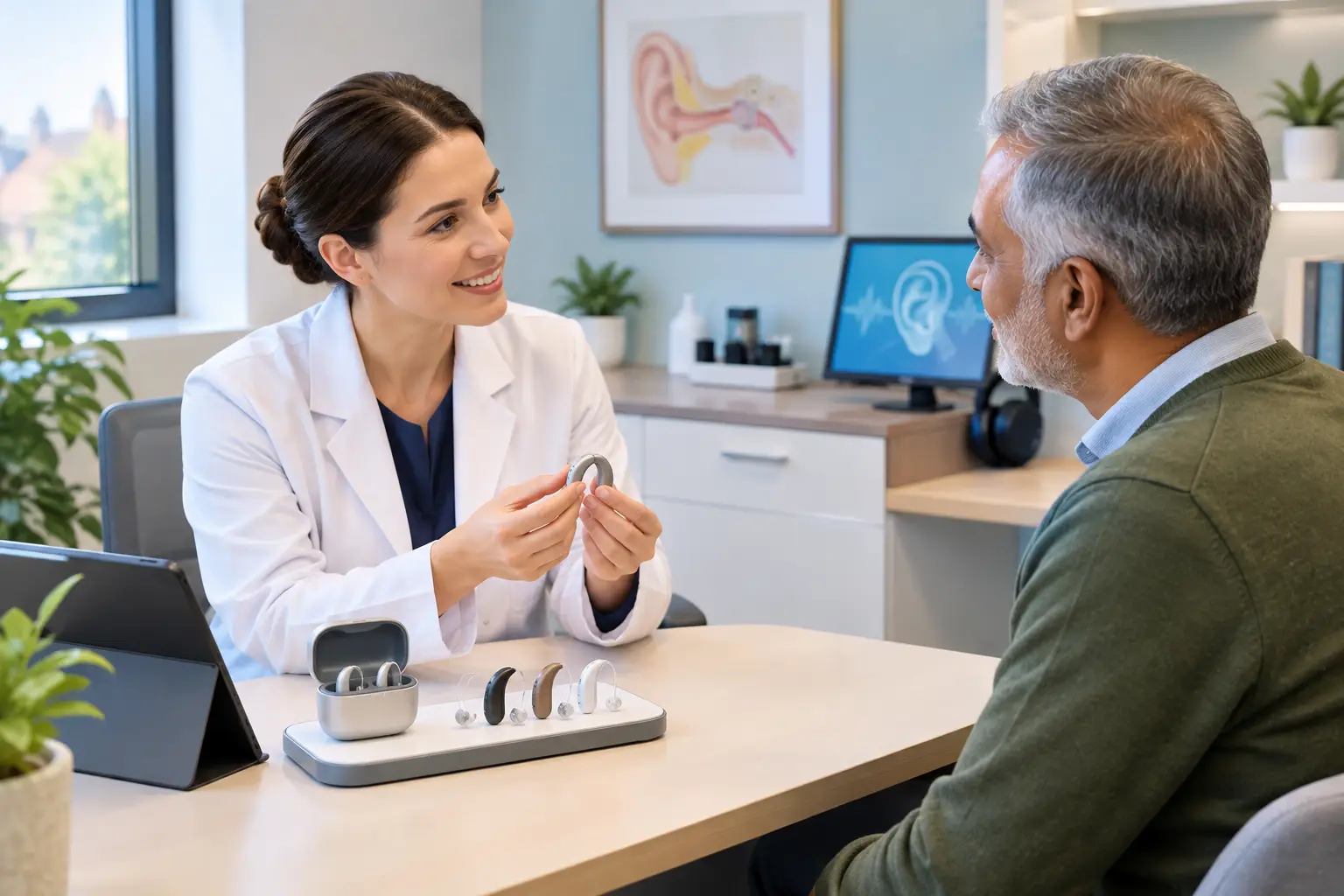
A busy family meal, a meeting with several voices, a television programme with quiet dialogue – these are often the moments when hearing loss becomes most frustrating. Phonak hearing aids are designed to make speech more accessible across everyday listening environments, but the best result comes from far more than selecting a device. It starts with a precise hearing assessment, careful fitting and ongoing clinical support.
For many people, hearing loss develops gradually. You may notice that others seem to mumble, that you ask people to repeat themselves, or that social occasions leave you unusually tired. These are not issues to simply put up with. Expert audiology can establish what is affecting your hearing and whether hearing aids are the appropriate next step.
What makes Phonak hearing aids different?
Phonak is a well-established hearing technology manufacturer, offering devices for a broad range of hearing needs, lifestyles and ages. Its hearing aids are available in discreet styles, from small in-the-ear options to behind-the-ear devices that can accommodate more advanced technology and greater amplification.
A central aim of modern hearing aid technology is not merely to make everything louder. It is to make useful sound, particularly speech, easier to follow while managing the competing noise around it. Phonak hearing aids use directional microphones and automatic sound processing to respond to different environments, such as a quiet sitting room, a car journey or a restaurant.
Many models also offer rechargeable batteries and wireless connectivity with compatible phones and other devices. This can make phone calls, streamed audio and television listening more straightforward for some users. However, features should serve a genuine hearing need. The most advanced specification is not automatically the best choice if it adds complexity without improving your day-to-day listening.
The hearing assessment comes before the hearing aid
A hearing aid should never be chosen solely from an online description, a special offer or a recommendation from a friend. Two people with apparently similar hearing difficulties can have very different hearing test results, listening demands and physical requirements.
A qualified audiologist begins by taking a detailed history. This covers when you first noticed difficulty, the situations that cause the most trouble, your general health and any symptoms such as tinnitus, dizziness, ear pain or a sudden change in hearing. The ears are examined before testing to check for concerns such as wax blockage, infection or an issue that needs medical investigation.
The hearing test then measures the quietest sounds you can hear across a range of pitches. Your audiologist will interpret the pattern of hearing loss and discuss how it relates to the problems you experience. Speech testing may also help show why conversation is difficult, particularly where there is background noise.
This assessment matters because hearing aids cannot correct every cause of reduced hearing. A blocked ear canal may require therapeutic ear care. Sudden hearing loss, persistent one-sided symptoms or certain patterns on a hearing test may need prompt referral. A premium hearing service protects your hearing health as well as recommending technology.
Choosing the right style and technology level
There is no single best Phonak hearing aid. The right option depends on your hearing levels, dexterity, ear shape, personal preferences and the environments that matter most to you.
A small rechargeable behind-the-ear aid may suit someone who wants straightforward daily use and reliable power. A custom device may appeal to a person seeking a more discreet fit, although suitability depends on the ear and degree of hearing loss. For more complex losses, a larger device may provide the power, control and connectivity needed for clearer listening.
Technology level is also a practical decision. Someone who spends most of their time in quiet settings may not need the same level of background-noise management as a person who regularly attends meetings, works in hospitality or enjoys busy family gatherings. Conversely, even a quieter lifestyle can involve challenging listening moments that have a significant effect on confidence and independence.
Your audiologist should discuss these trade-offs openly. This includes battery charging, controls, app use, the likely benefit of connectivity and what hearing aids can reasonably achieve in noise. Hearing aids can improve speech access substantially, but they do not remove all background sound or recreate normal hearing. Realistic expectations are a key part of successful rehabilitation.
Why expert fitting is essential for Phonak hearing aids
The fitting appointment is where the hearing aid becomes personal. The settings are programmed to your measured hearing loss, but clinical verification is needed to check that the sound delivered in the ear is appropriate. Your audiologist will also ensure the physical fit is secure and comfortable.
You will be shown how to insert and remove the devices, charge or maintain them, change any consumable parts and use relevant controls. These details can seem small, yet they determine whether hearing aids become a dependable part of your routine or remain unused in a drawer.
At first, familiar sounds may seem unexpectedly sharp or prominent. Rustling paper, footsteps and your own voice can take time to get used to, especially if you have lived with reduced hearing for years. This adjustment is normal, but discomfort, whistling, persistent distortion or poor speech clarity should be reviewed rather than tolerated.
Follow-up appointments allow the settings to be refined using your real-world experience. Perhaps the hearing aids are excellent at home but conversations in cafés remain difficult, or perhaps streamed calls sound too loud. Feedback from these situations helps the audiologist make purposeful adjustments rather than relying on generic settings.
Hearing aids, tinnitus and sound sensitivity
Hearing loss and tinnitus frequently occur together. When external sound is reduced, tinnitus can become more noticeable, particularly in quiet rooms or at night. For some people, appropriately fitted hearing aids reduce the prominence of tinnitus by improving access to environmental sound. They are not, however, a universal cure for tinnitus.
If tinnitus is distressing, intrusive or associated with sudden hearing change, one-sided symptoms, dizziness or pulsating noise, a specialist assessment is advisable. Treatment may involve hearing rehabilitation alongside tinnitus education and therapy. The plan should reflect the impact on sleep, concentration, work and emotional wellbeing.
People with hyperacusis or marked sound sensitivity also need an individual approach. Simply increasing amplification too quickly may be uncomfortable. Gradual rehabilitation and specialist guidance can help ensure that hearing support is both effective and tolerable.
Getting the most from your hearing aids
Consistent use is usually the fastest route to adaptation. Begin in comfortable environments, then build up to more demanding places as your confidence grows. Wearing the aids for only occasional social events can make the adjustment process harder and may leave you without support during the quieter conversations that matter just as much.
Good communication habits still have value. Sitting where you can see a speaker’s face, reducing competing noise where possible and asking people to gain your attention before speaking can all make conversation easier. Hearing aids work best as part of a wider strategy, not as a reason to struggle silently when a simple adjustment would help.
Regular review also protects your investment. Hearing can change, ears can become blocked with wax and your listening needs may evolve with work, family life or health. A device that once worked well may need reprogramming, servicing or a change in fitting.
At Tragus-The Ear Specialists, our qualified audiologists take a clinical, person-centred approach to hearing rehabilitation. If communication is becoming harder, arranging an expert assessment is a practical first step towards hearing the people and places that matter with greater clarity.