
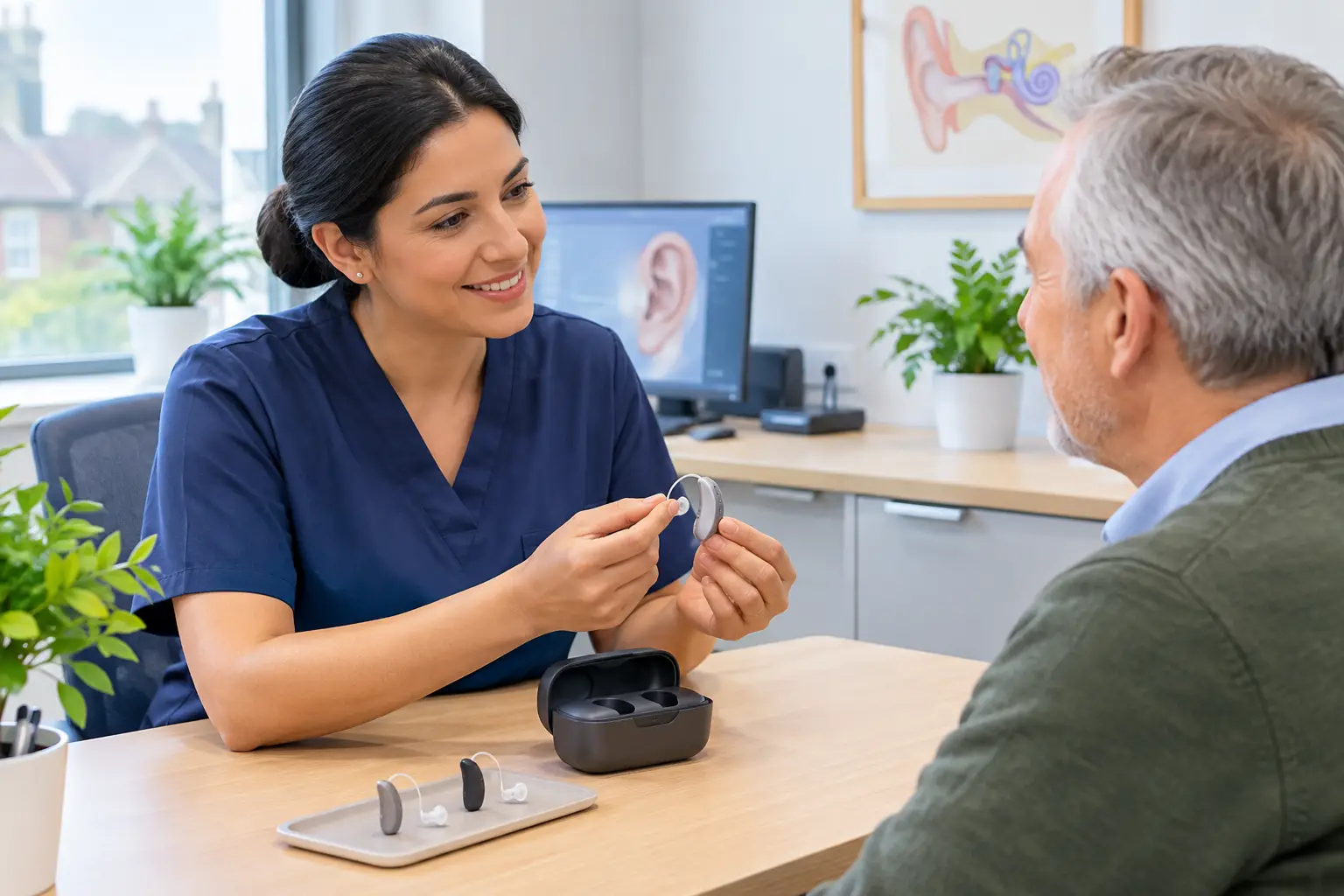
A hearing aid that has worked reliably for years can feel like part of everyday life. That is why questions about Oticon Reveal hearing aids are rarely just about technology. They are about hearing family conversations comfortably, contributing at work and avoiding the fatigue of constantly trying to fill in missing words.
Oticon Reveal is an older generation of hearing aid technology. Some people continue to use their devices successfully, while others notice a gradual loss of clarity, more difficulty in background noise or concerns about repairs. The right next step depends on the condition of the aids, the nature of your current hearing levels and, crucially, whether the devices are still meeting your communication needs.
What are Oticon Reveal hearing aids?
Oticon Reveal hearing aids were designed to provide amplification tailored to an individual hearing loss. As with many hearing systems from their era, they may be available in different styles and configurations, depending on the original fitting. Their programming was based on the wearer’s hearing assessment, so two people with Reveal devices may have very different experiences of them.
For a person with a stable hearing loss and well-maintained devices, an older hearing aid can still offer meaningful support. However, age matters. Hearing aid components, microphones, receivers, battery contacts and casing can deteriorate over time. Equally, hearing can change gradually without the wearer immediately recognising how much extra effort listening has begun to require.
The question is not simply whether the hearing aids turn on. It is whether they still provide appropriate, comfortable and sufficiently clear hearing in the environments that matter to you.
When an older hearing aid may still be appropriate
If your Oticon Reveal aids are comfortable, sound clear and remain dependable, there may be no immediate need to replace them. A qualified audiologist can assess their output, check for faults, clean the microphones and receiver ports, and compare their performance with your current hearing test results.
This review can be particularly valuable if you have recently experienced blocked ears, a chest infection, changes in medication or a sudden reduction in hearing clarity. Sometimes the apparent problem is not the hearing aid itself. Earwax, moisture, a worn tube or dome, or a blocked wax guard can significantly reduce sound quality.
A clinical ear examination should come before assuming that a device has failed. At Tragus-The Ear Specialists, this approach is central to good rehabilitation: establish what the ears and hearing are doing first, then make a recommendation based on evidence rather than pressure to upgrade.
Signs your hearing aids need attention
A review is sensible if speech sounds dull or distorted, one aid is quieter than the other, feedback has become more frequent, or you are increasing the volume without gaining better understanding. Difficulty following conversation in restaurants, meetings or family gatherings can also indicate that the programming no longer reflects your hearing needs.
Do not ignore a sudden change in hearing, new one-sided hearing loss, persistent ear pain, discharge, dizziness or a marked increase in tinnitus. These symptoms need prompt clinical assessment and should not be managed by adjusting hearing aid volume alone.
The limits of Oticon Reveal technology today
Hearing aids have advanced considerably since the Reveal range was introduced. Modern devices may offer more sophisticated management of background noise, improved directional microphones, better feedback control, rechargeable options and direct connectivity with phones and other devices. These features can make a substantial difference for some people, especially those who lead busy social or professional lives.
That does not mean newer is automatically better for every wearer. The benefit of modern technology depends on your hearing profile, dexterity, vision, lifestyle, listening environments and confidence using controls or apps. Someone who mainly wants comfortable one-to-one conversation at home may have different priorities from someone who regularly attends meetings, lectures, theatres or noisy family occasions.
Repair availability is another practical consideration. Manufacturers may eventually limit support for older models as parts become unavailable. If a repair cannot be completed reliably, or if repeated repairs are becoming costly, replacement may be the more sensible long-term option.
Should you repair or replace Oticon Reveal hearing aids?
This decision should follow an expert hearing assessment rather than a generic product recommendation. A good review considers three areas: your ears, your hearing and the devices themselves.
First, the clinician should examine your ear canals and eardrums. Wax blockage is common and can reduce benefit dramatically. Microsuction earwax removal, where clinically appropriate, can restore sound access without changing the hearing aid at all.
Next, a comprehensive hearing assessment establishes whether your hearing thresholds and speech understanding have changed. Hearing loss is not always static. A setting that was comfortable five years ago may now be too quiet, too sharp or insufficiently precise in noise.
Finally, the hearing aids should be checked for physical and acoustic function. If they are working correctly and can still be programmed effectively for your needs, ongoing use may be entirely reasonable. If the devices are unreliable, unsupported or no longer capable of delivering the help you need, a modern hearing aid assessment provides a clearer basis for considering alternatives.
What to expect from a specialist hearing aid review
A thorough appointment should not begin with a sales conversation. It should begin with listening to you. The clinician will ask where communication is difficult, how much listening effort you experience and what you want to hear better. For some patients, hearing grandchildren clearly is the priority. For others, it is contributing confidently in meetings or reducing the strain of following conversation in a busy café.
The assessment may include otoscopy, hearing testing and discussion of your existing devices. Bringing both hearing aids, any remote controls, chargers or battery packs, and details of previous repairs can be useful. It also helps to bring a family member if they have noticed changes that you may not have recognised yourself.
If replacement is appropriate, the fitting process should be individualised. Hearing aids need careful selection, programming and follow-up adjustment. A premium device cannot compensate for an incomplete assessment or a rushed fitting. Real benefit comes from matching the technology to the person and refining it as they adapt.
Do not overlook tinnitus and sound sensitivity
People with older hearing aids sometimes report that tinnitus has become more intrusive or that everyday sound feels uncomfortably sharp. These experiences deserve proper assessment. Tinnitus and hyperacusis can coexist with hearing loss, but they may require a more considered rehabilitation plan than simply increasing amplification.
An audiologist with specialist experience can assess the wider picture, including hearing loss, tinnitus impact, sound tolerance and emotional strain. The aim is not merely to make sound louder. It is to make listening more manageable and improve day-to-day quality of life.
Caring for older hearing aids
Care will not make obsolete technology current, but it can prevent avoidable faults. Keep devices dry, clean external microphone openings carefully with the supplied tools, and replace consumable parts such as wax guards or domes as advised. Store hearing aids safely away from heat, humidity and young children or pets.
If your devices use disposable batteries, check the battery door and contacts for corrosion. A weak battery can cause intermittent sound, distortion or unexpected shut-downs. If you use a drying system, follow the manufacturer’s guidance, as the correct method depends on the style of hearing aid.
Most importantly, do not attempt to push sharp objects into microphone ports or receiver openings. This can cause damage that is more expensive, and sometimes impossible, to repair.
A decision based on your hearing, not the age of the device
Oticon Reveal hearing aids may still have a role for some wearers, particularly when they are functioning well and remain appropriate for their hearing loss. Yet an older device should not become a reason to accept avoidable communication difficulty, isolation or listening fatigue.
If you are unsure whether your hearing aids need repair, adjustment or replacement, arrange an expert assessment. Clearer hearing often starts not with a new device, but with an accurate understanding of what your ears need now.