
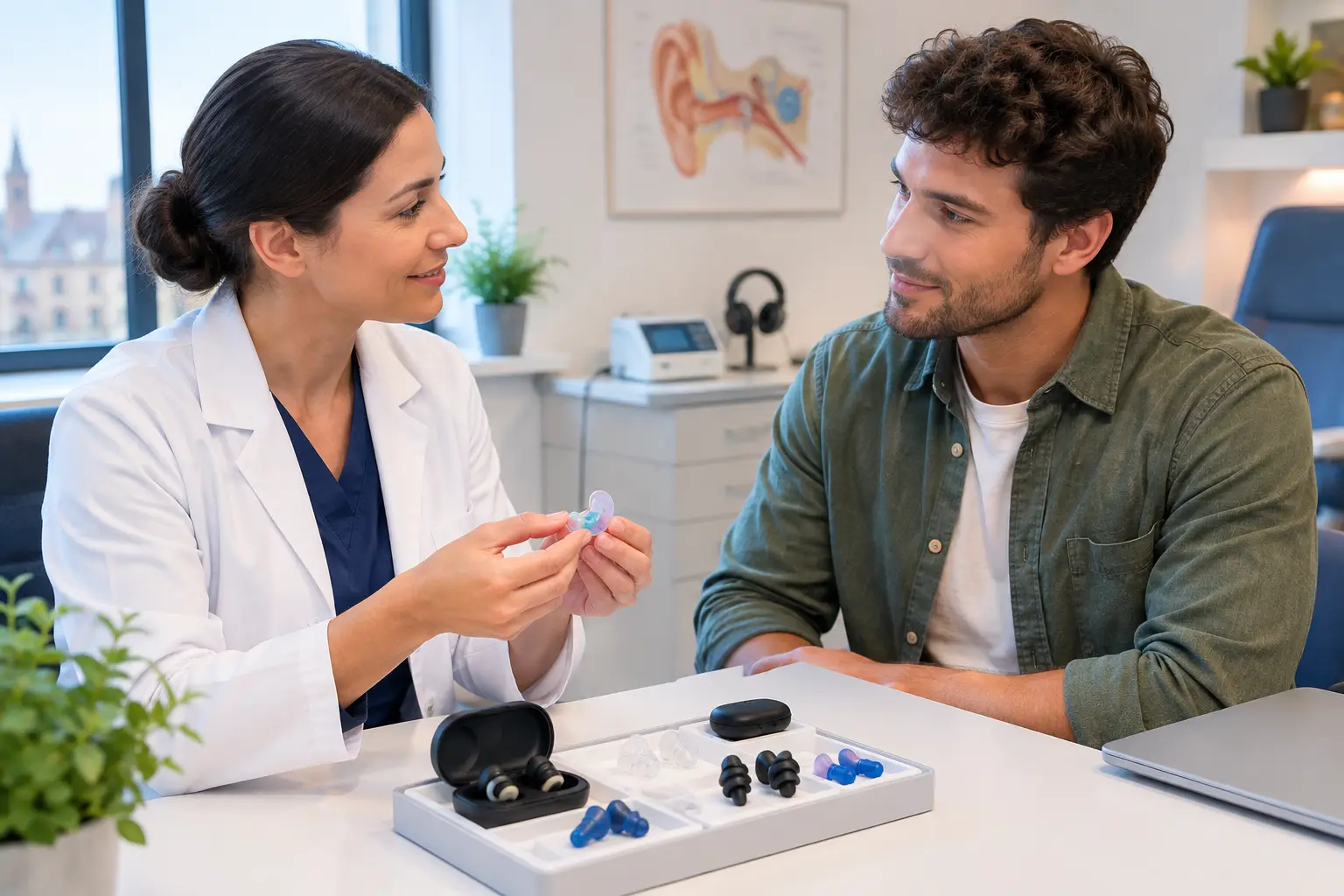
A rehearsal room can sit at levels that are uncomfortable for the ears long before it feels painfully loud. For singers, instrumentalists, DJs, sound engineers and regular gig-goers, this musician earplugs review guide focuses on the decision that matters most: choosing protection you will actually wear without losing the detail that makes music enjoyable.
The right earplugs should reduce harmful sound exposure while preserving balance, pitch and speech as naturally as possible. They are not simply an accessory for the stage. Used well, they are a practical part of protecting hearing for work, performance and life outside music.
Musician earplugs review guide: what makes a pair effective
Ordinary foam earplugs are designed chiefly to block noise. They can be useful for sleep, travel or very noisy environments, but music may become muffled and uneven through them. Bass can dominate, vocals may feel distant, and it can become harder to judge your own playing or hear instructions from bandmates.
Musician earplugs use acoustic filters to reduce sound more evenly across frequencies. This is often described as a flatter or more natural attenuation profile. Rather than turning a live mix into a dull rumble, they aim to lower the volume while retaining the relationship between vocals, cymbals, guitars and bass.
No earplug makes loud exposure harmless. The protection achieved depends on the filter, the seal in the ear canal, how the plug is inserted and the sound level around you. But a well-fitted filtered earplug can make rehearsals, venues and amplified performances substantially more manageable.
Look beyond the headline decibel figure
A decibel rating is useful, but it is not the whole story. A figure such as 15 dB, 17 dB or 25 dB usually indicates the approximate amount of sound reduction under test conditions. Real-world protection can be lower if the plug is loose, incorrectly positioned or removed repeatedly during a set.
The most suitable level depends on your setting. A classical musician playing in a large orchestra may need a different filter from a drummer in a small rehearsal studio or a front-of-house engineer working beside powerful PA systems. More reduction is not automatically better if it prevents you from hearing cues, tuning or conversation safely.
A qualified audiologist can discuss your usual exposure, instruments, venues and listening demands before recommending an option. This is particularly valuable if you play regularly, already notice ringing after gigs, or find everyday sound uncomfortably intense.
Universal versus custom musician earplugs
The main choice is between universal-fit filtered earplugs and custom-moulded earplugs. Both can have a place, but they serve different needs.
Universal filtered earplugs
Universal designs use pre-made tips in several sizes. They are generally more affordable and can be a sensible starting point for occasional concert-goers, students or musicians who want to trial filtered protection before investing further.
Their limitation is fit. Ear canals vary considerably in shape and size, and even a good universal tip can shift with jaw movement, sweat or extended wear. If the seal changes halfway through a rehearsal, both comfort and attenuation may be affected. Some people also find that they need to experiment with tip sizes before obtaining a reliable result.
For infrequent use, a well-made universal pair may be entirely appropriate. Check that it sits securely, sounds balanced and remains comfortable for the duration of your typical session.
Custom-moulded earplugs
Custom musician earplugs are made from impressions of your ears. The resulting earpieces are shaped to your ear canals and outer ears, supporting a secure and repeatable seal. They can be fitted with interchangeable acoustic filters, allowing the protection level to be selected for different types of work.
For working musicians, music teachers, venue staff and frequent gig-goers, this consistency is often the deciding advantage. A custom fit is less likely to work loose and is usually more comfortable for long rehearsals, touring days or performances. It also makes it easier to use protection routinely rather than only when a room feels unbearably loud.
The trade-off is cost and the need for a professional fitting appointment. Yet when music is central to your career or wellbeing, a custom solution is often a worthwhile preventive investment. At Tragus-The Ear Specialists, custom earplug provision begins with careful assessment and impressions taken by qualified clinicians, rather than a one-size-fits-all recommendation.
Choose protection for the way you make music
The best earplugs are not necessarily the strongest pair available. They are the pair that gives adequate protection without compromising your ability to perform safely and confidently.
A drummer, percussionist or amplified guitarist may need a higher attenuation filter because exposure can be intense and sustained, particularly in compact rehearsal rooms. A singer may prioritise clarity of their own voice and communication with the band. Orchestral players often need a balanced reduction that preserves subtle dynamic changes and ensemble cues. DJs and engineers may require dependable attenuation while retaining enough detail to make sensible sound decisions.
If you move between several environments, interchangeable filters can be useful. You may use a moderate filter for teaching or acoustic rehearsals and a stronger one for amplified gigs. Avoid changing filters casually during a noisy event, though. Plan your protection before the performance begins.
It is also worth considering practical details. Ask whether the plugs are easy to clean, whether replacement filters are available, and whether the case is secure enough for a gig bag or instrument case. A pair left at home cannot protect your hearing.
Comfort and sound quality are safety issues
Many musicians stop using earplugs because they dislike the sound or find the fit distracting. That is not a failure of willpower. It is a sign that the chosen product may not be appropriate for the person or the setting.
Pressure, soreness, a persistent sense of blockage or a plug that works its way out should be addressed. Do not force an earplug deeper into the canal. A clinician can check for earwax, irritation or an anatomical issue that may be affecting comfort and fit.
Sound quality also affects whether protection is worn consistently. If you repeatedly remove plugs to hear speech or regain musical detail, your ears receive unprotected bursts of sound at precisely the moments they may be most exposed. A more suitable filter or a better-fitting custom earpiece can solve this problem.
When tinnitus or sound sensitivity changes the decision
Ringing, buzzing or hissing after a gig can be a warning that your auditory system has been stressed. If tinnitus persists, recurs frequently or is accompanied by a noticeable change in hearing, arrange an expert hearing assessment. The same applies if sound causes discomfort, pain, anxiety or a disproportionate sense of overwhelm.
People with tinnitus or hyperacusis sometimes feel tempted to wear earplugs all day. Continuous overprotection in ordinary safe environments is not usually the answer and may increase sound sensitivity for some people. Protection should be targeted to genuinely noisy situations, with personalised advice where symptoms are present.
Sudden hearing loss, new one-sided tinnitus, dizziness, severe ear pain or discharge need prompt medical attention. Earplugs are preventive equipment, not a substitute for diagnosis.
A practical fitting and care checklist
Before relying on musician earplugs for an important performance, wear them during a lower-stakes rehearsal. Listen for whether your own instrument, vocals and spoken cues remain clear. Check the seal after singing, chewing or moving your jaw, and practise inserting them correctly in a quiet place.
Keep earplugs clean using the method specified for their material and filters. Store them in their case, away from excessive heat, and inspect them for damage. If a custom earpiece becomes loose after weight changes, ear surgery or many years of use, it may need reviewing or replacing.
Children and teenagers who perform or attend loud music events also deserve proper hearing protection. Their ear canals are still developing, so fit, comfort and supervision matter. A paediatric hearing professional can advise when there are concerns about hearing, sound tolerance or suitable protection.
Make protection part of the soundcheck
Hearing loss linked to noise exposure is often gradual. You may first notice that conversation in pubs is harder, that high notes seem less clear, or that your ears ring after a show. By the time these changes become routine, the impact on confidence, communication and enjoyment of music can be significant.
Treat musician earplugs as you would any other essential piece of performance equipment. Choose a filter and fit that let you hear accurately, wear them before the room becomes loud, and seek an expert assessment if your ears are giving you warning signs. Protecting your hearing now helps keep music clear, comfortable and part of your life for years to come.