
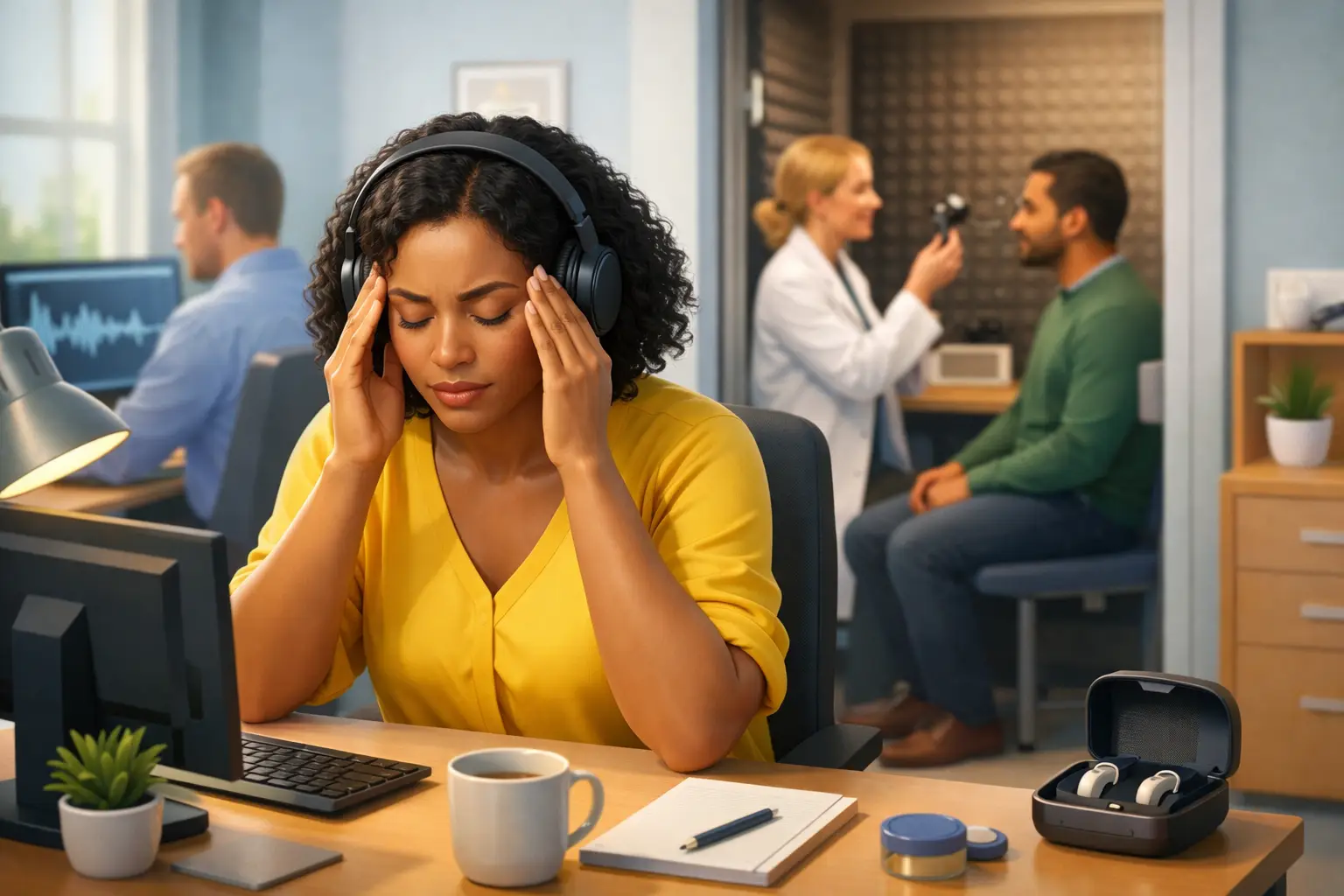
A meeting finishes, but the effort of following every voice does not. If you leave work feeling mentally drained, irritable around sound, or unable to face another conversation, it may be time to consider how you manage workplace hearing fatigue. This is not simply a matter of being tired after a demanding day. For many people, the brain is working overtime to make sense of speech through background noise, unclear audio, fast-paced discussion or an underlying change in hearing.
Hearing fatigue can affect concentration, confidence and performance. It can also make the working day feel unnecessarily difficult. The right adjustments can reduce daily listening strain, but persistent symptoms deserve an expert assessment rather than being dismissed as a normal part of office life.
What workplace hearing fatigue feels like
Workplace hearing fatigue, often called listening fatigue, is the exhaustion that builds when hearing requires sustained conscious effort. In a quiet one-to-one conversation, this effort may be manageable. In an open-plan office, busy clinical setting, classroom, shop floor or video meeting with poor audio, the demand rises quickly.
You might notice that you are asking colleagues to repeat themselves more often, particularly later in the day. Speech may sound audible but unclear, with words seeming to blur when several people are talking. Some people develop headaches, feel tense in noisy environments, or withdraw from lunch breaks and informal conversations because they need relief from sound.
This can happen with diagnosed hearing loss, but it can also be an early sign that hearing needs checking. Even a mild reduction in hearing sensitivity can make the brain work harder to fill in missing detail, especially with high-frequency speech sounds such as s, f and th. Tinnitus, sound sensitivity and stress can add further pressure.
Why the workplace can make listening harder
Modern work is often designed around constant communication rather than good acoustics. Hard surfaces, air conditioning, keyboard noise and nearby conversations create a layer of background sound that competes with speech. Hybrid working brings another challenge: compressed audio, unreliable microphones and the loss of visual cues when cameras are off.
The issue is not always volume. A colleague can speak loudly enough to hear, yet still be difficult to understand if the room is reverberant, they are facing away, or several voices overlap. Trying to predict words from partial information uses cognitive energy that would otherwise be available for decision-making, memory and problem-solving.
Hearing fatigue can be particularly noticeable in roles that depend on accuracy and communication. Managers, teachers, healthcare staff, customer-facing teams and anyone taking frequent calls may find that small listening difficulties have a disproportionate effect. The same is true for people returning to work after illness, managing tinnitus, or adapting to a new hearing aid prescription.
Practical ways to manage workplace hearing fatigue
The most useful approach is to reduce unnecessary listening effort before fatigue has built up. Small changes to your environment and routine can make a meaningful difference.
Improve the signal, not just the volume
Where possible, position yourself so you can see the speaker’s face clearly. Visual information such as lip movements and facial expression supports speech understanding without requiring you to strain. In meetings, choose a seat away from noisy equipment, open doors or the centre of multiple conversations.
For remote calls, use a good-quality headset rather than relying on laptop speakers. Encourage colleagues to use microphones, mute when not speaking and avoid talking over one another. Captions can be helpful for longer online meetings, particularly when names, figures or technical information are being discussed. They are a practical support, not an admission that you are failing to cope.
Plan recovery into the day
Listening concentration is not limitless. A short period of quiet after a demanding meeting can prevent fatigue from carrying into the next task. If your role allows it, avoid scheduling back-to-back calls all day and reserve complex work for a quieter period.
This does not mean total silence is always necessary. Some people with tinnitus find complete silence makes their tinnitus more noticeable. Gentle, neutral background sound may feel more comfortable in that situation. The goal is to give your auditory system and attention a break from competing, unpredictable noise.
Ask for communication that works for you
Clear communication benefits the whole team. It may help to ask colleagues to get your attention before speaking, face you when giving instructions and summarise key actions in writing after a meeting. For important conversations, a written agenda or follow-up note reduces the pressure to catch every word first time.
If workplace noise is a regular barrier, speak to your line manager or occupational health team. Reasonable adjustments may include a quieter desk position, access to a private room for calls, acoustic changes, flexible scheduling or suitable assistive technology. The best solution depends on the nature of the role and the specific hearing difficulty.
Protect your ears without overprotecting them
People who work around high noise levels should use appropriate hearing protection as part of a wider workplace safety plan. Custom earplugs can provide a more reliable and comfortable fit than generic options, particularly for people who need to communicate while reducing exposure.
However, wearing earplugs in ordinary, safe sound environments is not automatically the answer to hearing fatigue. For some people, especially those with hyperacusis or sound sensitivity, excessive use of hearing protection can make everyday sound feel harder to tolerate over time. A qualified audiologist can advise on the right balance for your symptoms, workplace and noise exposure.
When hearing fatigue may point to a hearing problem
Occasional tiredness after a noisy event is common. The concern is when listening feels hard in situations that others manage comfortably, or when the pattern is becoming more frequent. A hearing assessment is sensible if you regularly struggle with speech in background noise, increase the television volume, mishear colleagues, experience tinnitus, or feel unusually exhausted after conversations.
Hearing changes are not always obvious because they can develop gradually. Many people notice the impact at work before they recognise it elsewhere. They may blame poor microphones, distracting colleagues or stress, when the real picture includes a hearing loss that has not yet been assessed.
A comprehensive audiology appointment looks beyond whether you can hear tones in a test booth. It considers your hearing thresholds, speech understanding, ear health, symptoms such as tinnitus, and the situations where listening is most difficult. If earwax is contributing to reduced hearing, safe clinical removal may be appropriate. If hearing loss is identified, carefully fitted hearing aids and rehabilitation can reduce listening effort for many people, although there is an adjustment period while the brain adapts to clearer sound.
Support for tinnitus and sound sensitivity at work
Tinnitus can make a busy day feel more demanding, particularly when fatigue and stress increase its prominence. Trying to force the sound away rarely helps. Instead, practical tinnitus management may involve improving sleep routines, reducing unhelpful sound avoidance, managing stress and using appropriate sound enrichment where advised.
Hyperacusis is different from ordinary dislike of noise. It involves reduced tolerance to sounds that may be comfortable for others, and it can make offices, public transport and team environments feel overwhelming. Specialist assessment is valuable because the management plan must be tailored. What helps someone with noise-induced hearing loss may not be right for someone with significant sound sensitivity.
At Tragus-The Ear Specialists, qualified audiologists can assess hearing, tinnitus and sound sensitivity in the context of daily life, including the demands of work. A clear diagnosis gives you a more useful starting point than simply trying to endure each difficult day.
Make the next conversation easier
You do not need to wait until communication at work has become a source of anxiety. Begin with practical changes to sound, seating and meeting habits, then pay attention to whether they genuinely reduce the effort of listening. If fatigue persists, a specialist hearing assessment can identify what is driving it and help you make work feel clearer, calmer and more manageable.