
Buying hearing aids is not like buying a pair of glasses off the shelf. Two people can have the same complaint – struggling in restaurants, missing parts of conversations, turning the television up – and still need very different solutions. If you are wondering how to choose hearing aids, the right starting point is not the device itself. It is a proper assessment of your hearing, your listening needs, and the situations that matter most in daily life.
That distinction matters because hearing aids are not simply amplifiers. They are medical devices programmed to your hearing profile, and the best outcome depends on accurate diagnosis, careful fitting, and ongoing support. A cheaper or faster option can look appealing at first, but if the hearing aid does not match your hearing loss, comfort requirements, and lifestyle, it often ends up in a drawer.
How to choose hearing aids starts with diagnosis
Before comparing brands, styles, or features, you need to understand what type of hearing loss you have and how it affects communication. A comprehensive hearing assessment should identify the degree and pattern of hearing loss in each ear, and it should also rule out problems that hearing aids will not fix, such as significant earwax build-up, middle ear issues, or certain medical causes of sudden change.
This is one reason specialist assessment matters. Someone with mild high-frequency loss may mainly struggle with speech clarity, especially in background noise. Another person may have asymmetrical hearing, tinnitus, sound sensitivity, or reduced speech discrimination. Those details change the recommendation.
If you have tinnitus, recurrent wax blockage, dizziness, or one-sided symptoms, that should be part of the discussion from the beginning. Hearing rehabilitation works best when the wider picture of ear health is considered, not just the audiogram.
Think about where hearing matters most
Many patients start by saying, “I just want to hear better.” That is understandable, but it is too broad to guide a good fitting. A better question is: when do you notice the problem most?
For some, it is family conversation around the dinner table. For others, it is work meetings, phone calls, church services, television, or hearing in the car. If you regularly attend social events, eat out, or spend time in busy public spaces, speech-in-noise performance becomes especially important. If you are often outdoors, wind management and ease of use may matter more. If dexterity or vision is reduced, very small devices may not be the most practical choice, even if they seem attractive cosmetically.
The best hearing aid is not the smallest one or the most expensive one. It is the one that supports your real life consistently and comfortably.
Choosing the right hearing aid style
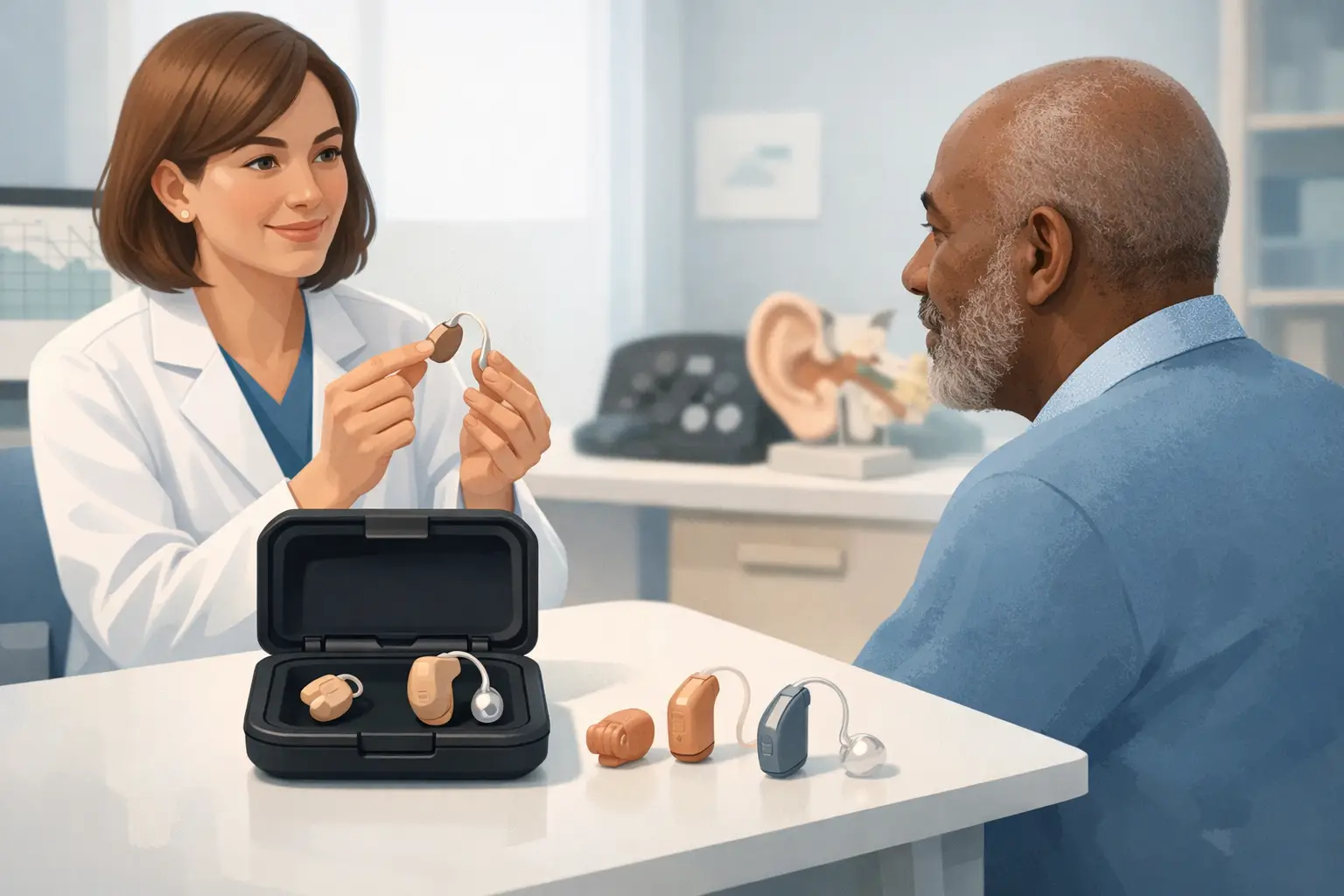
Hearing aids come in several styles, and each has strengths and compromises. This is where appearance, hearing loss level, ear anatomy, and handling ability all come into play.
Receiver-in-canal devices are among the most commonly recommended because they suit a wide range of hearing losses and often offer a good balance of discreet appearance, sound quality, and feature access. Behind-the-ear devices are slightly more visible but can be an excellent choice for people who need more power, easier handling, or a more robust fit. In-the-ear styles may appeal if you want everything contained in one shell, though suitability depends on your ear canal shape, hearing profile, and the space available for components.
There is always a trade-off. Smaller devices are often cosmetically appealing, but they can be fiddlier to insert, adjust, and clean. Larger devices may offer longer battery life, easier controls, and stronger connectivity. A specialist audiologist should talk you through those practical realities rather than assuming one size fits all.
Which features are worth paying for?
Modern hearing aids can include directional microphones, rechargeable batteries, Bluetooth connectivity, app control, tinnitus support features, feedback management, and automatic adaptation to different listening environments. Some of these features are highly useful. Some are useful only if they match your needs.
If you spend a lot of time in noisy settings, better speech-in-noise processing may justify a higher specification device. If you take frequent calls or stream audio, Bluetooth can make everyday listening far easier. If you have tinnitus, integrated sound therapy options may be relevant. If you are not comfortable with smartphone apps, remote fine-tuning may be less valuable than simple physical controls.
This is where honest clinical advice matters. Premium features can be worthwhile, but only when they deliver a meaningful improvement in situations you actually face. Paying more does not automatically guarantee better satisfaction.
Comfort, fit, and daily wear
A hearing aid can have excellent technology and still fail if it is uncomfortable. Physical fit affects not only comfort but also sound quality, feedback, and how likely you are to wear the device consistently.
You should expect your clinician to consider the shape of your ear, the size of your canal, whether you wear glasses, and any history of irritation or skin sensitivity. Open fittings can feel more natural for some types of hearing loss, while more closed fittings may be needed for others to provide enough amplification. Again, it depends.
It is also worth being realistic about the adjustment period. Even well-fitted hearing aids can sound strange at first because your brain is re-learning sounds it has not heard clearly for some time. Paper rustling, footsteps, cutlery, and traffic may seem unusually prominent in the early days. That does not necessarily mean the device is wrong. It often means the rehabilitation process has started.
How to choose hearing aids if you have tinnitus or complex hearing needs
Not everyone coming for hearing support has straightforward age-related hearing loss. Some people also live with tinnitus, hyperacusis, a long history of ear problems, or hearing changes linked to other medical conditions. In these cases, choosing hearing aids should not be treated as a retail transaction.
For example, a patient with tinnitus may benefit from amplification alone if reduced hearing is making the tinnitus more noticeable. Others may need a broader tinnitus management plan alongside hearing aids. Someone with sound sensitivity needs careful programming to avoid making listening uncomfortable. Children and adults with more complex auditory profiles need an even more tailored approach.
This is where a specialist ear and hearing clinic can add real value. At Tragus-The Ear Specialists, hearing aid recommendations sit within a wider clinical service, which means assessment, rehabilitation, and aftercare can be aligned rather than fragmented.
Do not overlook aftercare
One of the biggest differences between a good hearing aid experience and a poor one is what happens after fitting day. Hearing aids usually need fine-tuning. Your ears and brain need time to adapt. Listening goals may change once you start using them in real environments.
That means follow-up care is not an optional extra. You should know what support is included, how adjustments are handled, whether earwax management is available if needed, and what happens if the fit or sound needs refining. Proper aftercare also helps with maintenance, cleaning, and checking that your hearing aids continue to match your hearing over time.
Patients often focus heavily on the upfront price, but value is broader than cost alone. A lower-priced device with minimal support may prove more frustrating and less effective than a well-supported option that is properly fitted and reviewed.
Questions worth asking before you decide
If you are comparing providers, ask who carries out the hearing assessment and fitting, what qualifications they hold, and whether recommendations are based on your hearing profile rather than a sales target. Ask what follow-up is included, whether trial or adjustment periods apply, and how ongoing issues such as discomfort, wax, or changing hearing are managed.
You should also ask what outcome is realistic. Hearing aids can transform clarity, confidence, and participation, but they do not recreate perfect natural hearing. In busy places, listening may still require effort. Good clinicians set that expectation clearly while aiming to improve communication as much as possible.
A sensible way to make the final choice
If you feel overwhelmed by options, simplify the decision. Choose hearing aids based on five things: accurate diagnosis, suitability for your hearing loss, comfort and handling, performance in the situations you care about most, and the quality of aftercare behind them.
That approach usually leads to better results than chasing the newest model or the lowest price. Hearing aids are part of a rehabilitation process, not a gadget purchase. The aim is not to own impressive technology. It is to hear more clearly, communicate with less effort, and feel more confident in everyday life.
If hearing loss has started to affect conversations, work, family life, or your confidence, do not wait in silence. The right hearing aids begin with the right assessment, and that first step often makes the whole decision far clearer.