
Missing parts of conversation is rarely dramatic at first. It is more often the television creeping up a few notches, asking people to repeat themselves in busy places, or feeling unusually tired after meetings because listening has become hard work. If you are looking for a hearing test Dartford patients can rely on, the key is not simply having your hearing checked. It is having it assessed properly, by qualified clinicians who can explain what the results mean and what should happen next.
Why a specialist hearing assessment matters
A hearing test is not just about whether you can hear a beep through headphones. In a specialist clinic, it is part of a wider diagnostic process. That matters because hearing difficulties do not all have the same cause, and they do not all need the same solution.
Some patients have a straightforward age-related hearing loss. Others are dealing with wax blockage, tinnitus, sound sensitivity, recurrent ear infections, pressure problems, or sudden changes in hearing that need urgent medical attention. Children, of course, require a different approach again. A high-street screening may pick up that something is not right, but a clinical audiology assessment is designed to identify what is happening and guide the right treatment or rehabilitation plan.
For many adults, the biggest benefit is clarity. Instead of wondering whether the issue is serious, temporary, or simply part of getting older, you leave with evidence, explanation, and a professional recommendation.
Who should book a hearing test in Dartford?
Many people wait longer than they should. Hearing changes are often gradual, which makes them easy to normalise. If family members keep commenting that you are not hearing clearly, that is worth taking seriously.
You should consider booking a hearing assessment if speech sounds less clear than it used to, particularly in background noise, if you have persistent tinnitus, if one ear seems worse than the other, or if you regularly feel blocked, muffled, or off-balance. It is also sensible to arrange testing if your work depends on clear communication, if you have been exposed to loud noise over time, or if a child seems delayed in speech, inattentive, or inconsistent in their responses to sound.
There is also an important point about asymmetry. Hearing loss that is noticeably different between ears needs proper investigation. The same applies to sudden hearing loss, which should never be left to settle on its own.
What happens during a hearing test Dartford appointment?
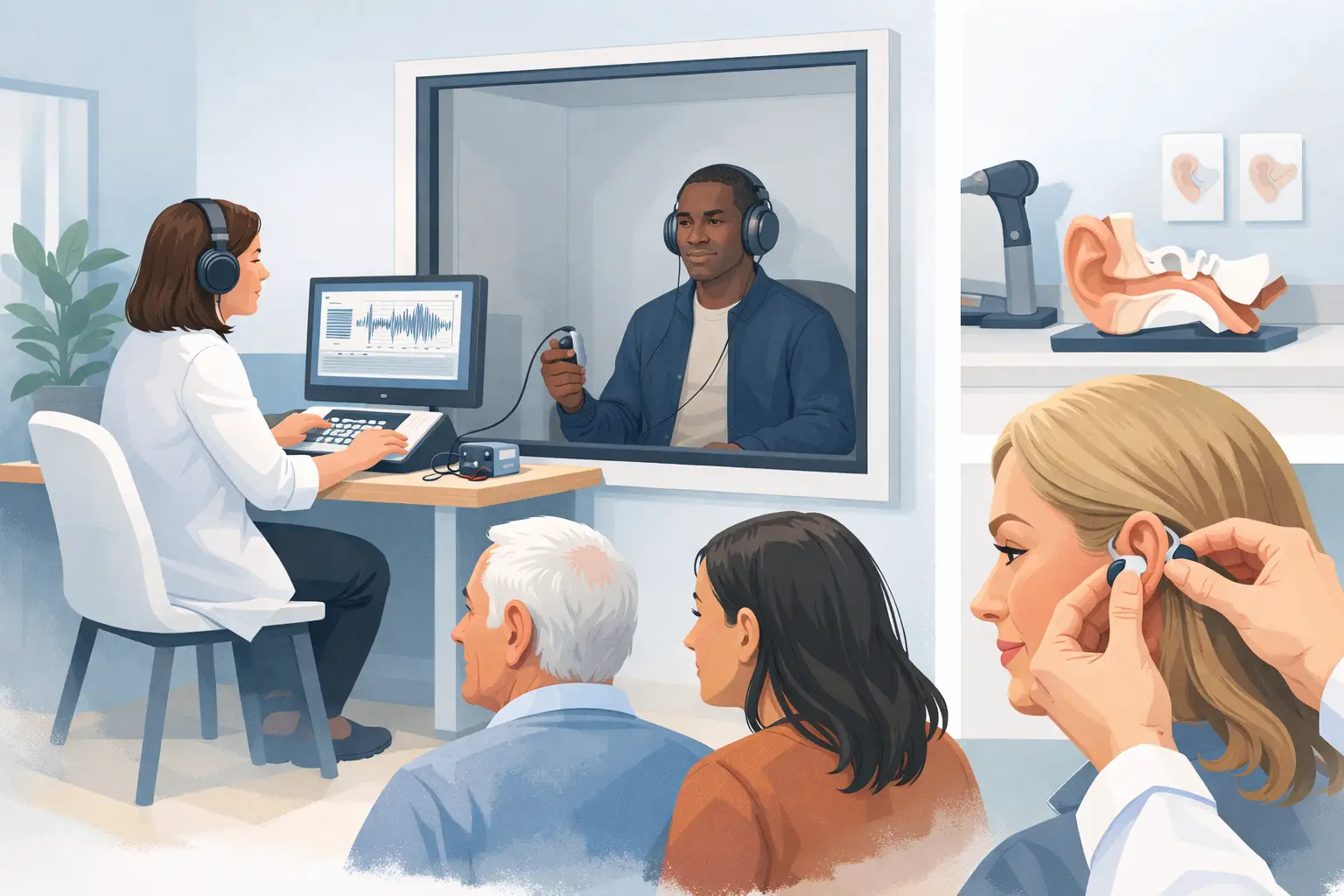
A well-run appointment should feel thorough without being overwhelming. It usually begins with a case history. Your audiologist will ask about your symptoms, when they started, whether they are affecting one ear or both, and whether there are related issues such as tinnitus, dizziness, ear infections, discomfort, or noise exposure.
Your ears may then be examined to check for visible causes of hearing difficulty, such as wax, inflammation, or changes to the eardrum. This step is important because testing hearing without first considering ear health can miss the obvious.
The hearing assessment itself often includes pure tone audiometry, where you respond to sounds at different pitches and volumes, and speech testing, which helps show how clearly you hear and process spoken words. Depending on your symptoms, further tests may be recommended, particularly if there are middle ear concerns or more complex auditory issues.
At a specialist clinic, the appointment does not stop at the test result. You should expect your audiologist to explain the findings in plain English, discuss whether the pattern is typical or unusual, and advise on treatment options or next steps. That may involve monitoring, wax removal, hearing aids, tinnitus support, medical referral, or further paediatric assessment where a child is concerned.
Not all hearing tests are the same
This is where patients often underestimate the difference between providers. Some services are designed mainly to funnel patients quickly towards a product. Others are built around clinical diagnosis and rehabilitation.
That distinction matters when symptoms are not straightforward. If you have tinnitus, hyperacusis, ear discomfort, fluctuating hearing, or concerns about a child’s hearing development, a specialist ear and hearing clinic is usually the more appropriate setting. The same is true if you want continuity of care rather than a one-off test.
An expert assessment should consider the whole picture – hearing levels, ear health, symptom history, communication needs, and what outcome would genuinely improve daily life. For some people, that means hearing aids. For others, it means treating wax, managing tinnitus, or confirming that hearing is within normal limits and looking elsewhere for the cause of symptoms.
When hearing loss is confirmed
A diagnosis of hearing loss can be unsettling, but it is often a relief as well. It gives a reason for the listening fatigue, the social strain, and the sense that communication has become more effortful than it should be.
The right next step depends on the type and degree of loss, your lifestyle, and your priorities. Mild loss affecting conversation in restaurants has a different impact from hearing loss that interferes with work meetings, family life, or telephone use. A specialist audiologist should talk through those practical implications, not just the numbers on an audiogram.
Hearing aids are one option, but they are not a generic fix. Good fitting, careful programming, realistic counselling, and follow-up support all shape the outcome. Patients usually do better when rehabilitation is personalised and when expectations are set properly from the start. Better hearing is rarely about making everything loud. It is about improving clarity, comfort, and confidence in real environments.
What if the problem is earwax rather than hearing loss?
Blocked ears can feel very similar to hearing loss, and sometimes that is exactly what is causing the problem. Wax can reduce hearing, create a sense of fullness, trigger tinnitus, and distort sound. The solution, however, is very different.
This is one reason a medically informed assessment is useful. If wax is present, it should be identified before assumptions are made about long-term hearing changes. In some cases, safe microsuction earwax removal may be the appropriate first step, followed by hearing testing if needed. That approach is far more accurate than guessing, self-treating repeatedly at home, or buying amplification before the ear canal has even been examined.
Hearing tests for children require a different approach
Parents often notice concerns before anyone else does. A child may not respond consistently, may mishear instructions, may turn one ear towards sound, or may seem withdrawn or distracted in noisy places. Those signs do not always mean permanent hearing loss, but they do justify assessment.
Paediatric hearing testing should be adapted to the child’s age, development, and attention level. It also needs clinicians who understand how hearing issues can affect speech, learning, behaviour, and confidence. A rushed adult-style appointment is not enough.
For families in and around Dartford, access to specialist paediatric audiology can make a real difference. It allows concerns to be addressed early and, where needed, supports a clearer plan for school, communication, and ongoing care.
Why people delay, and why that can cost more than they think
Many adults put off a hearing test because they do not feel ready for the answer. Others assume it is a minor issue or think they can manage by coping strategies alone. Unfortunately, the strain of untreated hearing difficulty often shows up elsewhere first – in work stress, social withdrawal, relationship frustration, and constant listening effort.
There is also growing recognition that hearing health is tied closely to general wellbeing. When hearing becomes harder, people often engage less, ask fewer questions, and avoid the very environments they used to enjoy. A timely assessment helps you act earlier, while solutions are usually simpler and adjustment is easier.
Choosing the right clinic
If you are comparing providers, look beyond convenience alone. Ask who performs the assessment, whether they are qualified audiologists, whether the clinic can investigate related symptoms such as tinnitus or wax blockage, and whether children can be assessed if needed. It is also worth asking what happens after the test. A result without explanation is not especially helpful.
A premium ear clinic should offer more than a quick check. It should provide expert assessment, regulated care, and clear recommendations grounded in clinical judgement. That is particularly important if your symptoms are affecting work, family life, sleep, concentration, or confidence.
Clinics such as Tragus-The Ear Specialists are designed around that more complete model of care, where diagnostics, treatment, and rehabilitation sit under one roof. For patients, that usually means fewer loose ends and a more confident path forward.
If your hearing has changed, or if you are simply no longer certain that what you hear is what others hear, it is worth getting a proper answer. Don’t wait in silence when a careful assessment could help you hear the world in high-definition once more.