
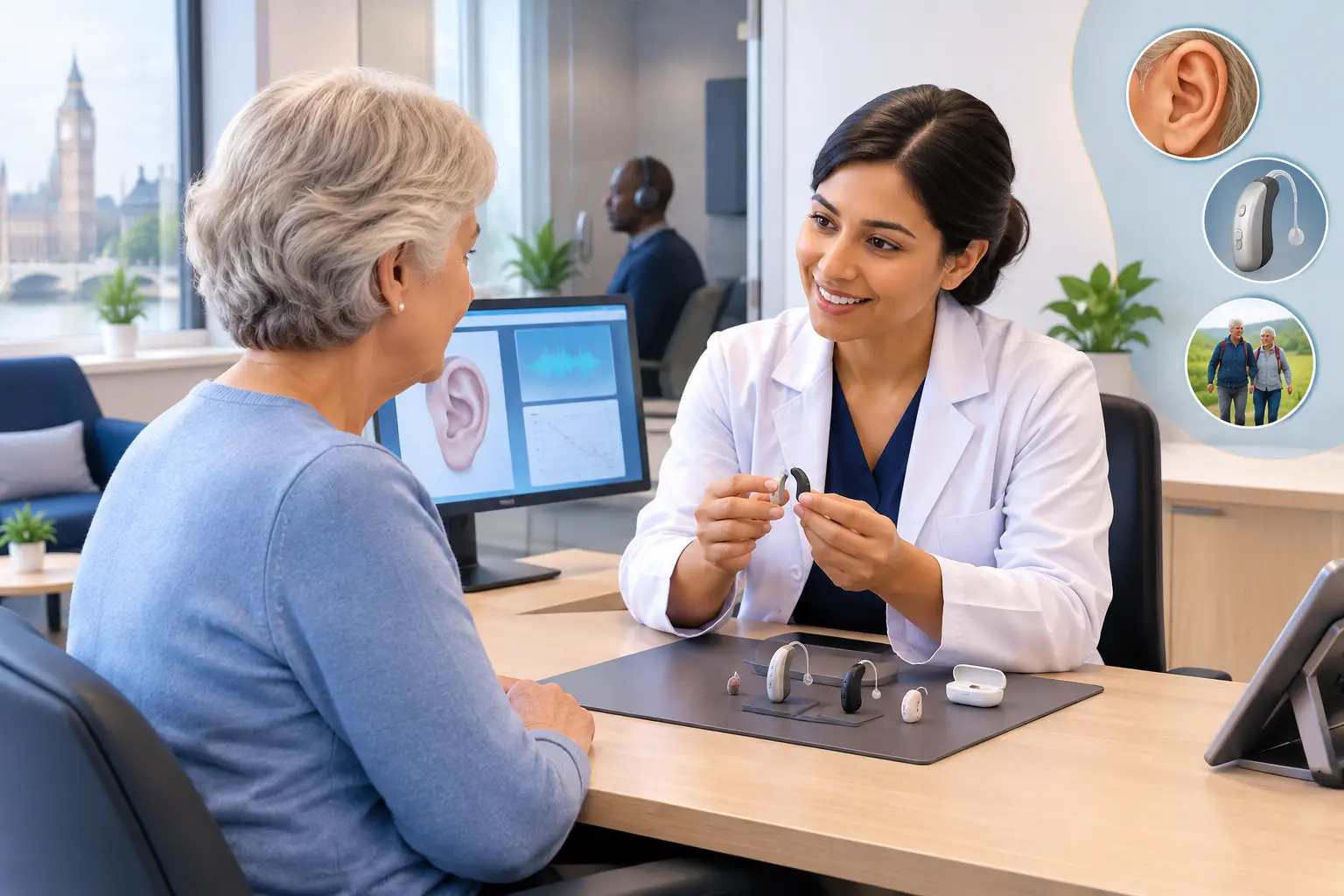
A missed word at a family meal, a persistent whistle in a quiet bedroom or a child who seems not to hear instructions can all be dismissed for too long. The hearing healthcare trends UK patients are seeing point in a more positive direction: people are seeking expert assessment earlier, expecting care that addresses everyday impact, and looking beyond a quick retail solution.
For adults and families, this change matters. Hearing loss, tinnitus, sound sensitivity and earwax blockage can affect confidence, concentration, sleep, work and relationships. The most effective next step is not always a hearing aid or an earwax appointment. It is understanding what is happening in the ear and hearing system, then receiving care tailored to the individual.
Hearing healthcare trends UK patients are noticing
One clear shift is away from waiting until communication becomes seriously difficult. Many people now recognise that hearing changes are not simply an unavoidable part of getting older, nor something to manage alone. They are choosing hearing tests when conversations become tiring, television volume rises, voices sound unclear in background noise or family members mention a concern.
This is a sensible development. Hearing difficulty can have several causes, including age-related inner-ear change, noise exposure, middle-ear problems, wax accumulation and, less commonly, medical conditions that need further investigation. A proper diagnostic assessment helps distinguish between them. It also establishes a useful baseline, particularly for people with a family history of hearing loss or regular exposure to loud sound.
The rise in self-referral is also changing expectations of private audiology. Patients want timely access to qualified audiologists, clear clinical explanations and recommendations that make sense for their lifestyle. That may mean rehabilitation with hearing technology, tinnitus therapy, medical referral, wax removal or reassurance that hearing is within expected limits. Good care begins with the diagnosis, not the product.
Earlier hearing tests are becoming routine
Hearing checks are increasingly viewed in the same practical way as eye examinations. This is particularly relevant from midlife onwards, but age is not the only factor. Musicians, construction workers, frequent concert-goers, headphone users and people who have experienced sudden changes in hearing should all take symptoms seriously.
A comprehensive hearing assessment should explore more than whether tones can be heard in a quiet booth. It should consider speech understanding, the condition of the ear canal and eardrum, relevant health history, noise exposure and the situations where listening feels most difficult. Someone who hears reasonably well one-to-one may still struggle significantly in restaurants, meetings or busy family gatherings.
Earlier testing does not mean everyone needs treatment. In some cases, monitoring is appropriate. In others, simple communication strategies and hearing protection may be the best first measures. The value lies in making an informed choice before hearing difficulties begin to limit daily life.
Hearing technology is becoming more personalised
Modern hearing aids are smaller, more sophisticated and more adaptable than many people expect. Rechargeable options, directional microphones and settings designed for different listening environments can offer meaningful support, particularly for speech in noise. However, technology alone does not create a successful outcome.
The best hearing solution depends on the hearing profile, ear shape, dexterity, visual needs, lifestyle and personal priorities. A person who spends their working week in meetings may need something different from someone whose main concern is following conversation at home. For some patients, discreetness is paramount; for others, ease of handling, rechargeability or strong performance in challenging environments matters most.
There is also greater recognition that fitting a hearing aid is the start of rehabilitation, not the end of it. Real-ear verification, follow-up appointments, adjustment and practical coaching help ensure that prescribed amplification is appropriate and comfortable. The brain needs time to adapt to hearing sounds more clearly again, especially after a long period of reduced hearing.
Tinnitus care is moving beyond “learn to live with it”
Tinnitus remains one of the most misunderstood hearing concerns. It may be described as ringing, buzzing, humming, hissing or another internal sound, and its effect ranges from mild annoyance to severe distress. Although tinnitus is common, it should never be dismissed when it is new, one-sided, pulsatile, associated with sudden hearing change, dizziness or neurological symptoms. These situations need prompt clinical advice.
For persistent tinnitus, the trend is towards structured, person-centred management. Assessment should consider hearing, sleep, stress, sound sensitivity, medication and the emotional impact of the symptom. There is no single cure that suits everyone, but evidence-informed therapy can reduce the prominence and distress associated with tinnitus.
Sound enrichment, hearing rehabilitation where hearing loss is present, education about the auditory system and strategies to reduce the cycle of anxiety and heightened awareness can all play a role. For patients with hyperacusis, where ordinary sounds feel uncomfortably loud or painful, a carefully paced plan is particularly important. Overprotection from normal sound can sometimes make sensitivity harder to manage, so advice should be individual rather than generic.
Earwax care is becoming more clinically focused
Demand for microsuction earwax removal has grown, partly because people are more aware that cotton buds can push wax deeper into the ear canal and cause irritation. Wax is normal and protective, but it can become troublesome when it blocks the canal, affects hearing, causes discomfort or prevents a clinician from viewing the eardrum.
Not every blocked feeling is caused by wax. Infection, middle-ear pressure, hearing loss and jaw-related problems can produce similar symptoms. This is why an ear examination before removal is valuable. Microsuction is commonly preferred because it allows the clinician to see the ear throughout the procedure, although the right approach depends on the ear, the amount and consistency of wax, and the patient’s medical history.
Patients with previous ear surgery, eardrum perforations, recurring ear infections or sudden symptoms need particular care. A specialist clinic can advise when wax removal is suitable and when a different clinical pathway is needed.
Paediatric hearing assessments are gaining attention
Parents are also seeking specialist input earlier when a child seems inattentive, asks for repetition, turns one ear towards sound, has delayed speech or appears unsettled by noisy environments. These signs do not automatically indicate hearing loss, but they deserve careful assessment rather than assumption.
Children’s hearing assessments require an approach that is both clinically rigorous and age-appropriate. The method used will vary according to a child’s age, development and ability to engage with the test. The aim is to build a reliable picture of hearing while helping the child feel safe and understood.
Timely assessment can be especially valuable where hearing may be affecting speech and language, confidence, classroom participation or behaviour. It also gives parents clear information to share with schools, GPs and other professionals where needed. For families, certainty and a practical plan are often as important as the test result itself.
What to look for in specialist hearing care
As hearing care becomes more accessible, the difference between a quick screen and a detailed clinical assessment becomes more significant. A retailer may be appropriate for straightforward needs, but complex symptoms, tinnitus, hyperacusis, children’s hearing concerns or uncertainty about the cause of a problem call for greater diagnostic depth.
Look for qualified audiologists who take a full history, examine the ears where appropriate, explain results clearly and make recommendations without pressure. A credible clinician will also recognise the limits of private treatment and advise GP, ENT or urgent medical referral when symptoms suggest it. That clinical judgement protects patients from both unnecessary treatment and delayed care.
At Tragus-The Ear Specialists, adults and children can access specialist-led hearing diagnostics, tinnitus support, hearing rehabilitation, microsuction earwax removal and custom hearing protection in one clinical setting. For patients across Kent, the purpose is straightforward: to replace uncertainty with an expert assessment and a care plan that fits real life.
If hearing, tinnitus or sound sensitivity is changing how you communicate, rest or take part in the moments that matter, do not wait for it to become your normal. A timely, thorough assessment can provide clarity and help you hear the world in high-definition once more.