
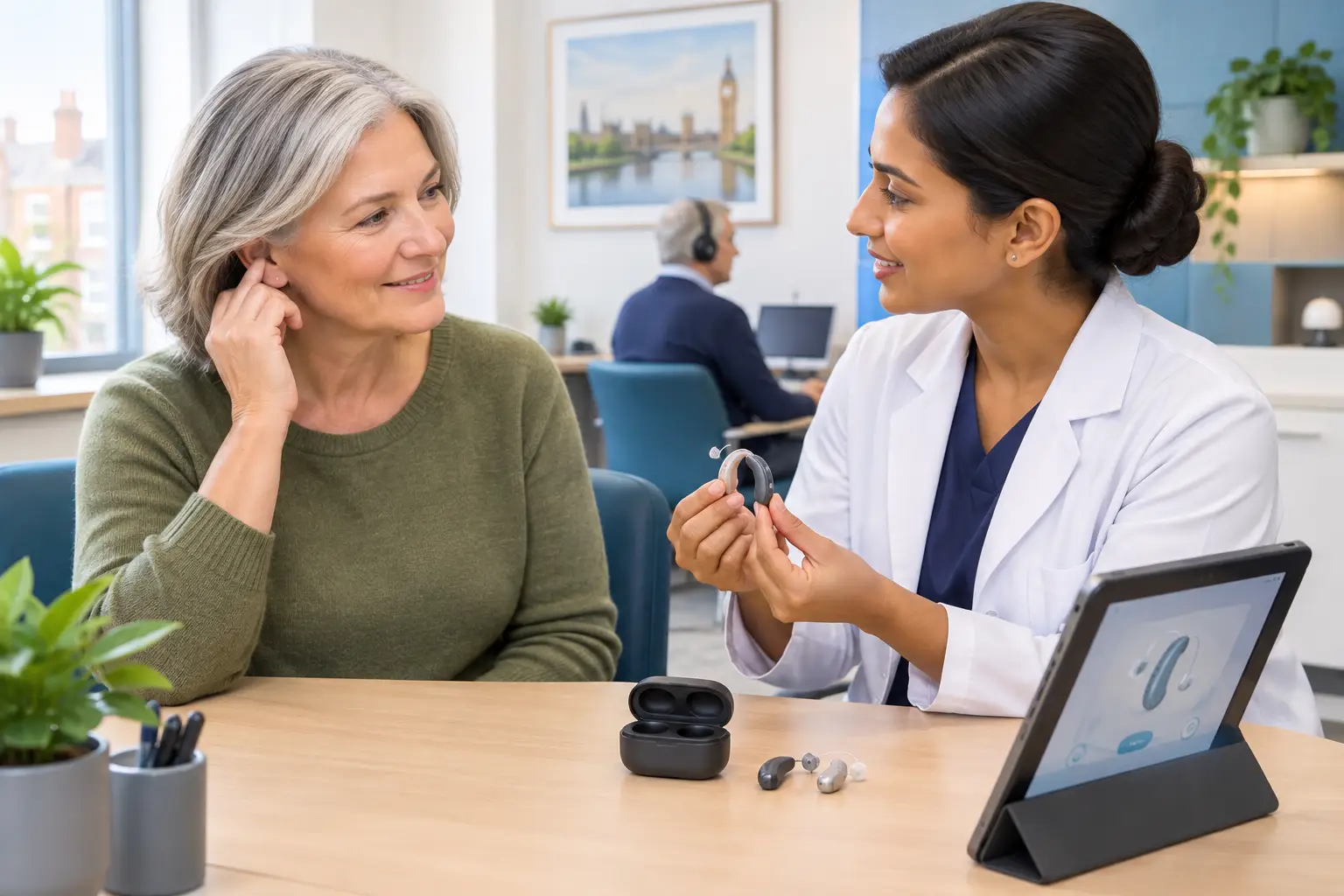
A hearing aid may be smaller than a matchbox, but the difference it makes can be felt across an entire day: following a colleague in a busy meeting, hearing a grandchild clearly, or relaxing in a restaurant without exhausting effort. The best hearing care technology is not simply the newest device. It is technology selected, fitted and supported around the way you hear, live and communicate.
For many people, the decision begins after months or years of turning up the television, asking others to repeat themselves, or avoiding situations where background noise makes conversation difficult. Others need help with tinnitus, sound sensitivity, earwax blockage or hearing protection. Each concern calls for a different clinical approach, and the right answer is not always a hearing aid.
What hearing care technology can and cannot do
Modern hearing technology is exceptionally capable. Digital hearing aids can analyse the sound environment thousands of times each second, reduce certain forms of background noise, manage feedback and direct focus towards speech. Many can connect to a mobile phone, television or other devices, allowing calls and streamed sound to reach the ears more clearly.
These features can be valuable, particularly for people who spend time in groups, work in demanding listening environments or want easier access to calls and media. However, no device can restore hearing to exactly the way it was before hearing loss. In a crowded room, several people speaking at once remains complex for any hearing system. A realistic expectation, alongside expert fitting and rehabilitation, is essential.
Technology also cannot diagnose the cause of a hearing change. Sudden hearing loss, one-sided symptoms, persistent ear pain, discharge, dizziness or a marked change in tinnitus requires prompt clinical assessment. Treating a symptom with an off-the-shelf product may delay the care that is actually needed.
Diagnosis comes before device choice
A high-quality hearing assessment does more than establish whether sounds are audible. Qualified audiologists assess the pattern and degree of hearing loss, discuss communication difficulties and consider ear health. Depending on the appointment, this may include looking in the ear, pure-tone testing, speech testing and middle-ear assessment.
The detail matters. Two people with a similar result on an audiogram may need very different solutions. One may struggle most with a partner’s voice at home; another may find open-plan workspaces difficult; a third may have normal hearing thresholds but troublesome tinnitus or hyperacusis. The technology should follow the diagnosis and the person’s priorities, not lead them.
For children, specialist assessment is particularly important. A child may not describe hearing difficulty clearly, and subtle changes can affect speech, confidence, classroom listening and learning. Paediatric hearing care needs age-appropriate testing, careful interpretation and clear guidance for parents.
Hearing aids: processing that needs personalisation
Hearing aids are now sophisticated miniature computers, but their benefit depends heavily on programming. Prescription settings should be based on measured hearing levels and verified against recognised targets. This helps ensure that soft speech is audible, ordinary sounds are comfortable and louder sounds remain safe rather than overwhelming.
Features such as directional microphones, automatic programmes, rechargeable batteries and Bluetooth connectivity can all improve convenience. Yet more features do not automatically mean a better outcome. Someone who mainly needs help in quiet conversation may place little value on advanced connectivity, while a person who regularly attends meetings or social events may benefit substantially from stronger speech-in-noise performance.
The physical style also matters. Discreet devices can be appealing, but the smallest option is not suitable for every ear shape, hearing profile or dexterity requirement. Comfort, reliable handling and enough power for the hearing loss should take priority over appearance alone.
Real-ear measurement: checking performance in the ear
A hearing aid’s settings cannot be judged accurately by how they appear on a computer screen. Real-ear measurement uses a fine probe microphone placed in the ear canal to measure the sound delivered by the hearing aid while it is being worn. It allows the audiologist to check whether the output matches the individual’s prescription.
This verification is one of the most valuable parts of a professional fitting. It moves the process beyond guesswork and gives a more dependable starting point for fine-tuning. Follow-up appointments are equally important because the brain needs time to adapt to hearing sounds it has not processed clearly for some time.
Tinnitus and sound sensitivity need more than an app
Apps and sound generators can offer useful relief for some people with tinnitus. Gentle, neutral sound may make tinnitus less intrusive at bedtime or in a quiet room. Some hearing aids can also provide integrated sound therapy options, particularly when hearing loss and tinnitus occur together.
But tinnitus is highly individual. Its impact is shaped by sleep, stress, anxiety, concentration and a person’s response to the sound itself. Hyperacusis, where everyday sounds feel uncomfortably loud or painful, needs especially careful management. Overprotecting the ears in ordinary safe environments can sometimes increase sound sensitivity rather than resolve it.
A specialist tinnitus assessment considers the hearing profile, the character and history of the tinnitus, and the effect it is having on daily life. Technology may form part of the plan, but education, targeted therapy and appropriate reassurance are often just as important. If tinnitus is sudden, pulsating, one-sided or accompanied by a sudden hearing change, it should be assessed without delay.
Protection technology has a place too
Not all hearing care technology is designed to make sound louder. Custom earplugs are made from impressions of the ears and can offer dependable fit, comfort and protection for specific activities. Musicians may need filters that reduce volume while preserving a natural sound balance. Shooters require protection suitable for impulse noise, while swimmers may need plugs that help keep water out of the ear canal.
The right protection should suit the risk. Foam plugs can be effective when inserted correctly, but they are not ideal for every setting or every ear. A custom solution may be more practical for regular use, though it still needs proper care and periodic review. Earplugs should not be used as a substitute for medical assessment when there is pain, infection, a perforated eardrum or ongoing hearing difficulty.
The limits of online tests and self-fitting devices
Online hearing checks can encourage people to seek help, but they cannot examine the ear or provide a full diagnostic assessment. Results may be affected by headphones, surrounding noise and device settings. They are best treated as a prompt to book a proper hearing test, not as a diagnosis.
Self-fitting products can offer an accessible entry point for some adults with uncomplicated, mild hearing difficulty. The trade-off is less clinical oversight, less precise verification and limited support when the result is disappointing. They are not appropriate for children, sudden or uneven hearing loss, significant tinnitus, active ear problems or anyone unsure about the cause of their symptoms.
Choosing hearing care technology with confidence
A good clinical conversation should cover more than the device. It should include your hearing goals, medical and ear history, work and home environments, previous experience with hearing aids, budget and ability to manage small controls. Ask how fitting will be verified, what follow-up support is included and when the technology should be reviewed.
At Tragus-The Ear Specialists, qualified audiologists take this wider view because clearer hearing depends on more than a product. Whether the priority is a comprehensive hearing assessment, tinnitus support, microsuction earwax removal, paediatric testing or custom hearing protection, the aim is to provide care that is clinically appropriate and genuinely useful in daily life.
If hearing is making conversation, work, sleep or family time harder than it should be, do not wait in silence. An expert assessment can establish what is happening and identify the most appropriate next step, with technology used where it can make a meaningful difference.