
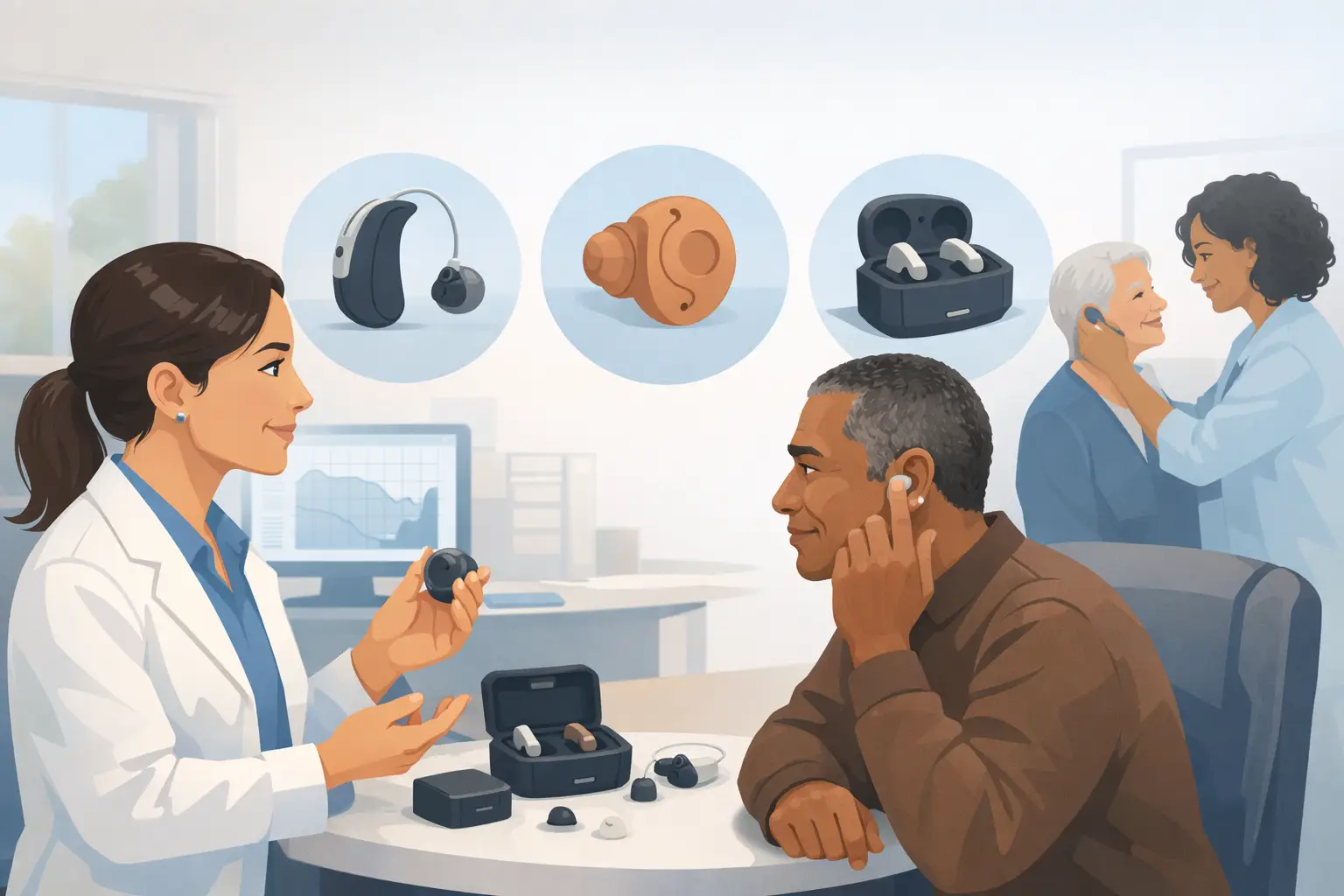
Choosing hearing aids is rarely just about making sounds louder. Most people notice the real challenge a few days later – how speech feels in a busy café, whether the television still needs subtitles, whether family conversations become easier rather than more tiring. That is why hearing aid trial options matter. A proper trial gives you time to judge comfort, sound quality and day-to-day benefit in real life, not just in a clinic room.
For many patients, the idea of a trial sounds simple until they start comparing providers. One clinic may offer a short demonstration, another a structured home trial, and another may include follow-up fine-tuning before any final decision is made. These are not small differences. They can affect how confident you feel, how well the hearing aids are adjusted, and whether you end up with technology that genuinely supports your hearing rather than sitting unused in a drawer.
Why hearing aid trial options are worth taking seriously
Hearing loss is personal. Two people with a similar hearing test can have very different listening needs. One may struggle most in meetings at work, while another finds family meals or telephone calls the biggest problem. A hearing aid that sounds acceptable in clinic may still need adjustment once you start using it at home, outdoors and in noisy places.
This is where a trial becomes clinically useful rather than simply commercially convenient. It allows your audiologist to see how you are getting on in the environments that matter to you. It also gives you a fair chance to adapt. New hearing aid users often need time for the brain to relearn sounds it has been missing, especially softer environmental sounds or speech detail. Judging a device too quickly can lead to the wrong conclusion.
A good trial should reduce uncertainty. It should not pressure you into a rushed purchase or leave you trying to work things out alone.
The main types of hearing aid trial options
Not all trials are structured in the same way, and that is where patients can become understandably confused.
In-clinic demonstrations
An in-clinic demonstration is usually the shortest option. You may wear programmed hearing aids during your appointment to get an initial impression of clarity and comfort. This can be useful as a starting point, particularly if you have never worn hearing aids before. It helps confirm whether amplification is likely to help and can open a realistic conversation about different technology levels.
However, a demonstration is not the same as a true trial. Clinic rooms are controlled spaces. They do not replicate the acoustics of your kitchen, your car, your church hall or a crowded restaurant. Demonstrations are helpful, but limited.
Home trials over a fixed period
A home trial is usually the most meaningful option. You wear the hearing aids in everyday life for an agreed period, often with a review appointment built in. This gives you time to test speech understanding, comfort behind or inside the ear, battery or charging routines, and how manageable the controls feel.
The length of the trial matters, but longer is not automatically better. A very short trial may not allow proper adjustment. An excessively long one without review or support may simply prolong frustration. In many cases, a structured period with at least one follow-up appointment is more valuable than time alone.
Trial with fitting and fine-tuning appointments
This is often the most clinically sound approach. The hearing aids are fitted based on your hearing assessment, then adjusted after you have used them in real settings. If one side feels too sharp, speech still lacks clarity, or background noise is intrusive, your audiologist can refine the settings.
This matters because the first fit is rarely the finished fit. Hearing aid rehabilitation is a process. Patients generally do best when trial periods include professional review rather than a simple handover.
What a good trial should include
When comparing hearing aid trial options, look beyond the word trial itself. The quality of the process is more important than the label.
A strong trial should begin with an expert hearing assessment and a clear discussion of your listening goals. If your main issue is hearing your partner at home, that is different from needing to follow conversation in open-plan offices or managing longstanding tinnitus alongside hearing loss. The choice of hearing aid style and technology should reflect that.
The fitting should be personalised, not generic. Hearing aids need to be programmed to your hearing profile, and ideally verified carefully rather than set to broad default levels. You should also be shown how to insert, remove, clean and charge them properly. Many apparent hearing aid failures are actually handling issues or poor initial set-up.
Follow-up support is equally important. If a provider offers a trial but no meaningful review, you are left to decide based on first impressions, which are not always reliable. Adjustment is normal. In fact, it is expected.
Questions to ask before agreeing to a trial
Patients often focus on cost first, which is understandable, but a few practical questions can reveal far more about the quality of care.
Ask how long the trial lasts and whether follow-up appointments are included. Ask whether there are any non-refundable fitting charges, and what happens if the hearing aids are not right for you. Ask whether the devices are new, clinic demonstration stock, or earmarked for eventual purchase if you continue.
It is also worth asking who is overseeing the trial. In a specialist clinic, hearing aid rehabilitation is part of a broader clinical picture. If your hearing loss is complex, fluctuating, linked with tinnitus or hyperacusis, or if you have asymmetrical hearing concerns, experienced audiological input is especially important.
Costs, deposits and the small print
Hearing aid trial options vary widely in how they are priced. Some providers advertise a free trial, while others charge a fitting fee or request a refundable deposit. Neither approach is automatically better. What matters is transparency.
A free trial may sound attractive, but you still need to know what is included. Is it a genuine take-home trial with professional support, or only a short in-clinic experience? A paid trial may actually offer better value if it includes detailed assessment, programming, verification and review appointments.
The key is to understand the terms in advance. Are follow-up adjustments included? If you proceed, is any trial fee deducted from the final cost? If you do not proceed, what do you owe? A premium clinical service should be clear and straightforward about this.
How long does it take to know if a hearing aid is right?
Most people form an early impression within the first few days, but that is not the same as making a final decision. Initial reactions are often influenced by sound novelty. You may suddenly hear paper rustling, footsteps or cutlery more sharply than expected. That does not always mean the settings are wrong. Sometimes it reflects your brain re-adjusting to sound it has not heard fully for some time.
For that reason, it is sensible to judge hearing aids across a range of everyday situations. Quiet conversation, television listening, outdoor walking, car journeys and social environments can all reveal different strengths and limitations. If there is a recurring issue, such as discomfort or harshness in noise, that should feed into a review appointment rather than an immediate rejection.
Hearing aid trial options for first-time users versus experienced wearers
First-time users usually need more guidance. They are adapting not just to a device, but to amplified sound itself. A good trial for a new wearer includes realistic counselling about adjustment, handling and expectations. It should also allow enough time for questions once the hearing aids become part of daily life.
Experienced wearers often approach trials differently. They may be comparing sound processing, rechargeability, Bluetooth features or comfort against an older device. Their trial needs may be more specific. They might identify subtle differences quickly, but they still benefit from expert fitting and verification, particularly if their hearing has changed.
When specialist input matters most
Some patients should be particularly cautious about quick, sales-led trials. If you have tinnitus, sound sensitivity, complex hearing loss, recurring earwax blockage, a significant difference between ears, or concerns about a child or family member’s hearing, the priority should be expert assessment first.
At a specialist clinic such as Tragus-The Ear Specialists, hearing aid recommendations sit within a wider clinical understanding of hearing and ear health. That can make a meaningful difference when symptoms overlap or when hearing loss is affecting confidence, work or family life in more than one way.
The best hearing aid trial options do not simply help you test a product. They help you make a better clinical decision. If a provider gives you time, careful fitting, honest guidance and proper review, you are far more likely to end up with hearing support that feels natural, useful and worth wearing every day. Don’t wait in silence if hearing is becoming harder than it should be.