
A hearing aid can be working perfectly internally yet sound weak, intermittent or dull because of moisture, wax or a blocked filter. Regular hearing aid maintenance is not simply about keeping the device tidy. It protects the clarity you rely on for conversations, television, work, family life and confidence in busy places.
Modern hearing aids are sophisticated medical devices. They sit close to the warm, humid environment of the ear and are exposed to natural earwax every day. A few minutes of appropriate care can prevent many avoidable problems, but persistent changes in hearing or comfort should always be assessed by a qualified audiologist rather than managed at home.
Why hearing aids need regular care
Earwax is normal and protective, but it can collect in the receiver, sound outlet, dome, earmould or wax guard. When this happens, sound may become quieter or distorted. Some people notice feedback or whistling, while others assume their hearing has worsened when the hearing aid simply needs cleaning or a replacement filter.
Moisture is another common cause of difficulty. Sweat, rain, condensation and humidity can affect microphones, battery contacts and receivers. Even hearing aids with moisture-resistant ratings still need sensible handling. Water resistance is not the same as being waterproof, and devices should not be worn in the shower, bath or swimming pool unless they are specifically designed for that purpose.
Regular care also helps identify a change that is not caused by the hearing aid. A sudden reduction in hearing, new pain, discharge, severe dizziness or a one-sided change needs timely clinical advice. Do not assume that replacing a wax guard will resolve every hearing concern.
A practical daily hearing aid maintenance routine
Make care part of the same routine as charging your hearing aids or cleaning your teeth. The best time is usually when you remove them at night, in a well-lit place over a soft towel or table. This reduces the chance of dropping a small component onto a hard floor.
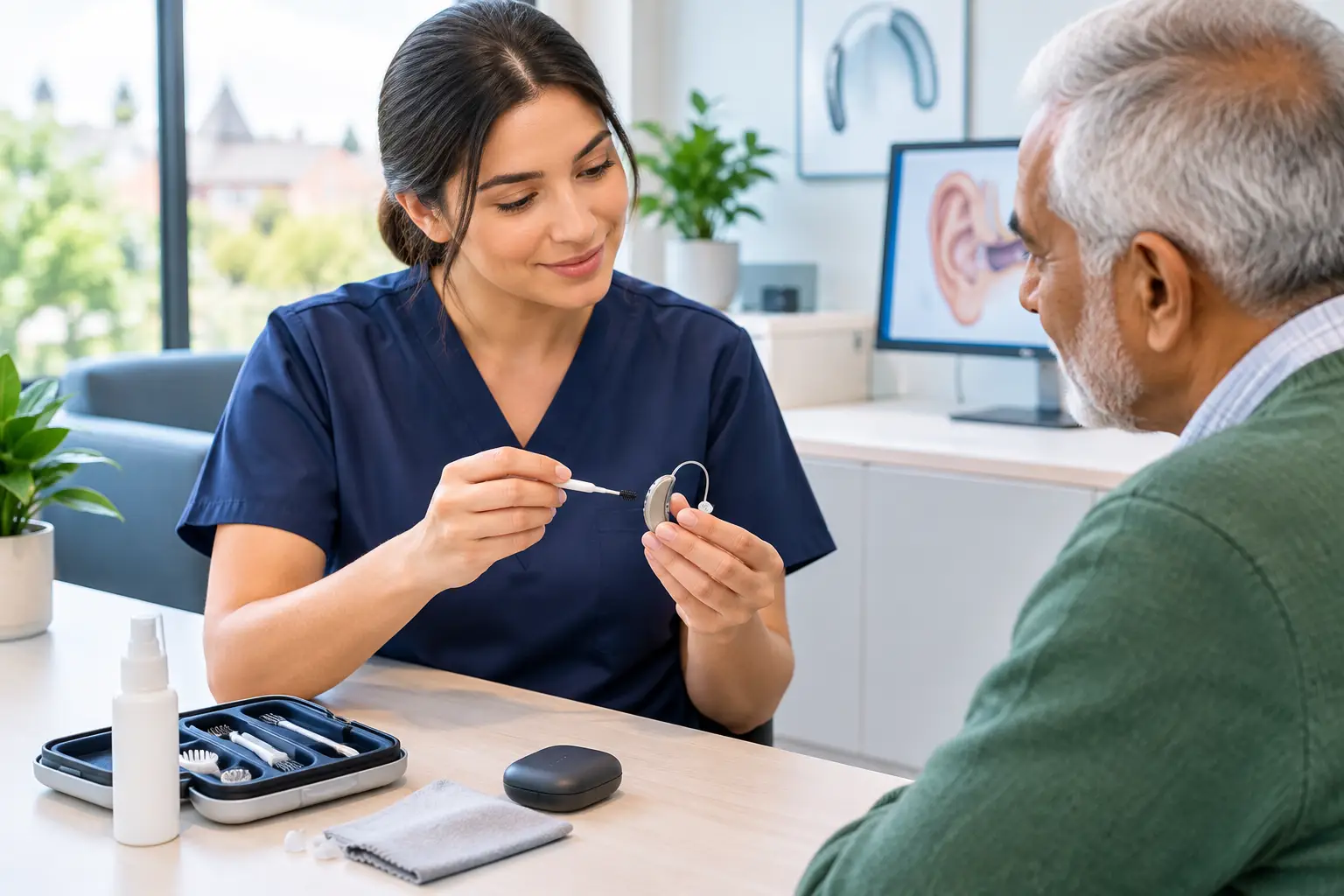
First, inspect each hearing aid for visible wax, moisture or debris. Wipe the outer casing with a clean, dry, soft cloth. Use the brush or cleaning tool supplied with your device to gently clear the microphone openings and sound outlet. Brush away from the opening where possible, so debris does not move further inside.
If your hearing aids use domes, look closely at the dome and the small wax filter beneath it. A pale, blocked or visibly waxy filter should be changed according to the manufacturer’s guidance. The correct replacement depends on the make and model, so do not force a filter, dome or receiver into place if it does not fit easily.
For custom earmoulds, remove them only if your audiologist has shown you how. Many earmoulds can be wiped daily and cleaned more thoroughly when detached from the hearing aid, but the electronic section must remain dry. Tubing can harden, discolour or become blocked over time and may need replacing by a clinician.
Avoid household cleaning products, alcohol wipes, sprays and running water unless your device manufacturer specifically permits them. These can damage coatings, seals and delicate microphone ports. A hearing aid cleaning kit designed for your particular style of aid is the safer choice.
Charging, batteries and moisture control
Rechargeable hearing aids should be placed in their charger each night, with the charging contacts kept clean and dry. If the aids do not appear to charge, inspect the contacts for wax or residue before assuming the battery has failed. Use the charger and power lead supplied or approved for the device, particularly when travelling.
For disposable batteries, open the battery drawer when the hearing aid is not in use. This helps reduce moisture build-up and preserves battery life. Keep spare batteries in their original packaging at room temperature. Do not store them loose in a pocket or handbag, where they may touch coins or keys.
A hearing aid dehumidifier or drying box can be useful for people who perspire heavily, exercise regularly or live with high humidity. It is also a sensible option after being caught in the rain. However, a drying system cannot repair an aid that has been submerged or repeatedly exposed to water. If this happens, remove the device, dry the exterior, do not apply direct heat, and contact your hearing care provider for advice.
When should wax guards, domes and tubing be changed?
There is no single timetable that suits every wearer. Earwax production varies significantly, and some people need a wax guard changed every few weeks while others need it far less often. If sound has become noticeably quieter in one aid, a blocked wax guard is a likely cause, especially where the hearing aid powers on normally.
Domes should be replaced when they become discoloured, misshapen, loose or uncomfortable. They can also gradually stiffen, affecting both comfort and acoustic performance. If the dome is damaged or has come off in the ear, do not attempt to retrieve it with tweezers or cotton buds. Arrange an ear examination.
Tubing on behind-the-ear devices may require periodic replacement when it becomes hard, cloudy or cracked. This is a small intervention, but it can make a substantial difference to sound quality and reduce the risk of an earmould becoming loose.
Do not clean inside the ear canal
It is tempting to use cotton buds or hairpins when you see wax on an earmould or feel blocked. This often pushes wax deeper into the ear canal and can irritate the skin, cause injury or worsen a blockage. Earwax can also prevent a hearing aid from sitting correctly, leading to feedback and reduced benefit.
If you suspect wax build-up, professional assessment is the safest next step. Microsuction earwax removal, when clinically appropriate, allows a trained practitioner to examine the ear and remove wax under direct vision. This is particularly valuable for hearing aid wearers who experience recurrent blockage, sudden changes in sound quality or discomfort.
Do not use over-the-counter wax-softening drops without advice if you have a perforated eardrum, grommets, ear surgery, pain, discharge or a history of ear disease. The right approach depends on your ear health as well as the amount of wax present.
Troubleshooting a hearing aid that has stopped working
Before arranging a repair, check the simple causes carefully. Ensure the hearing aid is switched on and charged, or fitted with a fresh battery. Check that the dome, wax guard and sound outlet are clear. Confirm that the volume or programme has not been changed accidentally through an app or button control.
If one aid remains quiet after changing the wax guard, the receiver may be blocked or faulty. If both aids seem less effective, the issue could be a programme setting, a change in hearing, excessive earwax or a problem with the accessories you use. Persistent whistling can be caused by a poor fit, a damaged dome, wax in the ear or increased volume.
Do not keep increasing the volume to compensate for a problem. Louder is not necessarily clearer, and high amplification can be uncomfortable if feedback or distortion is present. A professional hearing aid check can distinguish between a device fault, an ear canal issue and a genuine change in hearing.
Why professional reviews still matter
Home care keeps your hearing aids functioning between appointments, but it does not replace clinical follow-up. Hearing needs can change gradually, and a device that is clean and operational may still need adjustment to support speech understanding in restaurants, meetings or family gatherings.
At a review, an audiologist can check the physical condition of the hearing aids, clean or replace components, assess the fit, review your listening goals and carry out verification where needed. They can also examine the ear canals for wax, irritation or infection. For children, regular review is especially important because ear shape, hearing needs and communication demands can change as they grow.
If you have tinnitus, sound sensitivity or fluctuating hearing, maintenance appointments are also a useful opportunity to discuss whether your hearing aid settings continue to support you comfortably. Hearing rehabilitation should be personalised, not reduced to a quick repair.
Protect the value of your hearing care
Store hearing aids in their case or charger when not in use, away from direct sunlight, radiators and curious pets or young children. Remove them before using hairspray, perfume or other aerosols, as residue can block the microphones. Keep a small supply of the correct domes, filters and batteries at home so a minor maintenance task does not become an interruption to daily communication.
For patients in Kent who need expert assessment, Tragus-The Ear Specialists can review hearing aid performance alongside ear health, including wax management where appropriate. The most useful maintenance plan is the one that fits your device, your ears and the situations in which you most want to hear clearly. When sound changes, discomfort develops or simple cleaning does not restore performance, seek qualified advice rather than waiting in silence.