
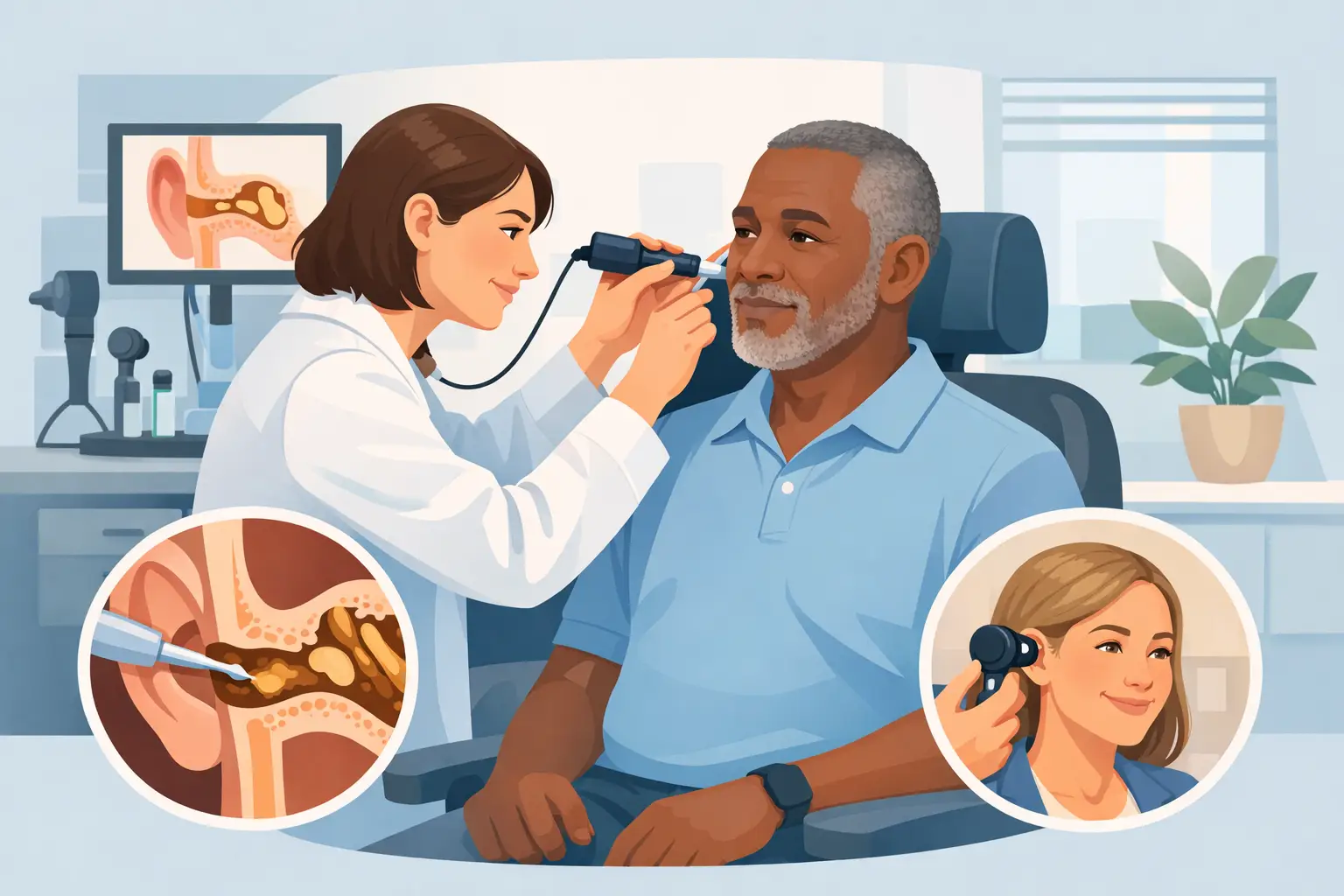
If your hearing has suddenly dulled, your own voice sounds oddly loud, or one ear feels blocked after using drops, earwax removal Sevenoaks patients seek is usually less about convenience and more about getting normal hearing back quickly and safely. A wax blockage can be surprisingly disruptive – affecting conversations, work, sleep, hearing aid use and even balance – but the right treatment depends on what is actually happening inside the ear.
When earwax becomes a problem
Earwax is not something the ear needs to be rid of at all costs. It is a protective substance that traps dust, debris and bacteria, while also helping to keep the delicate skin of the ear canal in good condition. In many people, wax clears naturally without any treatment.
Problems begin when wax builds up faster than the ear can move it out, or when it gets pushed deeper into the canal. Cotton buds are a common reason for this, but they are not the only cause. Earbuds, earplugs, hearing aids and naturally narrow ear canals can all contribute. Some people also produce drier, harder or heavier wax by nature, which makes self-clearance less reliable.
A full or blocked sensation is often the first sign. After that, hearing may become muffled, there may be ringing or buzzing, and some patients notice discomfort or dizziness. Children may become less responsive or complain that one ear feels strange rather than saying they cannot hear properly.
Earwax removal in Sevenoaks – when to book
Not every ear symptom is caused by wax, which is why assessment matters. If you have pain, discharge, sudden hearing loss, bleeding, a history of ear surgery or repeated infections, it is sensible to avoid guessing. Wax can certainly cause blocked hearing, but so can infection, middle ear problems and other conditions that need a different approach.
For straightforward wax build-up, treatment is usually worth arranging when symptoms are affecting daily life, when hearing aids are not working as they should, or when a clinician has advised that the ear canal needs to be cleared for examination or testing. Many people wait longer than they need to because they hope the blockage will shift by itself. Sometimes it does. Often, once wax becomes compacted, it does not.
That is where specialist ear care makes a real difference. In a premium audiology setting, the goal is not simply to remove wax quickly. It is to inspect the ear properly, choose the safest technique for that individual ear, and stop treatment if the findings suggest something other than wax is responsible.
Why microsuction is often the preferred option
Microsuction is widely regarded as one of the safest and most precise methods of removing earwax when carried out by a qualified clinician. It uses fine suction under direct visualisation, allowing the practitioner to see the ear canal and wax clearly throughout the procedure.
That visibility matters. Rather than flushing the ear blindly, the clinician can work carefully around the shape of the canal, the consistency of the wax and the condition of the skin. This is particularly helpful when wax is dry and impacted, when the ear canal is narrow, or when the patient has a perforated eardrum, previous ear surgery or a history that makes irrigation less suitable.
Microsuction is not always completely comfortable. If wax is very hard, very deep or resting close to the eardrum, there can be brief sensitivity. Some patients find the sound unusual because the ear canal amplifies internal noise. Even so, the procedure is usually quick, well tolerated and immediately rewarding once the blockage is removed.
What to expect at an earwax appointment
A proper earwax appointment should begin with history taking and examination, not treatment the moment you sit down. Your clinician should ask about symptoms, previous ear problems, surgery, infection, discharge, tinnitus, dizziness and whether you have been using ear drops.
The ears are then examined to confirm whether wax is present and whether removal is appropriate on the day. Sometimes the wax is softened enough for straightforward microsuction. Sometimes it is still too hard and close to the eardrum, in which case a short course of olive oil drops may be advised before returning. That can be frustrating if you were hoping for instant treatment, but it is often the safer course.
When removal goes ahead, the clinician uses magnified visual guidance and specialist equipment to clear the blockage as gently and completely as possible. Many patients notice an immediate return of clarity, although if the ear has been blocked for some time, hearing can feel temporarily strange simply because the brain is readjusting to normal sound again.
After the procedure, you should be told what was found, whether both ears were affected, and whether there is any sign of irritation, infection or another issue that needs follow-up. In a specialist clinic, this broader view of ear health is part of the value. The appointment is not treated as a retail transaction, but as a clinical intervention.
Why home removal is often the wrong place to start
There is no shortage of at-home ear cleaning products, but they are not all low risk. Cotton buds usually push wax further in. Ear candles are not recommended and can cause burns or additional blockage. Over-the-counter irrigation kits may help in selected cases, but they are not suitable for everyone, especially if there is a history of perforation, surgery, infection or uncertainty about the diagnosis.
Drops can be useful, particularly olive oil drops used to soften wax before professional removal. Even then, they are not a guaranteed solution. Softening the outer layer of a large plug can occasionally make the ear feel more blocked before treatment. That does not necessarily mean anything has gone wrong – only that the wax has swelled and shifted.
If you are prone to recurrent wax, hearing aid user or already know your ear canals are narrow, repeated DIY treatment can become a cycle of partial relief and repeated blockage. Expert removal is often more efficient and, over time, less stressful.
Choosing specialist earwax removal Sevenoaks patients can trust
When comparing providers, qualifications matter. Earwax removal is safest in the hands of clinicians who understand not only technique but ear disease, hearing symptoms and when not to proceed. A blocked ear may look simple from the outside, yet the decision-making behind safe treatment is often more complex.
This is especially relevant for patients with tinnitus, dizziness, previous grommets, perforations, chronic ear problems or hearing aid use. Families seeking care for older relatives or children also tend to want more than a quick appointment. They want reassurance that the person examining the ear can recognise wider concerns and advise appropriately.
A specialist-led clinic offers that higher level of scrutiny. For patients in and around Sevenoaks, accessing a dedicated ear and hearing service can mean more accurate assessment, more suitable treatment and a clearer plan if symptoms persist after wax is removed.
If symptoms continue after wax removal
This is one of the most important points to understand. Wax removal should not be used as a catch-all explanation for every hearing complaint. If your ears are clear but you still notice muffled hearing, tinnitus, pressure or communication difficulties, further assessment may be needed.
In some cases, the issue is hearing loss rather than wax. In others, it may be Eustachian tube dysfunction, infection, sound sensitivity or another ear condition. Patients sometimes assume a blocked sensation must mean the ear canal is physically blocked, but that is not always true.
That is why a clinic with broader audiology expertise can be helpful. If the wax was only part of the story, you can move on to proper diagnostic assessment rather than being sent away with uncertainty.
A note for hearing aid users and families
Wax build-up is particularly common in hearing aid users because the device can alter ventilation and natural wax migration. Even a small amount of wax can affect earmould fit, sound quality and feedback. If hearing aids suddenly seem less effective, wax should be considered early.
Parents should also be cautious about assuming children will describe wax blockage clearly. A child may simply turn the television up, miss instructions or tug at the ear. Gentle specialist assessment is usually the best route, especially if symptoms are recurring.
At Tragus-The Ear Specialists, ear care sits within a wider clinical service for hearing and ear health, which is often exactly what patients want when symptoms are affecting confidence, communication or day-to-day comfort.
Blocked ears can feel minor until they start interfering with ordinary life. If your hearing has changed, your ear feels full, or wax keeps returning, timely expert assessment can spare you weeks of discomfort and help you hear the world in high-definition once more.