
A hearing aid can be technically excellent and still be the wrong choice if it does not suit your hearing pattern, lifestyle or ability to manage it comfortably. The question of behind-ear versus in-ear aids is therefore not simply about what looks smallest. It is about finding reliable hearing support that helps you follow conversation, feel confident in social settings and hear the sounds that matter without creating unnecessary daily frustration.
A qualified audiologist will assess your hearing, examine your ear health and discuss how you use your hearing in real life. That process matters because the best style for someone who spends time in busy family gatherings may differ from the best style for a person who needs to hear clearly in meetings, enjoys music, or has reduced hand dexterity.
Behind-ear versus in-ear aids: the key difference
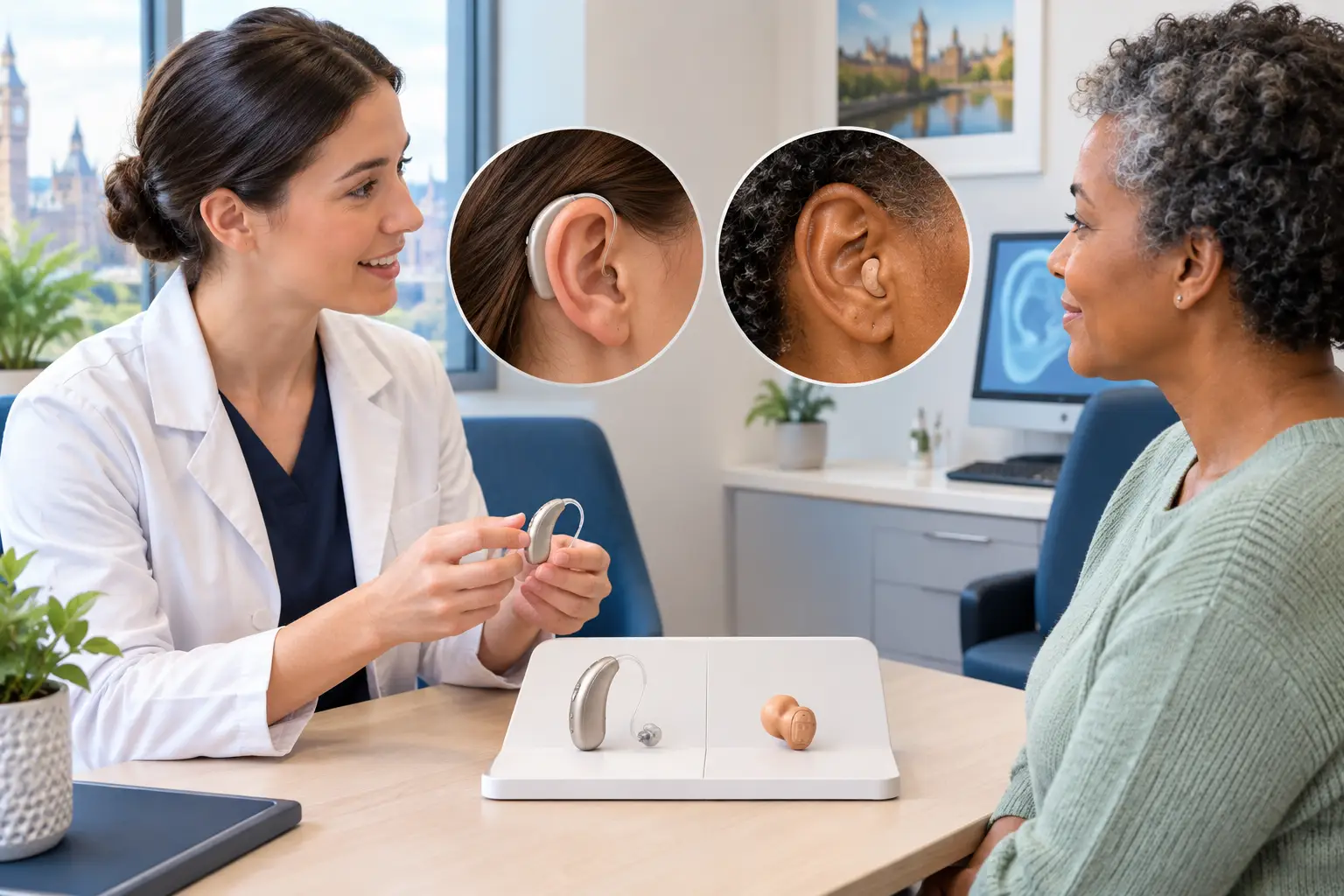
Behind-ear hearing aids sit behind the outer ear. Sound is delivered into the ear through a slim tube, a small speaker in the ear canal, or a custom earmould. This category includes traditional behind-the-ear devices and receiver-in-canal models, which are now among the most widely fitted styles.
In-ear hearing aids are made to sit partly or fully within the ear. Depending on the design, they may fill the outer bowl of the ear, sit in the lower part of the ear canal, or be positioned more deeply in the canal. They are custom-made from an impression or digital scan of the ear, so fit is central to their comfort and performance.
Both types can offer advanced features, including directional microphones, rechargeable batteries, feedback management and wireless connectivity. The physical position of the aid affects what it can accommodate, how it is maintained and how suitable it is for different levels of hearing loss.
When behind-ear aids are often the stronger choice
Behind-ear styles are highly versatile. Because more of the technology sits outside the ear canal, there is generally more room for battery capacity, microphone systems and greater amplification. This makes them a dependable option for mild through to severe hearing losses, depending on the specific model.
For many patients, a receiver-in-canal device provides an excellent balance. It is discreet, light and leaves much of the ear canal open when clinically appropriate. An open fitting can reduce the sense of blockage some people experience when they first begin wearing hearing aids, while allowing natural low-frequency sound to enter the ear.
Behind-ear aids can also be easier to handle. Their controls, battery doors and rechargeable charging contacts are usually larger than those on very small in-ear devices. For anyone with arthritis, tremor, reduced vision or difficulty manipulating tiny components, this can make a significant difference to everyday use.
They are often easier to clean and service as well. Earwax is a normal part of ear health, but it can block filters, receivers and sound outlets on any hearing aid. With behind-ear designs, the delicate components are less enclosed within the canal, although regular maintenance remains essential.
There can be practical benefits for children too. Children’s ears grow, and earmoulds can be remade as needed while the main hearing aid remains in use. Behind-ear devices also offer flexibility for changing hearing needs and compatibility with supportive listening technology in educational environments.
The trade-off is visibility. Although modern devices are smaller and available in subtle colours, there is still a component behind the ear. People who wear glasses, use oxygen tubing or prefer no equipment around the ear may find this less appealing. Wind noise can also be noticeable with some microphone placements, though current technology has improved considerably.
When in-ear aids may suit you better
In-ear hearing aids appeal to people who want an all-in-one device with no casing behind the ear. For some, that means greater cosmetic confidence. For others, it simply feels more natural to have the device contained within the ear.
A well-made custom in-ear aid can be comfortable and secure, particularly for people who lead active lives. It may also work well with glasses, face coverings or headwear because there is nothing resting behind the ear. Telephone use can feel more straightforward for some wearers, although many modern behind-ear aids also manage phone calls very effectively through wireless streaming.
The ear’s natural shape can provide useful acoustic benefits. Because the microphones sit in or near the ear, the aid may preserve some of the cues that help you judge where sound is coming from. This is not a guarantee of better hearing in every environment, but it can be a worthwhile consideration.
However, the smaller the device, the more compromise may be involved. Very small in-canal styles have limited space for battery power, manual controls and stronger amplification. They may not be suitable for more significant hearing losses, and rechargeable options can be more restricted than with behind-ear designs.
In-ear aids also sit where wax and moisture naturally collect. This does not mean they are unsuitable for people who produce wax, but they may require more frequent cleaning and wax-filter changes. If earwax is blocking the canal, an expert ear examination and appropriate removal should take place before hearing aid fitting or adjustment. A hearing aid cannot compensate properly for a physical obstruction in the ear canal.
Sound quality depends on more than style
It is understandable to ask which type gives the clearest sound. In practice, sound quality is shaped by several factors: the degree and configuration of hearing loss, the accuracy of the prescription, the fit of the device, the programming of its microphones and your own hearing goals.
A person with high-frequency hearing loss may benefit from a different fitting approach than someone whose hearing loss affects lower pitches or speech clarity across a wider range. An audiogram provides essential information, but a thoughtful consultation goes further. It should explore the situations that cause the most difficulty, whether that is hearing grandchildren, contributing at work, following conversation in restaurants or managing tinnitus alongside hearing loss.
The fit is especially important with custom in-ear devices and closed earmoulds. A poor seal can cause whistling, discomfort or reduced sound quality. Equally, an overly open fitting may not provide enough amplification where it is needed. Hearing aids should be verified and adjusted, rather than selected solely from a display model or online description.
Comfort, confidence and daily wear
The hearing aid you are willing and able to wear consistently is usually the one that will support better rehabilitation. It takes time for the brain to adapt to amplified sound, particularly if hearing loss has been present for years. Initial sound can seem sharp, busy or unfamiliar, even when the fitting is clinically correct.
Comfort is not just physical. Some people feel reassured by a visible device because it is easy to use and demonstrates that they may need communication support. Others strongly prefer a more discreet option. Neither preference is vain or trivial. Confidence affects whether hearing aids are worn regularly enough to deliver their full benefit.
Consider your normal routine honestly. If you frequently wear glasses, take part in sport, work in noise, use video calls, have recurrent earwax build-up or want rechargeable charging rather than disposable batteries, say so at your appointment. These details help shape a recommendation that works beyond the clinic room.
Why an expert assessment should come first
Hearing aids are not interchangeable amplifiers. Hearing difficulty can be caused by wax blockage, middle-ear problems, age-related hearing loss, noise exposure, medication effects or other medical factors. Sudden hearing loss, one-sided hearing changes, ear pain, discharge, persistent dizziness or a sudden worsening of tinnitus require prompt clinical advice rather than a routine hearing aid purchase.
At Tragus-The Ear Specialists, qualified audiologists can assess hearing and ear health before discussing appropriate rehabilitation. This is particularly valuable where tinnitus, sound sensitivity, complex hearing needs or a child’s hearing development is involved. A premium ear clinic should provide more than a device – it should provide a clear clinical rationale, careful fitting and ongoing support.
Choosing the right aid for your hearing
Behind-ear devices are often the most flexible choice for power, rechargeability, handling and future changes in hearing needs. In-ear devices can be an excellent option where discretion, custom fit and freedom around the ear are the priority. Neither is automatically superior.
The most helpful next step is an expert hearing assessment that considers your ears, your hearing results and the situations in which you most want to hear well. Do not wait in silence when communication is becoming harder. With the right assessment and carefully fitted support, hearing the people and places around you can feel clear, comfortable and worthwhile again.