
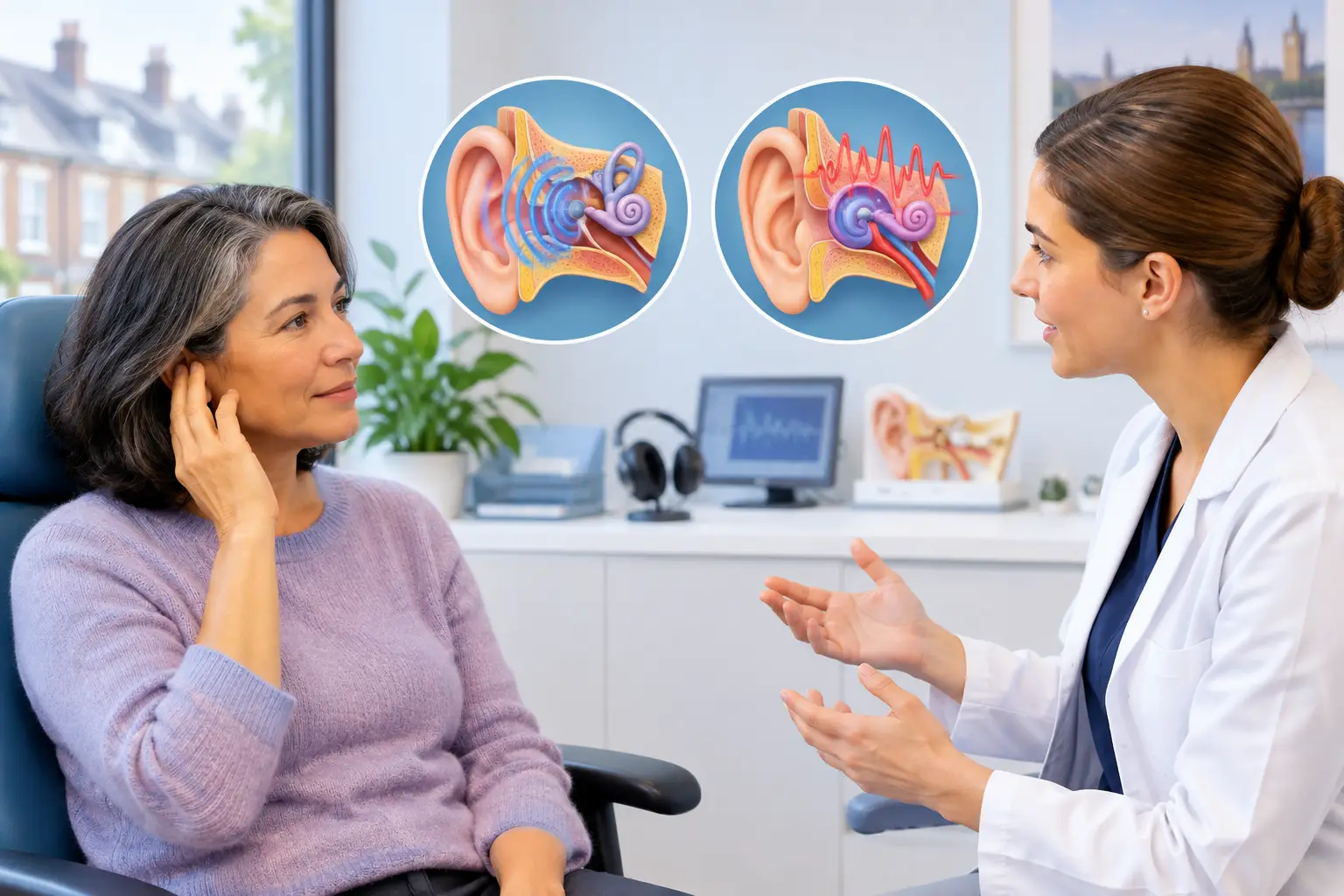
A sound that no one else can hear can be deeply unsettling, particularly when it intrudes on sleep, concentration or quiet moments at home. In the conversation around tinnitus versus pulsatile tinnitus, the key distinction is not simply the type of noise. It is whether the sound follows your heartbeat, because that can change the assessment required and how promptly it should be investigated.
Tinnitus is common and often manageable with the right support. Pulsatile tinnitus is less common, but because it may relate to blood flow near the ear, it deserves a more focused medical assessment. Neither should be dismissed as something you simply have to tolerate.
What is ordinary tinnitus?
Tinnitus is the perception of sound without an outside sound source. People describe it in many ways: ringing, buzzing, hissing, humming, whistling or a high-pitched tone. It may affect one ear, both ears or feel as though it is centred in the head.
For many people, tinnitus is associated with changes in the hearing system. This might follow noise exposure, age-related hearing loss, an ear infection, earwax blockage, certain medicines or a period of stress. Sometimes there is no single clear cause. The brain can become more aware of signals from the hearing pathways, particularly in quiet environments, and interpret them as sound.
The volume of tinnitus does not necessarily reflect the seriousness of the underlying issue. A relatively soft sound can feel overwhelming if it is affecting sleep or creating anxiety, while another person may notice a louder sound but find it easy to ignore. This is why a proper tinnitus assessment considers both the sound itself and its effect on your daily life.
What is pulsatile tinnitus?
Pulsatile tinnitus is a sound that has a rhythm, often in time with your pulse. It may be heard as a whoosh, thump, beat or rushing noise. Some people notice it most clearly when lying down, bending over, exercising or after consuming caffeine or alcohol.
Unlike many forms of tinnitus, pulsatile tinnitus can sometimes arise because you are hearing blood flow in vessels close to the ear. There are several possible reasons, ranging from temporary and treatable causes to conditions that need specialist medical investigation. For example, changes in blood pressure, anaemia, thyroid conditions, middle-ear problems or narrowing and altered flow in blood vessels can all be relevant in some cases.
This does not mean pulsatile tinnitus always signals a serious condition. However, its heartbeat-like quality is clinically significant. It should not be assumed to be ordinary tinnitus without an appropriate assessment.
Tinnitus versus pulsatile tinnitus: the practical differences
The clearest difference is the pattern of the sound. Non-pulsatile tinnitus tends to be continuous or variable without matching the heartbeat. Pulsatile tinnitus is rhythmic and may synchronise with the pulse.
The likely causes can differ too. Conventional tinnitus is often linked with hearing loss, noise exposure or changes in how the brain processes sound. Pulsatile tinnitus may involve hearing normal or altered blood flow more prominently, although ear and hearing factors can still play a part.
The assessment pathway may therefore be different. A comprehensive hearing assessment remains valuable for both. For pulsatile symptoms, a clinician may also recommend that your GP or an ear, nose and throat specialist considers further medical tests or imaging. The right route depends on your history, examination findings and whether there are any warning signs.
There is also a meaningful overlap. Someone can have hearing loss-related tinnitus and also notice a pulse-like component at certain times. Accurate description matters, but you do not need to work out the diagnosis alone. Your role is to report what you hear as clearly possible; the clinician’s role is to establish what it may mean.
Questions that help describe the sound
Before an appointment, it can be useful to notice whether the sound is in one ear or both, whether it is constant or intermittent, and whether it changes with position or activity. Consider whether it matches your heartbeat, began suddenly, or appeared alongside hearing loss, dizziness, ear pain or a blocked sensation.
It can also help to note recent exposure to loud sound, new medication, illness, head injury and changes in general health. These details are not a substitute for assessment, but they can make the consultation more efficient and focused.
When should you seek urgent advice?
Any new or persistent pulsatile tinnitus should be discussed with a healthcare professional, particularly if it is one-sided. Seek urgent medical advice if the sound starts suddenly or occurs with sudden hearing loss, severe dizziness, facial weakness, a severe new headache, visual disturbance, confusion, weakness, numbness or difficulty speaking.
You should also arrange prompt assessment if tinnitus follows a head injury, is accompanied by significant ear pain or discharge, or is rapidly worsening. These symptoms do not automatically indicate a serious cause, but they require timely clinical judgement.
If you are unsure whether the noise truly follows your pulse, it is still worth mentioning. People often use words such as humming or whooshing for different sensations. A qualified clinician can ask the right follow-up questions and examine the ears properly.
What happens during a specialist tinnitus assessment?
A high-quality assessment begins with listening carefully to your experience. The clinician will ask when the tinnitus began, how it sounds, what affects it and how it is influencing sleep, work, communication and wellbeing. They will also take account of your hearing history, noise exposure, general health and any relevant medication.
An ear examination may identify straightforward contributors such as wax or signs of middle-ear dysfunction. Hearing tests can establish whether there is hearing loss, asymmetry between the ears or a pattern that may be connected to the tinnitus. In some cases, further testing or referral is appropriate, particularly for unilateral or pulsatile symptoms.
At Tragus-The Ear Specialists, a tinnitus assessment is designed to provide clinical clarity rather than generic reassurance. Qualified audiologists can identify hearing-related factors, explain what the results mean and advise on the most suitable next step, including onward medical referral where needed.
Managing tinnitus when serious causes have been excluded
Once appropriate medical causes have been considered, tinnitus support focuses on reducing distress and restoring control. There is no single approach that suits every person. The best plan depends on hearing levels, the nature of the sound, sleep, stress and the degree to which tinnitus is taking up mental space.
For people with hearing loss, properly fitted hearing aids can make speech clearer and reduce the contrast between tinnitus and silence. This can make the tinnitus less prominent for many patients, although it is not a guaranteed cure. Sound enrichment, such as low-level neutral background sound at bedtime, may also help prevent quiet rooms from making tinnitus feel louder.
Tinnitus-focused counselling and therapeutic strategies can be particularly valuable when the symptom has triggered worry, avoidance or insomnia. The aim is not to suggest that the sound is imagined. It is to help the nervous system become less reactive to it, so the tinnitus has less power over attention and mood.
Lifestyle factors may matter, but they are individual. Some people notice that poor sleep, stress, alcohol, caffeine or loud environments make symptoms more noticeable; others do not. Rather than imposing restrictive rules, it is usually more useful to identify your own patterns and make proportionate changes. Avoiding loud noise is sensible, but wearing earplugs constantly in ordinary environments can make sound sensitivity worse for some people.
Do not wait in silence
Whether your tinnitus is a steady ring or a sound that beats with your pulse, the most useful next step is an expert assessment that takes your symptoms seriously. A clear explanation can remove uncertainty, identify when medical investigation is needed and create a practical plan for protecting your hearing and improving day-to-day comfort.
If the sound is affecting your sleep, confidence or ability to hear the people around you, arranging an assessment is a positive first step towards hearing the world more comfortably again.