
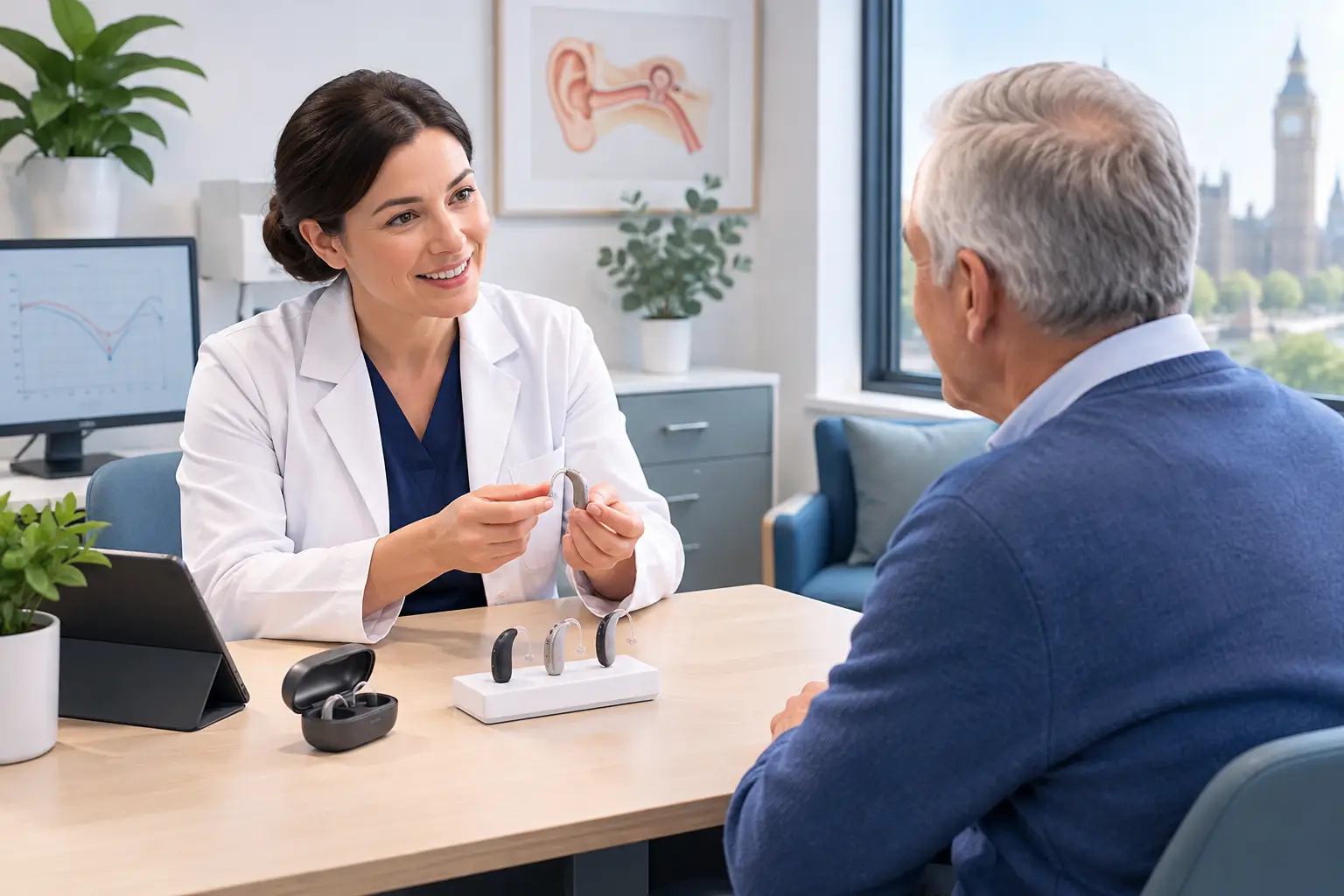
A good Signia hearing aids review should not begin with a list of features. It should begin with the situations that have become difficult: following conversation in a busy restaurant, hearing grandchildren clearly, taking calls at work, or feeling exhausted from concentrating on speech all day. Signia produces advanced hearing technology, but the right result depends on whether the device, settings and rehabilitation plan suit your hearing profile and daily life.
Signia is a well-established hearing aid manufacturer with a broad range of discreet, rechargeable and high-performance devices. Its products are particularly recognised for Bluetooth connectivity, rechargeable options and features designed to support speech understanding in complex listening environments. For many people, they can be an excellent choice. They are not, however, automatically the best choice for every type of hearing loss.
Signia hearing aids review: sound and everyday performance
The most meaningful measure of any hearing aid is not how sophisticated it appears on paper. It is whether you can hear speech more comfortably and confidently in the environments that matter to you.
Signia hearing aids generally offer clear, detailed sound, particularly for people with mild to severe hearing loss. Their directional microphone systems are designed to prioritise speech coming from in front of you while reducing competing background noise. This can be helpful in cafés, family gatherings, meetings and other places where several people are talking at once.
No hearing aid can remove background noise completely or restore natural hearing in every situation. A busy restaurant remains acoustically demanding, especially when there is hard flooring, music and multiple conversations nearby. The benefit is usually that speech becomes easier to identify and less tiring to follow, rather than the room becoming silent around you.
Many current Signia models also process sound automatically as you move between environments. This is useful for people who want hearing support without constantly changing programmes. Automatic settings need careful verification, though. What works well for one person in a quiet home may need refinement for someone who spends the day on construction sites, in classrooms or travelling between meetings.
Rechargeable models and discreet designs
Signia offers several styles, from small receiver-in-canal devices that sit neatly behind the ear to custom options made for the ear canal. The most suitable style depends on your hearing levels, dexterity, ear shape, cosmetic preference and the practical demands of your routine.
Rechargeable hearing aids are a strong part of the Signia range. They remove the need to handle small disposable batteries and tend to suit people who value straightforward daily use. Place the devices in their charger overnight and they are ready for the next day. For those with reduced vision, arthritis or limited hand control, this can be a substantial advantage.
Smaller hearing aids can be appealing because they are discreet, but discretion should not be the only deciding factor. Very small devices may have shorter battery life, fewer controls or less room for certain features. A slightly larger device may provide a more reliable solution if you need greater amplification, regular streaming or a robust rechargeable battery.
Connectivity and helpful extras
For many users, Bluetooth streaming is one of the most valuable parts of a modern hearing aid. Compatible Signia devices can connect with selected smartphones, allowing calls, audio and other media to stream directly to the hearing aids. This can make phone conversations clearer, particularly when the caller has a soft voice or the line quality is poor.
App-based controls can also allow you to adjust volume or sound balance discreetly. Some people appreciate this independence; others prefer a clinician to set the devices and leave the controls alone. Neither approach is wrong. The aim is a hearing solution that feels manageable rather than another piece of technology to worry about.
Signia also offers tinnitus support features within some devices. These may provide adjustable background sounds that can be used as part of a wider tinnitus management plan. They are not a cure for tinnitus, and they should not replace a proper tinnitus assessment. Persistent tinnitus, one-sided symptoms, sudden hearing changes or tinnitus accompanied by dizziness warrant prompt professional advice.
Where Signia hearing aids may be less suitable
There is no universally best hearing aid brand. Signia’s feature set may be highly attractive, but selection should be based on clinical evidence rather than marketing claims or a friend’s recommendation.
People who prioritise particular accessories, have complex asymmetric hearing loss or need a specific approach to sound processing may find that another manufacturer is a better clinical match. Likewise, someone with significant earwax build-up, an active ear infection, a perforated eardrum or fluctuating hearing may need ear care or medical investigation before a hearing aid fitting can proceed safely.
A hearing aid also cannot compensate fully for poor fitting. Even an advanced premium device can sound sharp, echoey or underpowered if it has not been programmed accurately to your measured hearing thresholds. Real-ear measurement, where the sound level is assessed in your ear while wearing the aid, helps ensure the amplification is appropriate rather than simply estimated.
There is an adjustment period as well. If you have lived with hearing loss for some time, everyday sounds such as running water, footsteps and traffic may initially seem unusually prominent. Your brain needs time to relearn what it has been missing. Gradual wear, follow-up appointments and honest feedback about difficult situations are central to successful rehabilitation.
The value of a clinical hearing aid fitting
Buying hearing aids is not just a product decision. It is a healthcare decision involving diagnosis, fitting and ongoing support.
A thorough assessment should consider more than an audiogram. A qualified audiologist will ask about your communication needs, medical history, lifestyle, tinnitus, noise exposure and whether your hearing changes between ears. They should examine the ear canals, identify whether wax or other ear conditions are affecting the test, and explain the results in language you can understand.
The fitting itself should include comfortable physical placement, accurate programming and clear guidance on cleaning, charging and insertion. Follow-up care matters because your first settings are a starting point, not a final verdict. If voices remain unclear in noise, your own voice sounds unnatural or the devices whistle, these issues can often be addressed with targeted adjustments.
For patients in Kent and the surrounding area, Tragus-The Ear Specialists provides specialist hearing assessments and hearing aid fittings led by qualified audiologists. Where appropriate, the process can also include earwax assessment, tinnitus support and a tailored plan for long-term hearing rehabilitation.
Who is likely to benefit from Signia?
Signia can be a strong option for adults who want discreet, rechargeable hearing aids with modern connectivity and reliable support for everyday speech listening. It may suit a professional who needs clearer calls, an active retiree who wants less effort in group conversations, or a person who wants to stream television audio without turning up the volume for everyone else.
The best candidates are not defined by age alone. They are people whose hearing needs, ear health and comfort with technology match the chosen device. A person with a straightforward mild hearing loss may need a different solution from someone with severe loss, tinnitus, sound sensitivity or long-standing difficulty understanding speech in noise.
Before choosing any device, ask what follow-up care is included, how your fitting will be verified and what happens if the first choice does not feel right. Those answers are often more valuable than an impressive feature list.
If hearing is making conversations harder, do not wait until you have started withdrawing from the people and activities you enjoy. An expert assessment can establish what is affecting your hearing and whether Signia hearing aids are the right route back to clearer, more confident communication.