
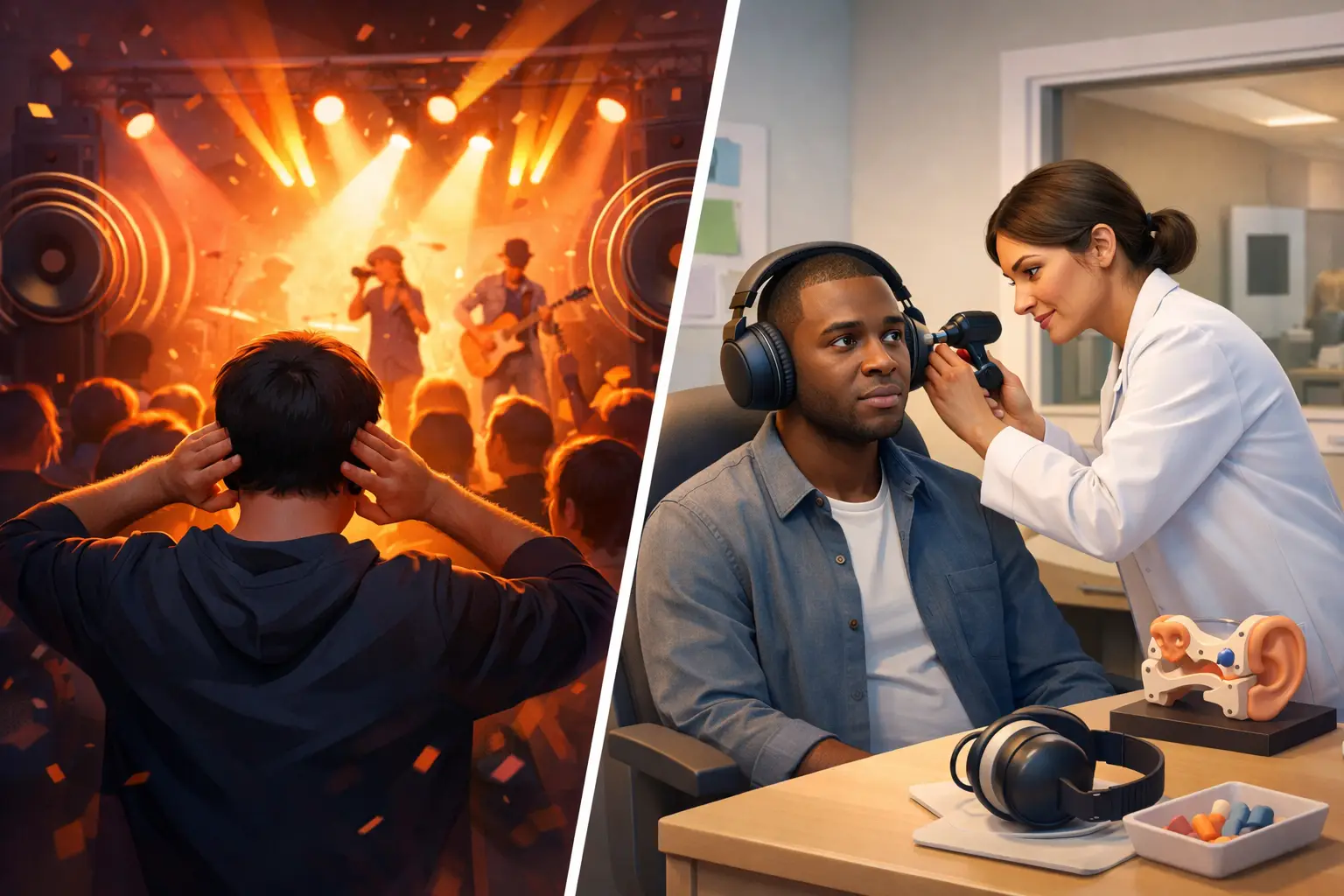
The ringing that follows a brilliant gig can feel like part of the experience. It is not. If you are asking, can loud concerts damage hearing, the clinical answer is yes. A single loud event can cause a temporary change in hearing, and repeated exposure can contribute to permanent noise-induced hearing loss or persistent tinnitus.
Live music should not come at the cost of your hearing. The good news is that a few informed choices can make a meaningful difference, without taking away from the atmosphere, detail or enjoyment of the performance.
Can loud concerts damage hearing permanently?
Concert venues can reach sound levels that exceed what the ear can safely tolerate for extended periods. The risk is not just about how loud the music feels. It is determined by a combination of volume, duration, your distance from speakers and how frequently you attend loud events.
Inside the cochlea, a delicate part of the inner ear, tiny sensory hair cells translate sound vibrations into electrical signals for the brain. These cells are vulnerable to excessive noise. When they are overstimulated, they can become temporarily less effective. With enough intensity or repeated exposure, they may be permanently damaged. Unlike many cells in the body, human cochlear hair cells do not regenerate.
This is why hearing can seem muffled after a concert, particularly when trying to follow conversation in a noisy room. Some people describe it as having cotton wool in their ears. It may improve after several hours or days, but that does not mean the exposure was harmless. A temporary threshold shift is a sign that the auditory system has been under strain.
Permanent damage does not always present as an obvious inability to hear. You may still hear sounds at a hearing test within the expected range while finding speech in restaurants, meetings or group conversations increasingly difficult. Noise exposure can affect the clarity of hearing, not simply its volume.
Why concert volume and exposure time both matter
Decibels are measured on a logarithmic scale, so relatively small increases in the number represent a substantial increase in sound energy. As sound gets louder, the safe listening time reduces rapidly.
For context, prolonged exposure to sound around 85 dB can pose a risk. Concerts and clubs may reach levels of 100 dB or more, particularly close to speakers or on the dance floor. At these levels, unprotected exposure can become risky in a very short time. The exact impact varies between individuals and venues, but the principle remains the same: louder sound requires less exposure time to cause harm.
Your position matters too. Standing directly in front of a speaker stack exposes your ears to considerably more sound energy than being further away or off to the side. Outdoor festivals can feel less intense because the sound disperses, but amplified music near a stage can still be loud enough to cause damage.
Repeated nights out are particularly relevant. Hearing injury is often cumulative. A person who leaves one event with slight ringing may recover well, while regular exposure over months or years may gradually reduce their hearing resilience and increase the likelihood of tinnitus.
Signs your ears may have been overexposed
Temporary ringing, buzzing or whistling after a concert is one of the most common warning signs. Tinnitus can be brief, but it should never be treated as normal or ignored when it recurs.
Other symptoms include muffled hearing, sensitivity to ordinary sounds, ear fullness, difficulty understanding speech, or a sense that your hearing is distorted. You may notice that your own voice sounds unusual or that high-pitched sounds seem less clear.
If hearing remains reduced beyond 24 to 48 hours, arrange an expert hearing assessment. Sudden hearing loss in one or both ears, severe dizziness, significant ear pain, discharge, or a sudden onset of one-sided tinnitus requires urgent medical assessment. Prompt care matters, particularly where sudden sensorineural hearing loss is suspected.
How to protect your hearing at live music events
The most effective option is well-fitted hearing protection. This does not mean settling for muffled music or losing the energy of a live set. High-quality musician’s earplugs use specialist acoustic filters to reduce volume more evenly across frequencies. The result is typically clearer and more balanced than standard foam plugs, which can make music sound dull.
Custom-moulded earplugs are particularly useful for musicians, DJs, venue staff and regular concertgoers. They are shaped to the ear, comfortable for longer wear and available with filters offering different levels of attenuation. The right choice depends on your typical environment, how often you attend events and whether you need to communicate while wearing them.
There are other practical measures worth taking. Give your ears a break by moving to a quieter space between sets. Avoid standing beside or directly in front of loudspeakers. If you need to shout into someone’s ear from close range, the environment is probably loud enough to warrant protection.
Do not rely on folding tissue paper into your ears, or on the assumption that your ears will simply “get used to” the noise. Neither protects your hearing adequately. Equally, turning your headphones up on the journey home to overcome post-concert muffling adds more noise exposure when your ears need rest.
A sensible plan for frequent gig-goers
If live music is a regular part of your life, consider hearing care in the same way you would consider eye protection for bright light or a helmet for cycling. Keep reusable earplugs with your keys, bag or festival kit so they are available when plans change. Use them from the start of the event rather than waiting until your ears begin to ring.
It also helps to build in quieter days after particularly loud events. This is not about living in silence. It is about avoiding unnecessary extra exposure while your auditory system recovers. If you work in noise, play an instrument, use power tools or listen through headphones at high volume, the combined total of your weekly exposure is what matters.
What to do if tinnitus starts after a concert
A short-lived ringing sensation can settle, especially after a single noisy evening. However, persistent or recurring tinnitus deserves assessment. Tinnitus is not a disease in itself, but it can be associated with hearing changes, noise exposure, earwax blockage and other ear-health issues.
Avoid constantly checking whether the sound is still there or sitting in complete silence to listen for it. Gentle background sound, such as low-level music or ambient audio, can make tinnitus less intrusive while you seek advice. Try to protect your ears from further loud noise, but avoid overprotecting in everyday safe environments, as this can make sound sensitivity worse for some people.
A qualified audiologist can assess your hearing, discuss the pattern and impact of your tinnitus, and advise on appropriate next steps. Where hearing loss is identified, hearing rehabilitation can sometimes improve both communication and the perception of tinnitus. For people whose symptoms affect sleep, concentration, work or emotional wellbeing, specialist tinnitus therapy can provide structured support.
When a hearing check is worthwhile
You do not need to wait for severe symptoms before arranging a hearing test. An assessment is sensible if you attend loud concerts regularly, have noticed ringing after events, struggle to follow speech in background noise, or feel that one ear hears differently from the other.
A comprehensive assessment does more than confirm whether you can hear quiet tones. It explores your hearing profile, discusses your noise history and identifies whether further investigation or tailored hearing protection would be beneficial. For families, it is also worth taking a child’s report of ringing, muffled hearing or discomfort at loud events seriously. Children and teenagers may not recognise these as symptoms worth mentioning.
At Tragus-The Ear Specialists, qualified audiologists can provide expert hearing assessment, tinnitus support and custom earplugs designed around how you listen, work and live. Taking action early gives you the best chance of protecting the sounds that matter to you – from the next chorus at a favourite venue to an easy conversation with the people beside you.