
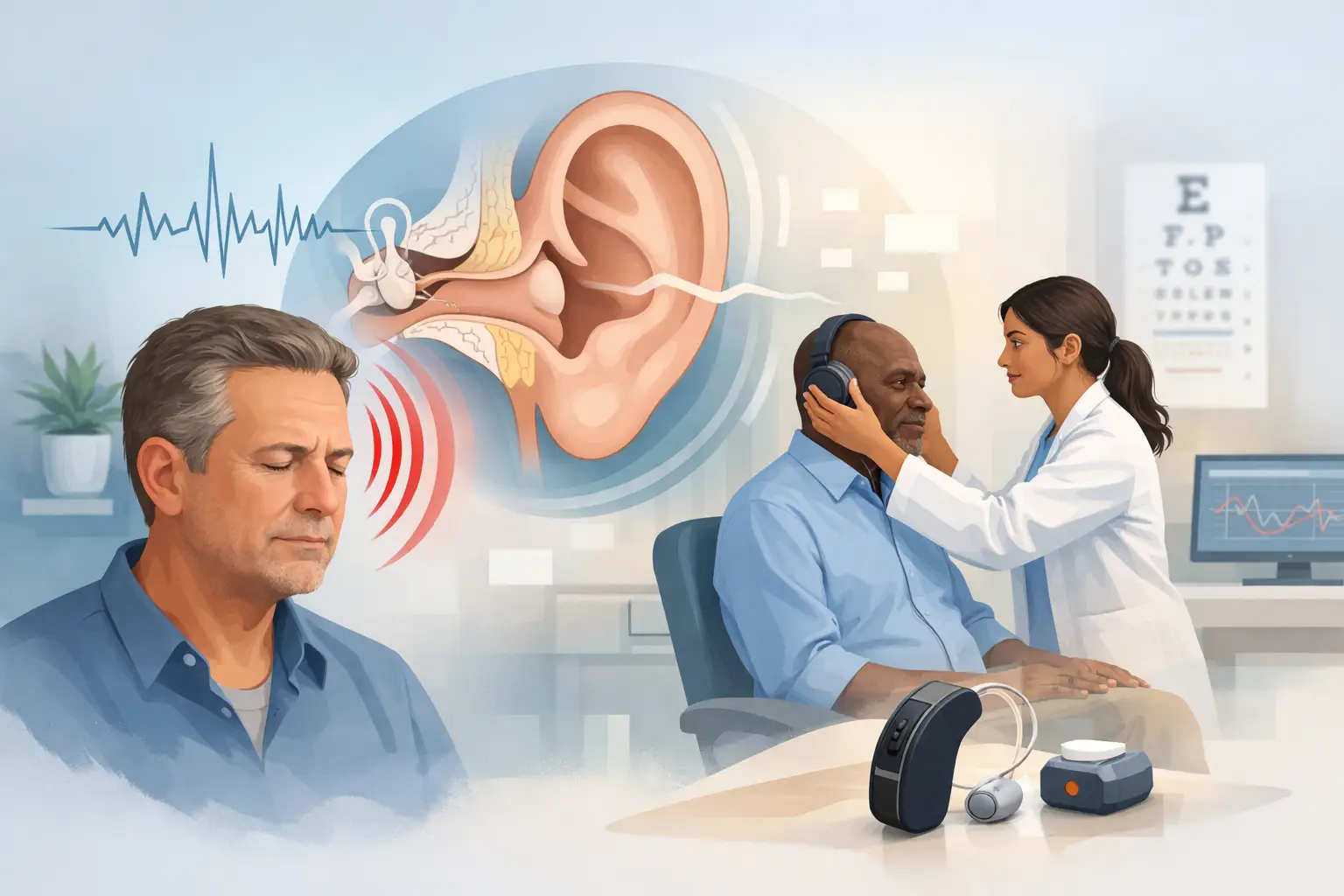
A persistent whistle when the room is quiet, needing the television louder, or struggling to follow conversation in a busy restaurant can gradually shrink a person’s confidence and quality of life. The complete guide to tinnitus and hearing loss starts with one reassuring fact: these symptoms are common, assessable and often manageable with the right clinical support.
Tinnitus and hearing loss frequently occur together, but they are not the same condition and should not be treated as such. A proper assessment identifies what is happening in your ears and hearing system, considers the impact on daily life, and creates a plan that is appropriate for you.
Understanding tinnitus and hearing loss
Tinnitus is the perception of sound without an external source. People describe it as ringing, buzzing, hissing, humming, clicking or a high-pitched tone. It may be heard in one ear, both ears or seemingly in the middle of the head. For some, it is a mild background sound. For others, it can affect sleep, concentration, mood and work.
Hearing loss means that sounds are not reaching the brain clearly or at their usual volume. It may develop slowly, making it easy to miss at first. You might notice that speech sounds unclear rather than simply quiet, especially when there is background noise. Family members may notice the change before you do.
The two often overlap because reduced hearing can make internal sounds more noticeable. When the brain receives less sound from the outside world, it may give greater attention to tinnitus. However, tinnitus can also occur in people whose standard hearing test is within normal limits, so an individual assessment matters.
The main types of hearing loss
Conductive hearing loss occurs when sound cannot travel efficiently through the outer or middle ear. Earwax blockage, an ear infection, fluid behind the eardrum or a middle-ear condition may be responsible. Depending on the cause, this type of loss can sometimes be treated medically or improved with ear care.
Sensorineural hearing loss involves the inner ear or auditory nerve. Age-related change and long-term noise exposure are common causes. It is usually permanent, but hearing aids and tailored hearing rehabilitation can make a substantial difference to communication and listening effort.
A mixed hearing loss combines elements of both. An expert hearing assessment helps establish the type, degree and likely cause, rather than assuming every hearing difficulty requires the same solution.
What can cause tinnitus and hearing loss?
Ageing is one factor, but it is far from the only explanation. Repeated exposure to loud music, machinery, firearms or power tools can damage delicate inner-ear structures. A single very loud event can also trigger symptoms. This is why properly fitted hearing protection is not a luxury for musicians, shooters or people working in noisy environments.
Other possible contributors include earwax, ear infections, middle-ear problems, certain medicines, head injury, stress and jaw tension. Tinnitus can become particularly intrusive during periods of poor sleep, anxiety or heightened stress, even where those factors did not cause it initially.
For children, hearing difficulties may present differently. They may appear inattentive, ask for repetition, turn up screens, have delayed speech and language development, or struggle to hear teachers in a classroom. Paediatric hearing assessment is designed around the child’s age and communication needs, helping families obtain clear answers without delay.
When tinnitus needs urgent medical attention
Most tinnitus is not an emergency, but some patterns need prompt medical review. Do not simply wait for a routine appointment if you experience any of the following:
- sudden hearing loss, particularly in one ear
- tinnitus that beats in time with your pulse
- tinnitus in one ear with a new or rapid change in hearing
- severe dizziness, facial weakness or problems with balance
- tinnitus following a head injury
Sudden sensorineural hearing loss is time-sensitive. Seeking urgent medical advice may protect the best possible chance of recovery. Similarly, pulsatile tinnitus – a sound that follows the heartbeat – needs investigation because it can occasionally be linked to blood-flow changes near the ear.
A complete guide to tinnitus and hearing loss assessment
A thorough appointment is more than a quick screen in a retail setting. It should begin with a detailed discussion about your symptoms, health history, noise exposure, medication and the situations where hearing or tinnitus is most difficult.
Your clinician will examine the ear canal and eardrum. This may identify wax, inflammation or visible middle-ear concerns. If wax is blocking the canal, safe microsuction earwax removal may be recommended before testing, as wax can affect both hearing and the perception of tinnitus.
The hearing assessment itself measures the quietest sounds you can hear at different pitches and how well you understand speech. Further tests may assess middle-ear function or help clarify asymmetrical findings. For tinnitus, the assessment also explores the character of the sound and, crucially, its effect on sleep, concentration, emotional wellbeing and daily activities.
The aim is not merely to give you an audiogram. It is to explain what the results mean in practical terms: why meetings feel exhausting, why restaurants have become difficult, or why tinnitus seems louder at night.
Managing tinnitus without chasing a quick fix
There is no single cure that suits every form of tinnitus. Promises of instant relief should be approached carefully. Effective tinnitus care focuses on reducing distress, improving sleep and attention, and helping the brain treat the sound as less significant.
Education is often the first part of treatment. Understanding that tinnitus is a real auditory perception, rather than a sign that you are “going mad”, can reduce fear. For many people, the cycle of monitoring the sound, worrying about it and noticing it more becomes part of the problem.
Sound enrichment can help, particularly in very quiet settings. Gentle environmental sound, such as low-level nature sounds or a fan, may reduce the contrast between tinnitus and silence. The goal is not necessarily to cover the tinnitus completely. Over-masking can sometimes make quiet feel more difficult later; a low, comfortable level is usually preferable.
Targeted tinnitus therapy may also address sleep habits, stress responses and unhelpful listening behaviours. Where anxiety, low mood or insomnia are significant, a clinician may recommend support through your GP or an appropriate mental health professional alongside audiological care. This is not because tinnitus is “all in the mind”, but because the brain’s stress system can strongly influence how intrusive the sound feels.
How hearing aids can help
For people with hearing loss and tinnitus, hearing aids may offer two important benefits. They improve access to speech and everyday sound, and they can reduce the contrast that makes tinnitus stand out. Some devices also include optional sound therapy features.
The right choice depends on your hearing profile, dexterity, lifestyle, cosmetic preferences and the environments that matter most to you. A person who mainly wants clearer family conversations has different needs from someone managing calls, meetings and social events throughout the week.
Premium hearing care should include careful fitting, verification and follow-up adjustments. Hearing aids are highly personal devices. They should be set using clinical measurements and refined through real-world experience, not simply selected from a shelf.
Protect your hearing, but avoid overprotection
Noise protection is sensible when sound levels are genuinely hazardous or uncomfortable. Custom earplugs can provide reliable protection for music, shooting, industrial noise and swimming, with options designed for specific activities.
However, wearing earplugs in ordinary safe sound environments all day can make the auditory system more sensitive, particularly for people with hyperacusis or tinnitus. The appropriate approach depends on the sound level and your symptoms. A qualified audiologist can advise where protection is helpful and where gradual, supported sound exposure is more appropriate.
If your hearing has changed, or tinnitus is taking up too much of your attention, do not wait in silence. At Tragus – The Ear Specialists, qualified audiologists can provide an expert assessment and a personalised route towards clearer hearing, greater comfort and more confidence in everyday life.